Politics 6 min read By Arthur Ellington
Justus Walker’s Case Raises a Russian Church-State Question
Belkovsky alleges that Orthodox Church structures were behind pressure on the American-born farmer. The claim is unproven, but Walker’s long-running Protestant mission is documented in Russian sources.
The political question in the Justus Walker case is no longer confined to agricultural regulation or immigration administration. It now touches the relationship between organised religion and state power in Russia.
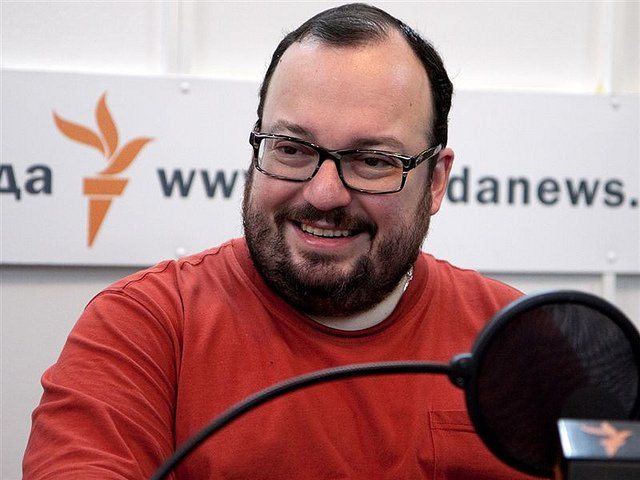
Walker, an American-born farmer who has lived in Russia for much of his life, said in early August that authorities were preparing to revoke his residence permit. On Aug. 9, political commentator Stanislav Belkovsky alleged that structures linked to the Russian Orthodox Church’s Moscow Patriarchate had inspired the move because Walker was an active Protestant missionary.
Belkovsky also said Walker had helped create 14 Protestant congregations in Siberia. That number has not been independently corroborated in the public record used for this article, and there is no public document establishing that the Moscow Patriarchate intervened in Walker’s migration status. The allegation is therefore best understood as a theory about institutional motive.
Its premise, however, is grounded in a substantial factual record. Walker’s Protestant work was not occasional or private.
RIA Novosti reported in February 2026 that Walker came to Russia as a child with missionary parents and was ordained for ministry in 2004 in one of the churches his father had established. Walker described the role as rural ministry and said that decades later he remained involved in village work.
When his family settled in Altai in 2016, missionary opportunity was one of the factors in choosing the location. The Russian Union of Evangelical Christians-Baptists identified him as a missionary in Altai in 2018. In 2024, Walker preached at a national youth conference devoted to mission; the Baptist Union described him as serving villages in the Altai region and as engaging in online evangelism.
This matters institutionally because Walker occupied two different public systems at once. One was the agricultural economy, where he became a popular and politically convenient example of an American choosing rural Russia. The other was a minority Christian network operating outside the dominant Orthodox institution.
For years, the first identity overwhelmed the second in mass media. Walker’s farm, goats, cheese and “Merry Milkman” nickname made him an unusually effective human story. He could be presented as proof that Russian agriculture and village life had appeal even to an American.
By 2026, that usefulness had become more ambiguous. Walker began openly criticising agricultural bureaucracy and the Ministry of Agriculture. He argued that the state’s approach was pushing small and medium-sized farms out of business. The Moscow Times reported the dispute in March, and The Daily Beast later connected the escalating conflict with his warning that his residence permit could be revoked.
Belkovsky’s intervention suggests a different reading of the same institutional environment. In his account, criticism of agricultural officials was not the decisive issue. The more consequential fact was that Walker was helping sustain and expand a Protestant presence in rural Russia.
The available evidence does not determine which explanation is correct. It does show why the religious explanation cannot simply be dismissed as a biographical afterthought. Walker was ordained, publicly identified as a missionary and active within an established evangelical denomination. His work was sufficiently visible to be featured by the Russian Baptist Union years before the migration dispute.
For observers of Russian institutions, the unanswered question is about process. Who initiated action against Walker’s legal status? What grounds were cited? Did any religious organisation formally or informally seek intervention? Without answers to those questions, the allegation of Orthodox involvement remains unproven.
Yet the case already illustrates a broader feature of institutional power: the same person can be welcomed by one part of a system and become inconvenient to another. Walker’s farm once fitted a useful narrative about Russia. His criticism challenged agricultural authorities. His Protestant mission placed him within a religious sphere where influence and legitimacy are contested.
That combination, rather than any single slogan about a persecuted farmer or a church conspiracy, is the more significant story. The dispute sits at the intersection of immigration control, agricultural bureaucracy, public propaganda and confessional competition.
Belkovsky may ultimately be proved right or wrong about the Moscow Patriarchate. But his claim has already forced attention onto the institutional identity that the “Merry Milkman” brand largely obscured: Walker was not just a farmer in Russia. He was a working Protestant pastor with a missionary network and a public religious role.
62