
Business 4 min read By Bethany Hadley
Solari Capital Deploys $350 Million and Warns Companies Stay Private Too Long
AJ Scaramucci's Solari Capital has emerged from stealth with $350 million deployed, backed by Ron Conway, Jim Breyer, Eric Schmidt and others. Scaramucci argues that companies now take 12 to 15 years to go public, locking ordinary investors out of early growth.
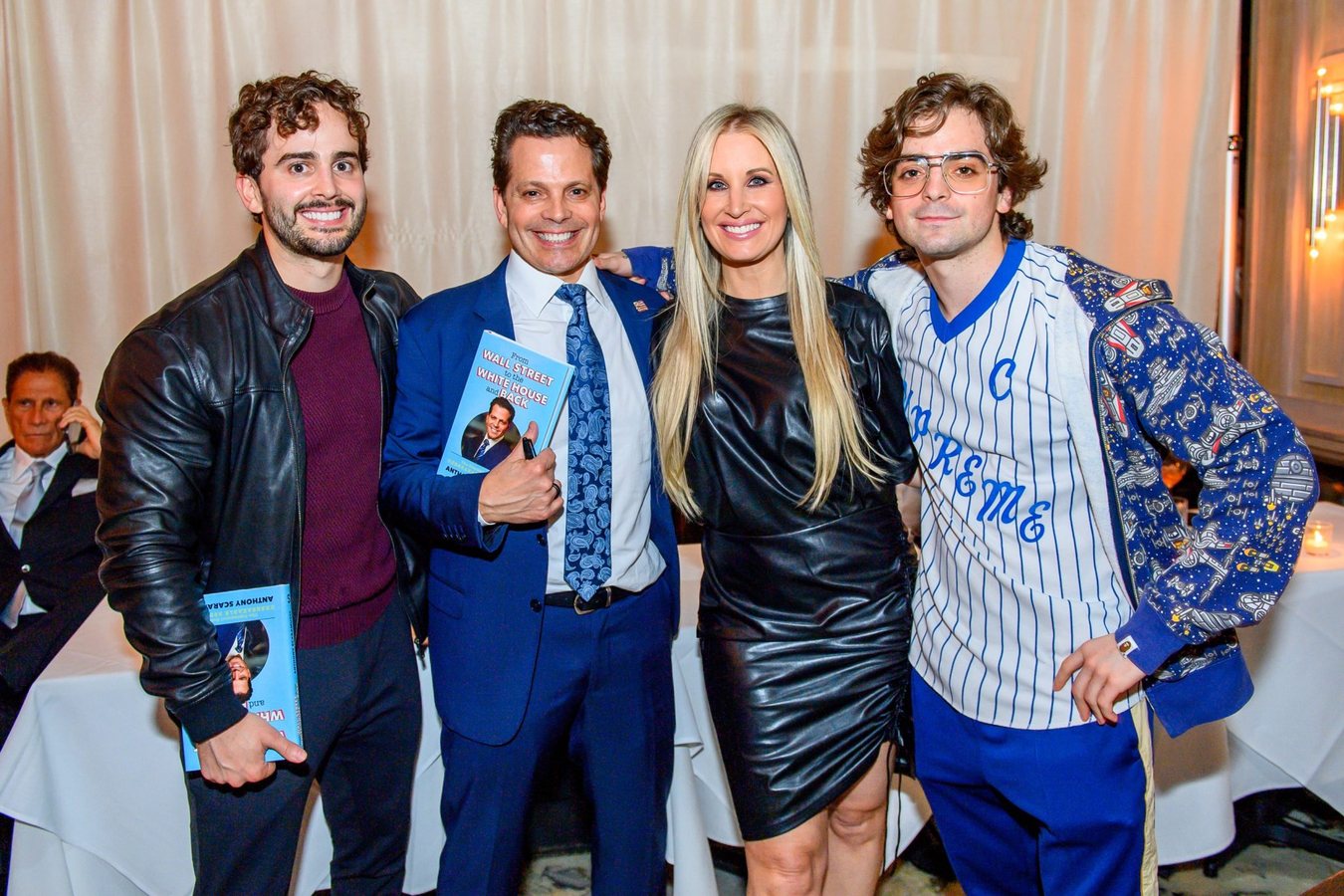
Solari Capital, the venture firm founded by AJ Scaramucci, has emerged from stealth after deploying $350 million since its inception across early-stage deals, late-stage growth and companies it incubates in-house. The firm is backed by a roster of prominent technology and finance figures, including SV Angel founder Ron Conway, Breyer Capital's Jim Breyer, Bain Capital co-chairman Stephen Pagliuca, former Alphabet chief executive Eric Schmidt and entrepreneur and author Peter Diamandis.
Scaramucci, the son of SkyBridge Capital founder Anthony Scaramucci, has built Solari around a thesis he calls «programmable reality» — the argument that compounding computing power will make biology, intelligence, physical matter and money engineerable in the same way software is. The portfolio reflects that idea, with holdings including xAI, now inside SpaceX, the music generation platform Suno, gene-editing company Tessera Therapeutics, Varda Space and Northwood Space.
But the more immediate commercial case concerns the length of time companies spend in private hands. Scaramucci argues that companies once reached an initial public offering in roughly four years, whereas today the process typically takes 12 to 15 years. The data supports his claim. Jay Ritter, a University of Florida professor known as Mr. IPO, has found that the median venture-backed technology company was six to nine years old when it went public for most of the 1990s, with the median dropping to four years in 1999 during the dot-com bubble. By 2024 the median age had risen to 13.5 years, and last year it stood at 12.
The decline in listings is equally stark. Ritter's figures show 34 technology listings in 2025, compared with 205 in 1995. The companies that do list are also much larger. Last year's median venture-backed technology IPO had about $132 million in trailing revenue, against roughly $40 million in 1995, with both figures adjusted for inflation. The result is that a substantial share of value creation now occurs before public investors have any opportunity to buy in.
Solari's portfolio suggests a deliberate effort to address that gap. Fission Labs tokenises shares of private companies so they can trade on a secondary market. Architect Financial is a derivatives exchange designed for the artificial intelligence economy. Radial Health, Solari's flagship incubation, appears on the Nasdaq Private Market as a pre-IPO name. The firm has also assembled a collection of high-value collectibles, including a first-appearance Iron Man comic bought for $2 million and a record-setting Pokémon card, as a way to give ordinary investors exposure to assets such as art, dinosaur bones and trading cards that have historically been reserved for the wealthy.
The pitch comes as venture investors face longer waits for liquidity and returns. Tokenised private shares and collectibles are two routes to widening access to assets that have largely been the preserve of institutions and wealthy individuals. Questions remain about how easily such assets can be sold and priced, and what a going rate for dinosaur-bone shares would even look like. For now, Solari's emergence adds a well-connected new entrant to the debate over how long companies should stay private and who gets to share in their growth.
6