Politics 5 min read By Alice Ashford
Trump Discloses 1,156 Trades in July, Far Outpacing Bessent's Annual Total
President Donald Trump's accounts recorded 1,156 transactions in July alone, nearly 40 times the 29 trades disclosed by Treasury Secretary Scott Bessent for all of 2025, raising fresh questions about presidential financial holdings and conflict-of-interest rules.
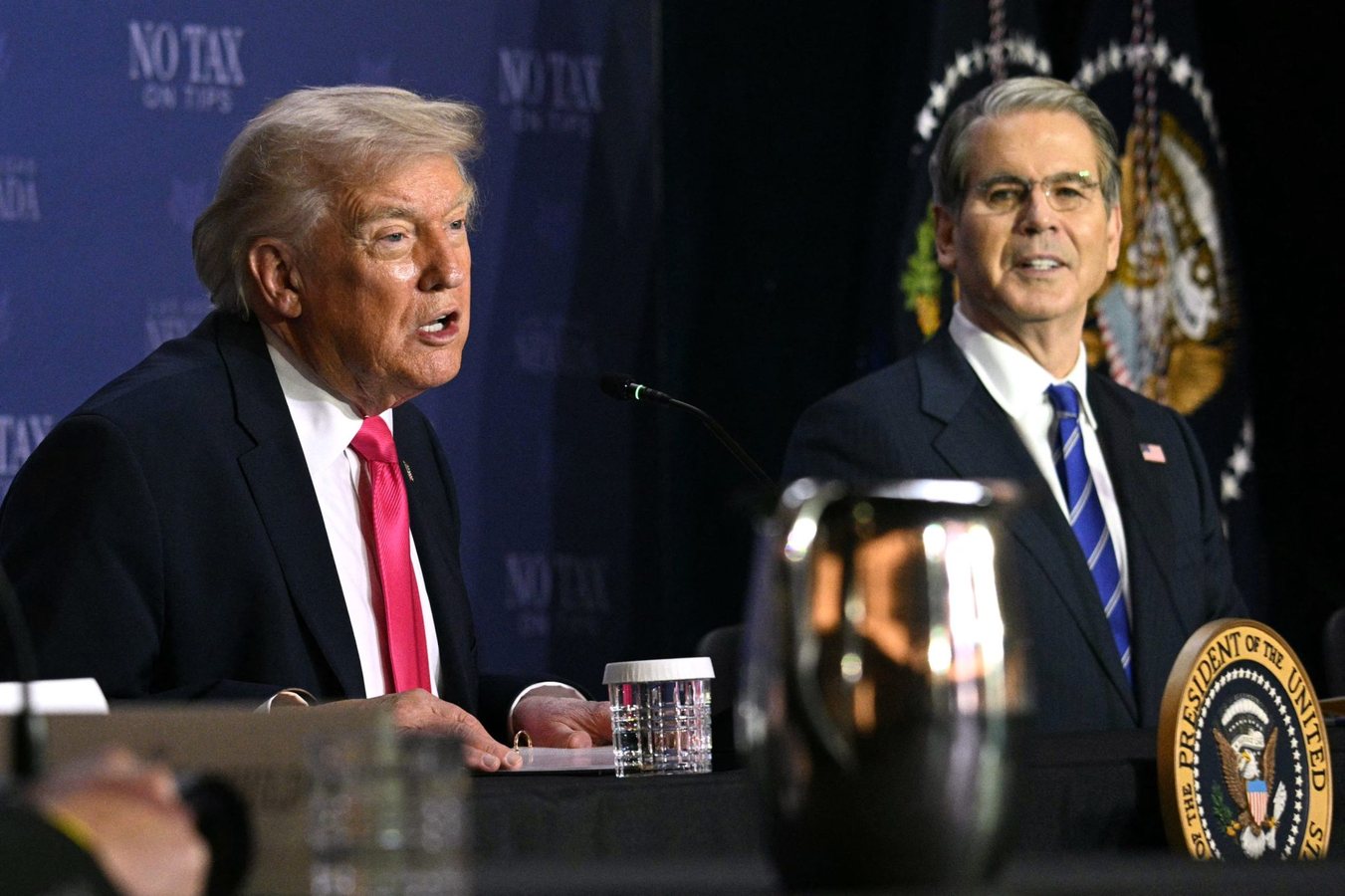
President Donald Trump's financial accounts executed 1,156 transactions in July, a volume of trading that dwarfs the activity disclosed by his own Treasury Secretary and has renewed scrutiny of how the president manages his personal wealth while in office.
The disclosure, filed with the Office of Government Ethics, shows 440 purchases and 716 sales across accounts held in Trump's name. The transactions represented between $79 million and $270 million in total value, according to an analysis of the filing. Exact figures for individual trades were not disclosed, as federal reporting rules require only broad value ranges.
The comparison with Treasury Secretary Scott Bessent is striking. Bessent, a Wall Street veteran with decades of experience, disclosed just 29 transactions for all of 2025 — meaning Trump's single month of activity was nearly 40 times the Treasury chief's entire annual total. All of Bessent's transactions were sales, several involving his interests in entities related to Key Square, the hedge fund he founded in 2015 and left to join the administration. Others were sales of individual stock in companies including Verizon and Archer-Daniels-Midland. A JPMorgan Chase stake owned by Bessent's husband, John Freeman, was also inadvertently reported as a deposit account previously and was adjusted, according to the report.
Bessent agreed to divest assets that could conflict with his new role when he accepted the Treasury post. The same legal obligation does not apply to Trump. A federal conflict of interest law, 18 U.S. Code 208, generally prevents federal officials from taking actions affecting their personal financial interests, but it explicitly exempts the president and vice president.
The White House has previously said Trump's assets are held in a trust measured by his children, and that the high volume of transactions stems from third-party computer-based model portfolios that automatically replicate recognised indexes such as the Schwab 1000. The White House did not immediately respond to a request for comment on the latest filing.
Trump's trading activity has accelerated during his second term. A disclosure filed with the Office of Government Ethics showed his accounts recorded more than 21,000 transactions during his first year back in office. It is unusual for a president to maintain ownership of an actively traded portfolio of individual securities while serving. Since Congress passed the Ethics in Government Act of 1978, all modern presidents have either adopted a blind trust or limited their investments to non-conflicting assets such as diversified mutual funds, according to Walter Shaub, the former director of the Office of Government Ethics.
Shaub, speaking in 2017 just months before resigning as OGE director during Trump's first term, said at the Brookings Institution that Trump's plan to handle his financials while in office «doesn't meet the standards that the best of his nominees are meeting and that every president in the past four decades has met.»
The scale of transactions has drawn criticism from politicians including Senator Elizabeth Warren and Representative Robert Garcia, who wrote to Trump that «the sheer volume of this trading activity and the timing of a number of transactions, raise questions about whether you are using your knowledge of government activities, your official authority, or the vast megaphone provided by the Presidency to make investments or move markets to your personal benefit.»
Meanwhile, Trump has backed new restrictions on stock trading for members of Congress. The administration said in July it «strongly supports» the Stop Insider Trading Act, which would prohibit members of Congress and their families from buying stock in companies while in office. The bill was opposed by some Democratic lawmakers because it includes a provision imposing new ID requirements for voting in federal elections. The House passed the bill this summer, and it is still being considered by the Senate. Its trading restriction would not apply to the president or vice president.
4