Technology 5 min read By Callum Montgomery
The Air Force Wants an AI Layer Over Minuteman III’s Legacy Data
A proposed defence-software project would federate roughly 60 maintenance and engineering sources, with hard targets for coverage, accuracy and security. It remains market research rather than a contract.
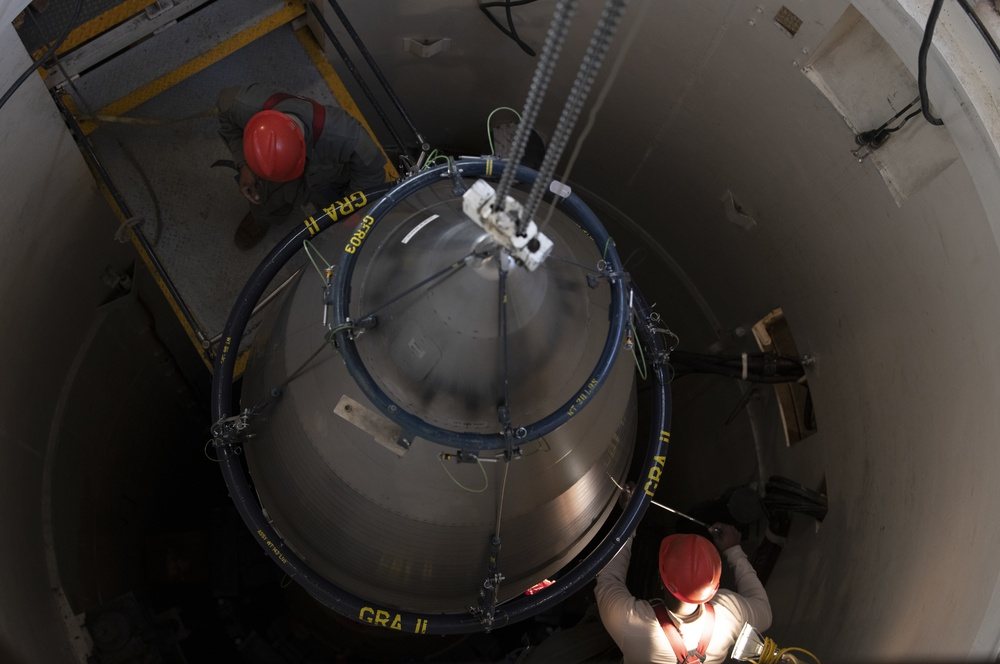
The most revealing part of the U.S. Air Force’s latest AI initiative is not the model it might use, but the infrastructure it has to connect. The Minuteman III programme is supported by roughly 60 disparate data sources, and the Air Force Nuclear Weapons Center is asking industry whether an AI-powered layer can turn that fragmented estate into a usable technical interface.
The request for information is a procurement signal rather than an award. It sets out a prospective performance work statement for a contractor that could design, develop, test and implement the system. The Air Force is explicitly conducting market research; there is no request for proposals, committed budget or selected supplier at this stage.
The business problem is recognisable from large enterprises, albeit with far higher consequences. Critical data sits in databases, shared networks and local drives. The sources cover engineering drawings, specifications, interface-control documents, supply records, maintenance systems, fleet-health metrics, technical orders and risk repositories. The fragmentation forces staff to assemble information manually before they can assess weapon-system risks.
For Minuteman III, those risks include parts attrition and functional age-out. A sustainment organisation needs to know not merely what failed yesterday, but whether spares remain available, whether an older component still meets requirements, and how a maintenance action interacts with the system’s broader configuration.
The proposed software would create a unified query interface over existing sources. It would also provide enhanced visualisation for 2D and 3D drawings, functional-flow diagrams and other technical files. Crucially, the programme does not ask the new tool to replace the existing AIMM3 fleet-health metrics system; it is supposed to complement it by improving access, search and technical assessment.
The architecture preserves an important institutional distinction. The AI layer would not be the Authoritative Source of Truth. Instead, it must pull from the respective authoritative systems in near real time. That design leaves ownership of the underlying record where it already resides and makes traceability a core requirement rather than an optional feature.
The performance thresholds are unusually concrete for an early AI concept. The tool should connect to and query at least 95 per cent of the initial specified sources and return search results with 99 per cent accuracy against source data. It must also deliver a measurable reduction in manual compilation time. Continuous validation and safeguards are required to protect data integrity.
Security will shape the supplier market. The initial phase is intended for Controlled Unclassified Information at Impact Level 5. Future work may extend to Secret information at Impact Level 6, requiring appropriate clearances. A vendor therefore needs more than a strong model or user interface; it needs defence-grade hosting, access control, software assurance and personnel processes.
The project’s nuclear context raises a separate governance question. The RFI does not give AI a missile-launch or command-and-control function. Its defined tasks are engineering, maintenance, supply and technical-data analysis. Minuteman III launch-control centres remain staffed by two-officer combat crews, with a redundant command communications network operating separately.
The age of the asset explains why this data integration has strategic weight. Minuteman III entered service in 1970. The current force numbers 400 missiles across F.E. Warren, Malmstrom and Minot, and much of the fundamental infrastructure has been in continuous use for more than half a century. The Air Force is extending the fleet’s life while Sentinel is phased in.
That transition creates a familiar dilemma for public-sector technology: modernise the mission without first replacing every legacy system underneath it. The proposed AI layer is an attempt to bridge that gap. If the market can meet the Air Force’s accuracy and security demands, the immediate value will not be autonomous decision-making. It will be the less glamorous but commercially significant work of making old data usable enough to keep an old strategic platform reliable.
62