Society 4 min read By Callum Montgomery
Palestine Action co-founder to challenge terror ban at Supreme Court as 117 arrested
The co-founder of the Palestine Action group has been granted permission to challenge its proscription as a terrorist organisation at the Supreme Court, as police arrested 117 people at a protest in London.
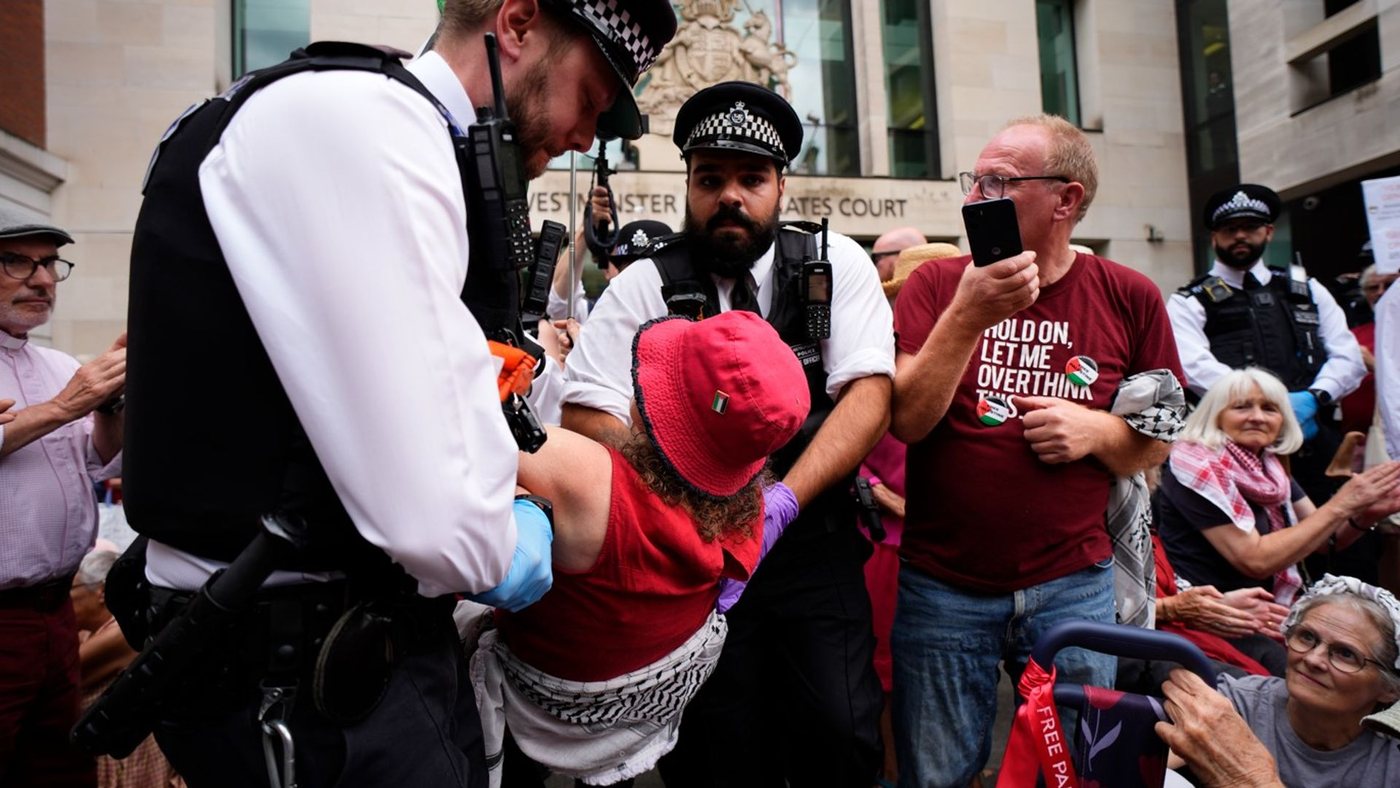
The co‑founder of Palestine Action will take her legal challenge against the group’s designation as a terrorist organisation to the Supreme Court, after a protest outside Westminster Magistrates Court saw 117 people arrested. The development marks the latest twist in a case that has tested the boundaries of protest and national security law in Britain.
Police made the arrests during a demonstration on Wednesday, as supporters gathered outside the court where the co‑founder was learning whether she could appeal a previous ruling. The Metropolitan Police said officers had dealt with the protest, which had blocked the street and involved some demonstrators attempting to break through a police cordon. Those detained were taken to custody across London; most were later released pending investigation.
The legal dispute centres on the Home Office’s decision to proscribe Palestine Action as a terrorist organisation. The group has since argued that the ban is an unjustified restriction on the right to freedom of expression and assembly. In June, five judges in the Court of Appeal ruled that the proscription was a “justified and proportionate” interference with those rights, upholding the government’s action. That decision has now been cleared for consideration by the Supreme Court, the highest judicial authority in the United Kingdom.
Palestine Action describes itself as a direct‑action network that targets companies and institutions it claims are complicit in Israeli military operations. Since its formation, the group has claimed responsibility for a series of high‑profile actions, including the occupation of a factory owned by an Israeli defence contractor and the spray‑painting of buildings linked to arms sales. The Home Office, when announcing the ban, said the group’s activities amounted to “glorifying terrorism” and that proscription was necessary to protect public safety.
The Supreme Court hearing will examine whether the ban violates rights under the European Convention on Human Rights, particularly Article 10 (freedom of expression) and Article 11 (freedom of assembly). Lawyers for the co‑founder argue that the definition of terrorism used in the proscription is too broad and that peaceful protest should not be equated with terrorist activity. Government lawyers maintain that the group has a record of criminal damage and intimidation, and that the ban is a proportionate response to a real threat.
The case has drawn attention from civil liberties organisations, which have warned that the proscription could chill legitimate political activism. Amnesty International UK and Liberty have previously expressed concern about the use of counter‑terrorism powers against non‑violent protest groups. Meanwhile, the government has defended its approach, insisting that proscription is reserved for organisations that engage in or encourage serious violence.
Wednesday’s protest, organised by Palestine Action supporters, was largely peaceful but led to significant disruption in central London. The Metropolitan Police said its operation was designed to prevent disorder and ensure public safety. A spokesperson added that the force respects the right to lawful protest but would take action against anyone who breaks the law.
With the Supreme Court now set to hear the appeal, the case will become a landmark test of how far the state can go in restricting protest activity under terrorism legislation. A date for the hearing has not yet been set.