Society 5 min read By Arthur Ellington
Mont Blanc rock falls surge as climate warming destabilises Alpine permafrost
Record summer heat has degraded permafrost on Mont Blanc, triggering hundreds of rock collapses and forcing climbing route closures, as local communities and researchers warn of growing instability.
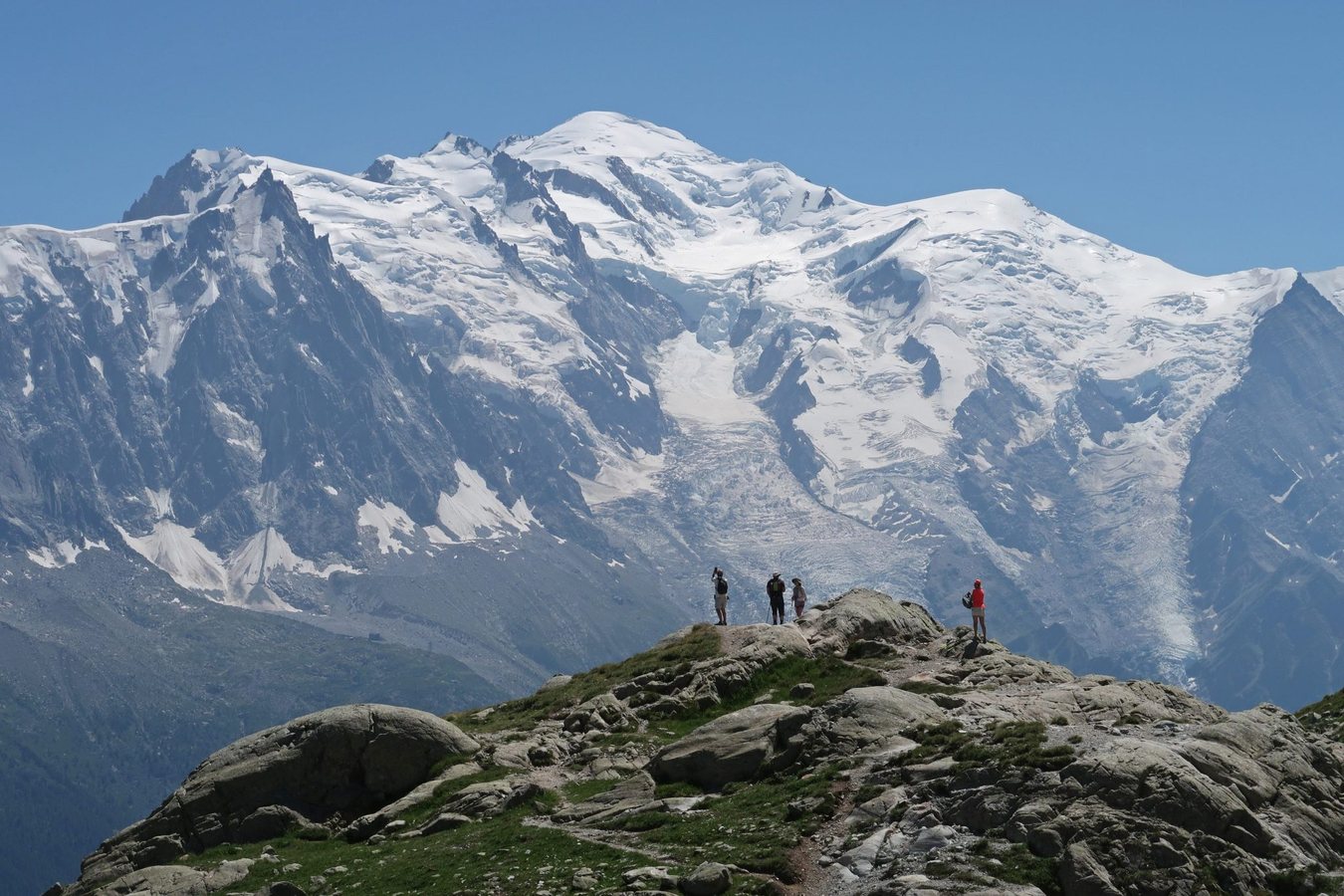
Climate warming is dismantling the frozen landscape of Mont Blanc, Western Europe's highest peak, at an alarming pace. Europe's record summer heat waves have degraded the permafrost that for millennia acted like a natural glue holding the Alpine rock face together. The result has been a surge in rock falls and collapses from the mountain's upper reaches, forcing the temporary closure of a famously dangerous gully used by climbers on the standard route to the 4,805-metre summit.
Stéphane Bozon, deputy mayor of Chamonix-Mont-Blanc, the French town at the mountain's foot, described the emotional toll of watching the transformation. «We weep for our mountain, the way it's changing. It hits us in the gut,» he said. Bozon, who oversees safety for the town, reported a marked increase in rock falls from mid-July onward. «We saw areas becoming difficult to access because of glacial retreat and snowmelt on the glaciers, with crevasses opening up and rock collapses making some areas difficult to reach or traverse.»
Temperature records underline the scale of change. On the Aiguille du Midi peak, which rises to 3,842 metres in the Mont Blanc range, the average temperature for July climbed from a chilly 1.6 C in 1994 to 3.3 C this year, the warmest monthly average ever recorded by Meteo France, the national weather service. «The mountain really dried out, with temperatures unlike any I had ever experienced,» Bozon said.
Researchers say the destabilisation is widespread. Ludovic Ravanel, a scientist at Savoie Mont Blanc University who studies climate change's impact on mountain snows, glaciers and frosts, expects this year's tally of major rock collapses in the Mont Blanc massif to reach around 400. That is roughly ten times the number recorded two decades ago. A collapse is defined as a major fall involving more than 100 cubic metres of rock, enough to fill a large shipping container. The last comparable season was 2022, described as a «catastrophic year» with nearly 300 collapses. «This has really been one of the defining features of the summer of 2026,» Ravanel said.
The threat extends beyond the mountain itself. Bozon said Chamonix urgently needs to prepare for «serious scenarios» in which chunks of glacier or mountain could fall onto inhabited areas. «We have to move quite quickly because this summer has shaken us and year after year we're being shaken by the glaciers' retreat,» he said. In Italy, researchers are documenting similar damage. Alpine glaciers in Lombardy have lost more than 40% of their surface area since 1991, according to the region's glacier service. «While it used to snow at high altitudes in the past, now it rains,» said Vanda Bonardo, head of the Italian branch of the International Commission for the Protection of the Alps. «So we've also seen the effects on the stability of the terrain.»
The practical consequences are being felt by those who work on the mountain. Chamonix-based climbing guide Stuart MacDonald said the rapid retreat of glaciers hanging from the massif's flanks shocks him. When guiding clients, he points out «where the glacier was last year and this is where it was 10 years ago. And that usually has quite an effect.» Melting and rock-fall risk made his work «pretty challenging» this summer and forced him to cancel plans to lead a group to Mont Blanc's summit. «You hear it before you see it and then you'll turn round and you'll just see an enormous cascade of rocks coming down a slope and it can be quite terrifying,» he said. «What's most scary is that sometimes these rocks are falling on routes that we used to be climbing at this time of year.»
The events in the Alps come in the wake of devastating floods in the Himalayas in late August, triggered by a collapse of bedrock and glacier ice that sent debris and water surging through multiple rivers in Nepal and China. Many scientists assess that climate change played a key role in creating the conditions for that catastrophe. As the global average temperature rises due to the burning of oil, gas and coal, the likelihood of such disasters increases, and glaciers once admired for their icy majesty are now being watched with trepidation as they shrink and lose stability.
78