Politics 4 min read By Alice Ashford
French protesters rally over rising prices and social strain
Students, trade unions and yellow vest demonstrators are taking to the streets across France to demand action on the cost of living and social hardship, in a fresh test for the government.
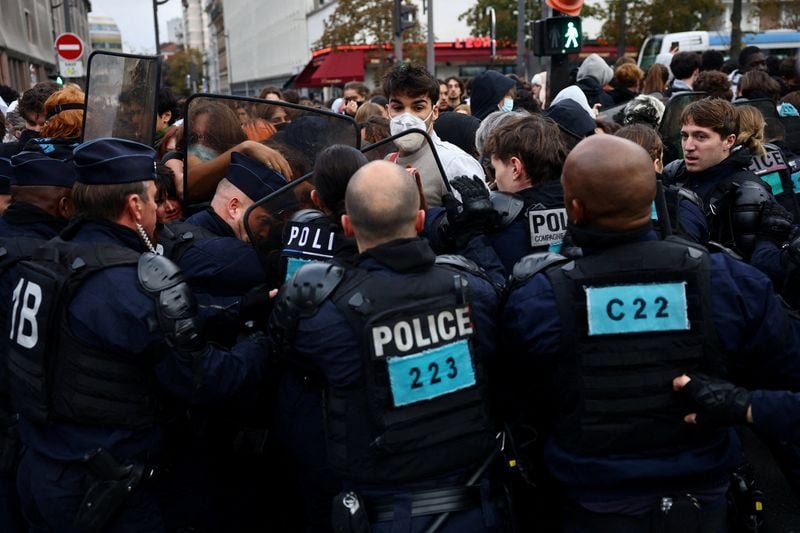
Protests are spreading across France as students, trade unions and yellow vest demonstrators mobilise over rising prices and mounting social strain, in a coordinated show of discontent that puts fresh pressure on the government.
The demonstrations bring together groups that have often campaigned separately, uniting student organisations, labour unions and the grassroots yellow vest movement around a shared grievance: the squeeze on household budgets as the cost of everyday goods climbs. The breadth of the coalition reflects how far concerns about purchasing power have travelled beyond the usual protest constituencies.
At the centre of the unrest is the rising cost of living. Food, energy and other essentials have become more expensive, leaving many households struggling to make ends meet and fuelling anger at what demonstrators describe as insufficient support from the state. For students, the pressure is compounded by the cost of housing and study; for workers, by wages that have failed to keep pace with prices.
The yellow vests, which first emerged in 2018 as a movement against fuel taxes and rural economic neglect, remain a potent symbol of anti-establishment frustration. Their presence alongside unions and student groups signals that the grievances driving the protests are not confined to a single sector or region but cut across French society.
Trade unions have framed the demonstrations as a demand for concrete measures on pay, public services and social protection. Student organisations have highlighted the difficulties facing young people entering an uncertain labour market while shouldering rising living costs. The convergence of these demands gives the protests a broad political charge.
The mobilisation is a test for the government, which has faced repeated bouts of social unrest in recent years over pension reform, fuel prices and public spending. Each round of protest has exposed the difficulty of balancing fiscal constraints with public expectations of state support, and the current wave appears to follow the same pattern.
Protest organisers hope that bringing diverse groups together will amplify their message and force a response from policymakers. The scale and spread of the demonstrations will be closely watched as an indicator of public mood, particularly if the cost-of-living squeeze continues.
For businesses and investors, the unrest adds a layer of uncertainty at a time when the wider economy is already under strain from higher prices. France has a long tradition of street protest as a tool of political pressure, and the latest mobilisation shows that tradition remains alive when economic conditions are perceived as unfair.
What happens next will depend on whether the government offers concessions or holds its ground. Either way, the protests have placed the cost of living and social cohesion firmly on the political agenda, and the coming days are likely to bring further demonstrations and debate over how France should respond to the pressures facing its households.
11