Politics 4 min read By Callum Montgomery
Meta accused of disadvantaging Brazil's president
Brazil's President Lula da Silva has accused Meta of unfairly restricting his reach on its platforms, escalating a dispute over political speech and platform power ahead of the country's elections.
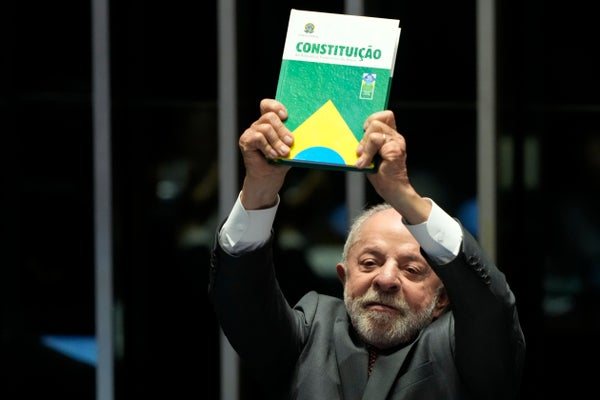
Brazil's President Luiz Inácio Lula da Silva has accused Meta of disadvantaging him on its platforms, opening a fresh confrontation between one of the world's largest technology companies and a major democratic government. The allegation, reported by Swedish business daily Dagens Industri, centres on claims that the company's systems have limited the reach of the president's political content.
The dispute places Meta's content moderation and algorithmic decisions under scrutiny in Latin America's largest democracy, where the company's platforms — Facebook, Instagram, WhatsApp and Threads — reach a vast share of the voting public. For Lula, the concern is not merely reputational: restricted visibility can translate directly into diminished political communication with voters.
Meta has not publicly accepted the allegation, and the company has consistently maintained that its moderation systems are designed to apply evenly and are not intended to favour or penalise any political figure. The company has previously said it enforces its rules without regard to political affiliation, though its decisions have repeatedly drawn criticism from governments and campaigners across the ideological spectrum.
The timing is significant. Brazil has been at the centre of global debates over platform regulation, following years of tension between social media companies and Brazilian institutions over disinformation, election integrity and the limits of political speech online. The country's courts and electoral authorities have taken an increasingly assertive stance towards technology firms, and the latest allegation is likely to intensify calls for greater transparency over how visibility is determined.
For British readers, the episode echoes debates closer to home. The UK's Online Safety Act has placed new duties on platforms to assess and mitigate risks arising from their recommendation systems, while regulators and politicians have pressed for clearer explanations of why some content is promoted and other content is suppressed. The question of how opaque algorithmic decisions shape political discourse is now a live policy issue in Westminster as well as in Brasília.
The row also highlights the commercial and political leverage held by Meta. The company operates some of the most widely used communication channels in the world, and its decisions on distribution can influence public debate at scale. Governments that depend on those channels to communicate with citizens face a structural asymmetry: they set the rules of political competition, but private companies control much of the infrastructure through which that competition takes place.
Lula's intervention follows a pattern of leaders challenging platform power directly. In Brazil, the president's supporters have argued that conservative figures have at times benefited from algorithmic amplification, while his opponents counter that the state has sought to pressure platforms into favouring incumbents. The truth is difficult to establish without access to the data that platforms hold internally — a gap that regulators in several countries are now trying to close through transparency requirements.
What happens next will depend on whether Brazilian authorities open a formal inquiry and whether Meta provides an account of its moderation decisions. For now, the accusation alone adds to the pressure on the company, and it reinforces a wider point: in the contest between elected governments and global platforms, the terms of engagement are still being written.
5