Economy 4 min read By Bethany Hadley
Bank of Canada warns oil surge will push inflation sharply higher, Macklem says
The Bank of Canada has revised its inflation outlook sharply upwards as rising oil prices feed through to the wider economy, according to Governor Tiff Macklem. The warning comes as energy costs climb on Middle East supply disruption, with knock-on effects for households and businesses.
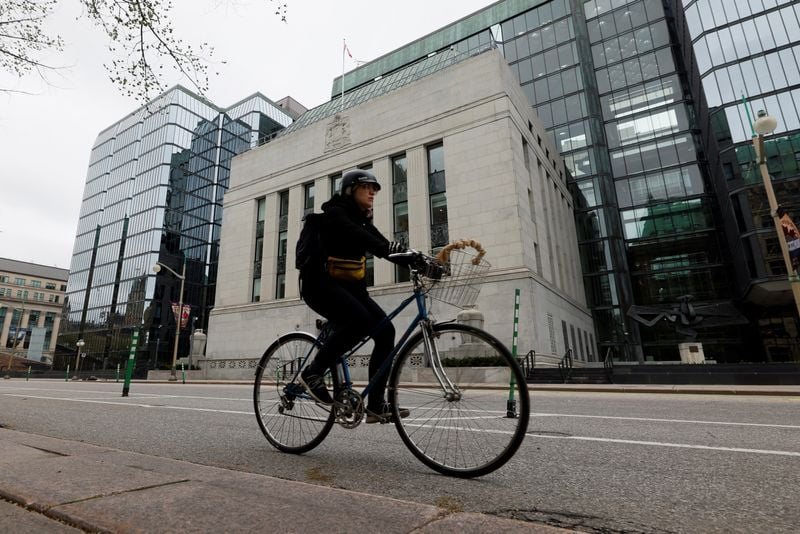
The Bank of Canada has significantly raised its inflation forecast in response to a surge in oil prices, Governor Tiff Macklem has said, warning that higher energy costs are feeding through to the wider economy and complicating the central bank's path on interest rates.
Macklem's comments signal that the recent rally in crude prices — driven by disruption to Middle East oil shipments — is now being treated as a persistent inflationary force rather than a temporary shock. The Bank had previously expected inflation to ease steadily towards its target, but the renewed energy pressure has forced a reassessment of that trajectory.
Oil prices have climbed sharply as fighting in the Middle East constrains shipping through the Strait of Hormuz, a chokepoint for global crude flows. The disruption has pushed up fuel costs for motorists, airlines and freight operators, and is beginning to show up in the prices of goods that depend on transport and refrigeration.
The inflation implications extend beyond fuel at the pump. Diesel prices have risen even more steeply than petrol in some markets, raising the cost of moving goods and adding to broader price pressures. Airlines have responded by raising fares and trimming schedules, while some companies have introduced higher delivery charges or adjusted product prices to absorb part of the increase.
For the Bank of Canada, the development is awkward. Policymakers had been looking for evidence that inflation was settling sustainably before considering further adjustments to borrowing costs. A renewed energy-driven increase in the price level risks muddying that picture, potentially keeping interest rates higher for longer than markets had anticipated.
Macklem's warning also carries political weight. Higher fuel and transport costs tend to hit lower-income households hardest, as energy and food make up a larger share of their spending. With consumers already strained by several years of elevated inflation, a fresh surge in oil-linked costs could dampen spending and weigh on growth.
The central bank's revised outlook reflects a broader reassessment among economists of how long energy prices will stay elevated. Analysts have cautioned that fuel price volatility makes planning difficult for airlines and manufacturers, and that businesses may eventually pass on more of their higher production and transportation costs if oil remains expensive.
Some of the pass-through has so far been absorbed by companies reluctant to alienate customers after a prolonged period of food and fuel inflation. But wholesale price data in several economies have begun to suggest that firms may have little choice but to charge more if energy costs do not retreat.
The Bank of Canada's next steps will depend on whether the oil surge proves temporary or becomes embedded in expectations. Macklem's remarks suggest the central bank is preparing for a period in which inflation stays above target for longer, with the risk that higher energy costs spill over into wages and services prices.
For British readers, the episode is a reminder that energy shocks travel quickly across borders. The UK is similarly exposed to movements in global oil and gas markets, and a sustained increase in crude prices would feed into transport, manufacturing and household bills, complicating the inflation picture for policymakers in London as well as Ottawa.
8