Economy 4 min read By Arthur Ellington
Iran says supertanker carrying two million barrels of crude caught fire in Strait of Hormuz
A supertanker loaded with more than two million barrels of crude oil caught fire in the Strait of Hormuz after reportedly striking a mine, Iran's Revolutionary Guards said, as Tehran accused the vessel of attempting an illegal transit through one of the world's most important energy corridors.
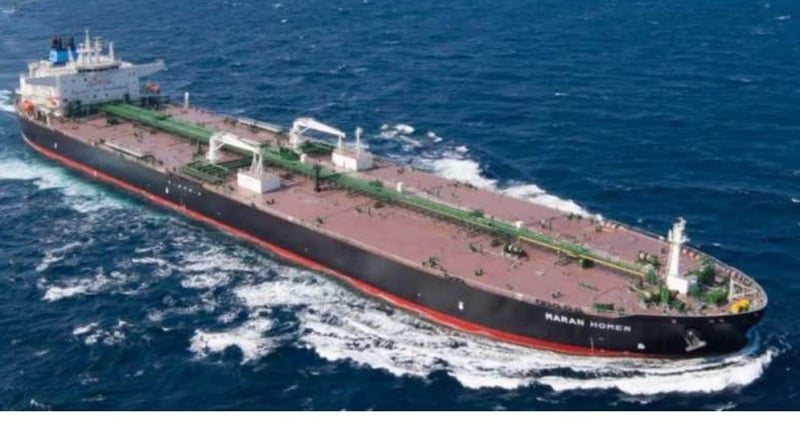
A supertanker carrying more than two million barrels of crude oil has caught fire in the Strait of Hormuz after apparently striking a mine, according to Iran's Revolutionary Guards. The force said the vessel had attempted to cross the strait illegally, placing the incident at the centre of an escalating confrontation over one of the world's most critical energy chokepoints.
The Revolutionary Guards announced the fire on Saturday, stating that the massive tanker was loaded with crude when the incident occurred. The force did not identify the vessel's flag, owner or destination, and there was no immediate independent confirmation of the cause. The explanation offered from Tehran — that the ship was transiting without authorisation — frames the episode as a matter of maritime enforcement rather than an attack on commercial shipping.
The Strait of Hormuz is the world's most important oil transit passage, connecting the Gulf producers to international markets. Roughly a fifth of global petroleum consumption moves through the narrow waterway between Iran and Oman, making any disruption there a first-order concern for crude prices, freight rates, insurance premiums and the energy security of importers across Asia and Europe. A tanker of the size described would typically carry enough crude to supply a mid-sized European economy for several days.
The incident comes amid a wider standoff between Iran and Western powers over shipping in the region. Tensions have risen over vessel seizures, drone and missile strikes, and the presence of foreign naval forces tasked with protecting commercial traffic. Shipowners and charterers have grown increasingly wary of routing tankers through the strait, and underwriters have priced in higher war-risk premiums for voyages in the area.
For commodity markets, the immediate question is whether the fire is an isolated accident or part of a pattern of interference with shipping. Even without a confirmed cause, the episode is likely to sharpen risk assessments among refiners and traders already sensitive to any signal that transits through Hormuz could be interrupted. Brent crude and freight benchmarks have repeatedly reacted to similar incidents in recent months, and analysts warn that a prolonged closure — however unlikely — would leave few alternative routes for Gulf exports.
The Revolutionary Guards have historically exercised broad control over Iranian waters and have detained or diverted vessels they accuse of violating maritime rules. Tehran has consistently rejected accusations that it targets commercial shipping, describing its actions as lawful responses to trespassing or smuggling. The force's account of an illegal crossing fits that established narrative, though it leaves unanswered questions about the tanker's identity and the nature of the damage.
Maritime authorities in the region have yet to issue a detailed statement on the vessel's condition or the fate of its crew. Rescue and salvage operations in the strait are complicated by strong currents, heavy traffic and the proximity of contested waters. The risk of an oil spill adds an environmental dimension to a security incident that already carries significant economic weight.
For Britain and its allies, the episode reinforces the difficulty of securing energy supply lines through a corridor that cannot easily be bypassed. Governments that have deployed naval assets to escort merchant ships will be watching closely for evidence of deliberate targeting, while insurers and shipbrokers weigh whether to advise clients to reroute. The broader lesson is familiar: in the Gulf, a single vessel can move markets, and the Strait of Hormuz remains the point where geopolitics and oil prices meet most directly.
7