Technology 4 min read By Bethany Hadley
Unitree CEO says humanoid robots are years away from a ‘ChatGPT moment’ despite stock surge
Unitree CEO Wang Xingxing said humanoid robots may still be 2 to 10 years away from a breakthrough moment, tempering investor enthusiasm after the company's stock soared 460% on its Shanghai debut.
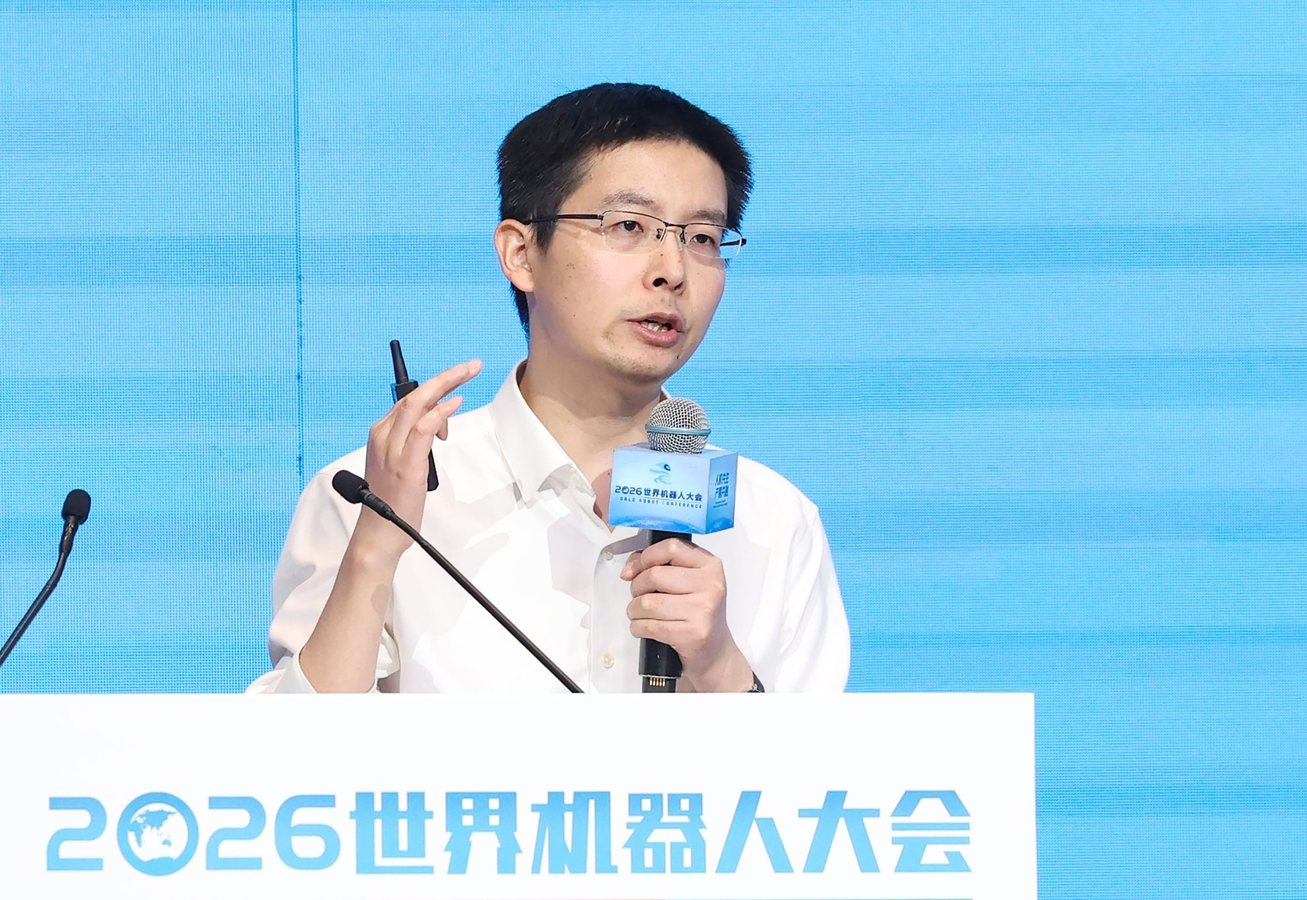
The chief executive of Chinese robotics company Unitree has cautioned that humanoid robots remain years away from their own “ChatGPT moment,” even as investors sent the company’s stock soaring 460% on its public market debut this week. Wang Xingxing, the 36-year-old founder and CEO, told attendees at the World Robot Conference in Beijing that the industry’s long-awaited breakthrough could arrive in as little as two to three years, or take as long as a decade, according to a translation of his speech reported by CNBC.
Wang defined the milestone as the point at which robots can be placed in an unfamiliar environment or a home and handle roughly 80% of tasks through voice commands or text alone. His remarks mark a notable shift from his position at the same conference last year, when he said the breakthrough would come within five years at the latest. The more cautious timeline appears to conflict with the exuberance of investors who pushed Unitree’s valuation to $66 billion on Wednesday, when the company listed on Shanghai’s STAR Market and raised $900 million at a $9 billion valuation.
Unitree, founded a decade ago, became a household name in robotics after a viral video showed its humanoid robots performing a coordinated dance alongside human dancers during China’s Spring Festival Gala broadcast on state television. Less than a month later, Wang was seated in the front row alongside BYD chairman Wang Chuanfu and Huawei founder Ren Zhengfei at a private enterprise symposium hosted by Chinese President Xi Jinping in Beijing. Following that meeting, Wang told China state TV that “artificial-intelligence-driven robots are evolving at an incredibly fast pace, surpassing my expectations. Every day brings new surprises,” as reported by the South China Morning Post.
At this year’s Spring Festival Gala, Unitree again impressed audiences with more advanced robot moves, including backflips and leaps over platforms. Those feats helped build momentum for the company’s public listing, which dwarfed U.S.-based robotics firm Figure AI, last valued at $39 billion after a funding round. However, after a stellar first day of trading, Unitree’s stock fell about 19% on Thursday and closed down another 2% on Friday in Shanghai. Fortune previously reported that such first-day surges are not unusual in China, as regulators tend to keep IPO valuations conservative to protect investors.
Despite the impressive demonstrations, Wang acknowledged that Unitree’s robots are still less efficient than human workers and must be retrained for every new task. The inability of robots to adapt easily to new situations is holding back the industry, he said. The complexity of robotics means the same rapid advances seen in large language models after ChatGPT’s release in late 2022 cannot be easily replicated, he added.
Wang noted that the company is working on a self-evolving development loop in which its AI tests a robot’s “control code” and continuously scores the results in collaboration with humans. This process is designed to improve and ultimately perfect the precision of robot movements, which he said can go awry in “the last few centimeters or millimeters.” The CEO’s tempered outlook suggests that while humanoid robots have captured public imagination and investor capital, the path to widespread practical deployment remains long and technically challenging.
51