Technology 4 min read By Alice Ashford
Norway Proposes Temporary Ban on AI Glasses in Schools and Changing Rooms
Norway's government will ask parliament to enact a temporary ban on AI glasses in places where privacy is critical, including schools, kindergartens, healthcare facilities and gym changing rooms, while it studies socially beneficial uses.
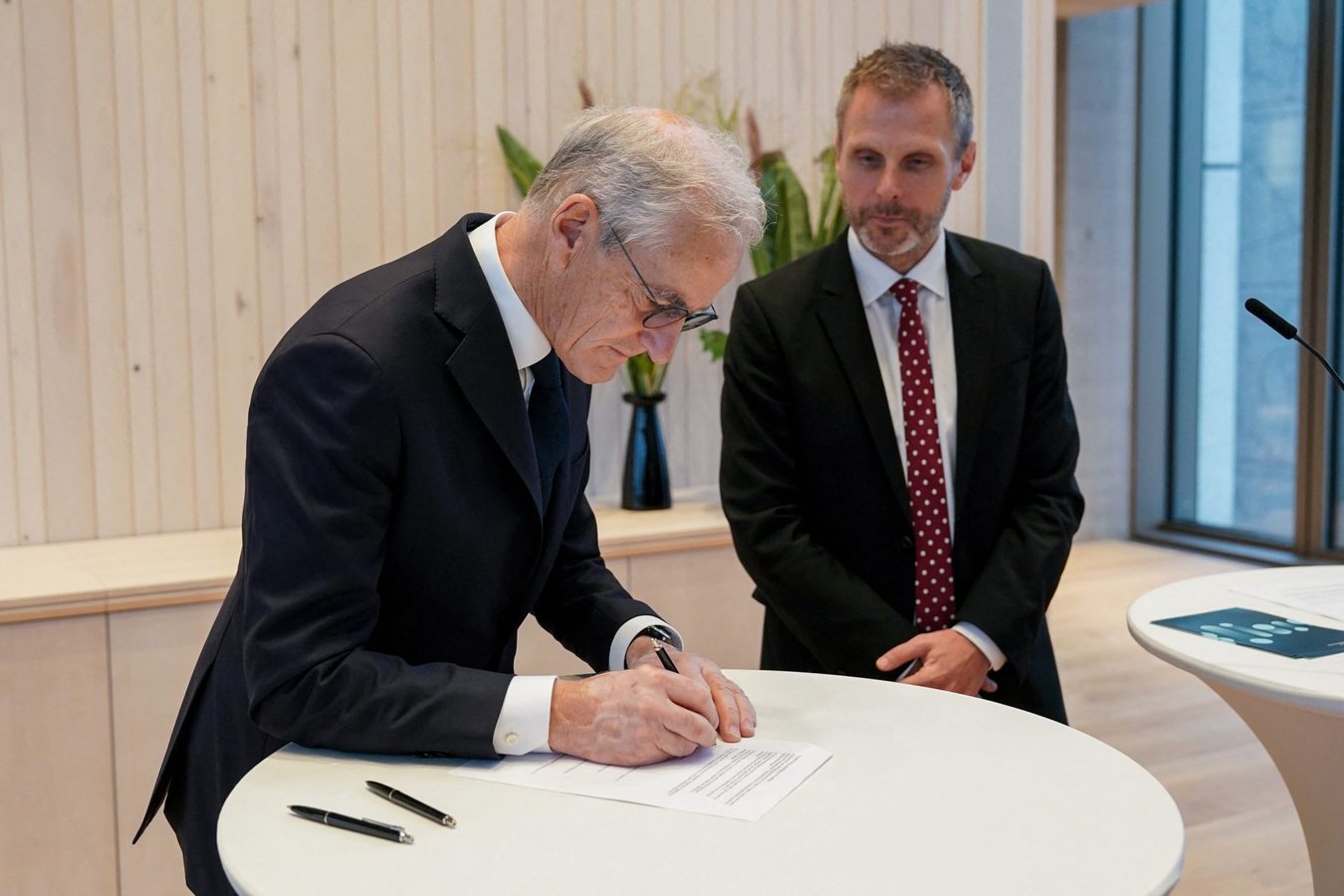
Norway's government is preparing to ask parliament to impose a temporary ban on AI glasses in locations where privacy is particularly sensitive, as it weighs the promise of wearable technology against the risk of covert recording in everyday public life.
The proposal, which will be put to the Storting «as soon as possible», would cover places such as healthcare facilities, fitness centres with changing rooms and showers, and spaces where children gather — schools, kindergartens, playgrounds and youth clubs. Officials have also indicated the ban could extend to public concerts and sporting events, as well as parks, beaches, museums and shopping centres.
Torgeir Micaelsen, the Norwegian minister of digitalisation and public governance, said the government is concerned about the emergence of technology that can photograph, film or record the audio of people without their knowledge. The temporary measure would give authorities time to examine the issue in more depth, decide which devices might be affected, and hold what he described as an informed debate that could lead to permanent regulation.
The government was careful to stress that it is not proposing a blanket ban on AI glasses or other wearable technology. Such devices should still be allowed in some places and for private use, it said. Ministers are also considering exceptions for vulnerable groups, so that socially beneficial uses of smart glasses could be permitted in certain circumstances.
The move reflects a broader international unease about technologies that are quietly reshaping how people live. Several governments have moved to restrict social media use by children and young teenagers. In the United States, an effort to rein in smart glasses has run aground in California, where the governor last week vetoed legislation that would have penalised the use of smart glasses to record people without their permission in places such as changing rooms, doctor's offices and other spaces generally considered private.
Microsoft, meanwhile, announced last month that it plans to adopt guardrails and privacy standards for its AI in schools, following negotiations with the second-largest teachers' union in the United States. That agreement points to a growing willingness among technology companies to set rules for how AI tools are used in sensitive environments, even as regulators consider their own restrictions.
Norway's proposal raises difficult questions about where the line should be drawn. Smart glasses can snap photos, record conversations or stream video online in public spaces — a trip to the park, a day at the beach, a workout at the gym — without the people in the line of their lenses and microphones knowing about it. The government's answer is to focus first on places where privacy is most important, and where children are most likely to be present.
The temporary ban would not settle the underlying debate. It would instead create a pause for authorities to work out what types of devices fall within scope and how any permanent rules might be designed. The government has framed the exercise as a way to balance innovation with the protection of personal privacy, and to allow socially beneficial uses to continue where they can be justified.
For now, the proposal is a signal that Norway intends to act rather than wait for a wider European or international consensus. If parliament approves the measure, it would place the country among the first to impose a temporary restriction on AI glasses, and it would add to the pressure on manufacturers and regulators to clarify how the devices can be used without intruding on the people around them.
6