Business 5 min read By Callum Montgomery
Walmart's China revival: how Sam's Club became its growth engine
Walmart's China business is growing at nearly 20% annually while the country's consumer slump deepens, with Sam's Club membership warehouses accounting for about 70% of its China revenue under CEO Christina Zhu.
Walmart's China operation is expanding at a pace that belies the country's consumer downturn, with its Sam's Club membership warehouses generating roughly 70% of the retailer's revenue in the world's second-largest economy. China now accounts for 3% of Walmart's global business, but sales reached $24.6 billion in its past fiscal year, a 19.3% increase, and grew 20.7% last quarter against 5.9% for the company as a whole.
The performance stands out against a weak backdrop. Consumer-goods retail sales in China rose just 1.1% in the first eight months of the year, down from 4.6% over the same period in 2025, and edged up only 0.4% year on year in August. High unemployment and a prolonged real-estate crisis continue to weigh on household spending, conditions that have left several foreign brands losing ground to domestic rivals such as Luckin Coffee and Anta Sports.
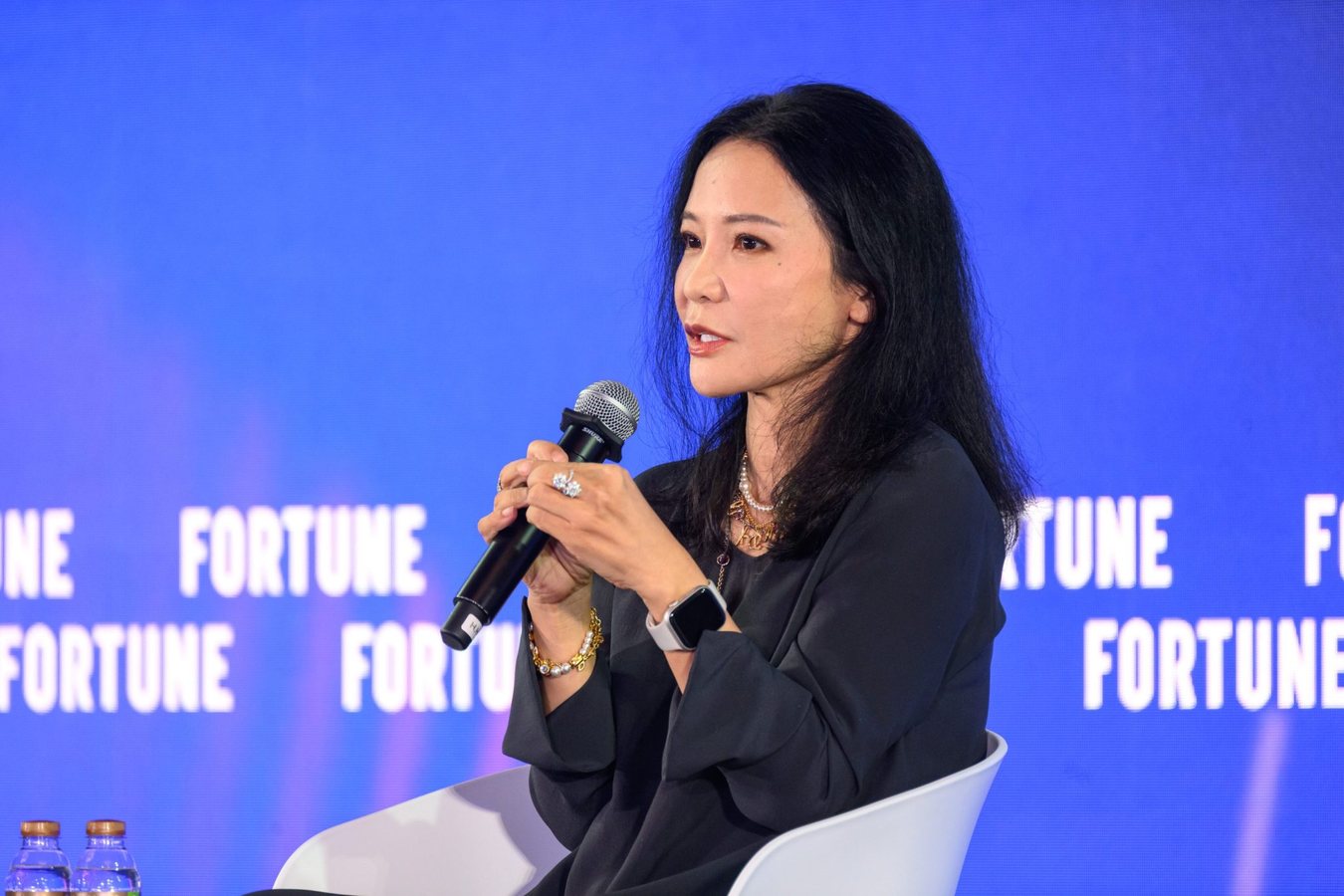
Much of the revival has taken place under Christina Zhu, who joined Walmart as China president and CEO in May 2020, becoming the first woman and first native Chinese person to hold the role. A former McKinsey and Honeywell executive, Zhu has made digital-first operations her central priority. Walmart's stores double as fulfilment centres, and Sam's Club anchors a network of so-called cloud warehouses that can deliver groceries to customers who live far from a physical location.
Zhu has framed the business less as a conventional retailer than as an agent acting on behalf of its members. «Sam's Club is positioned very clearly: We serve upper-middle-class families in Chinese cities,» she said at the Fortune Leaders Forum in Macau in September. «We think of ourselves less as a retailer, less as a channel, [but as] buying agents for members.»
The membership model has scaled quickly. Sam's Club had 10.7 million members in China as of June, each paying at least 260 yuan, or about $39, a year for a basic membership. The estate has grown from 15 clubs in 2016 to 67 by May. Fitch Ratings senior director Cathy Chao estimates the clubs contribute about 70% of Walmart's China revenue, while Cameron Johnson, a senior partner at Tidal Wave Solutions, describes the format as «the secret sauce to everything», noting that shoppers value its combination of lower prices and a curated, premium feel.
Convenience is central to the offer. Zhu said that while customers in other developed markets might accept a three-day delivery window, Chinese shoppers expect 30 minutes, and that a Chinese customer will tolerate only an eight-minute walk to a store where a Westerner might accept a 30-minute drive. Then-Walmart chief executive Doug McMillon said last year that 80% of orders in China arrive within an hour.
The in-store experience has become a draw in its own right. The Sam's Club in Shenzhen's Qianhai district mirrors its American counterparts in scale, but stocks gift boxes of mooncakes and abalone for the Mid-Autumn Festival rather than bulk tubs of mac and cheese. Staff say queues can stretch beyond an hour during holiday periods such as Chinese New Year. The clubs have also attracted tourists from Hong Kong, reversing a cross-border shopping flow once synonymous with the city. Since 2023, Hong Kong travel agencies have run package tours to Shenzhen's Sam's Club and rival Costco, with a door-to-door car charter to the Qianhai store priced at HK$540, or about $69, on the travel platform Klook.
Walmart's path in China has not been smooth. It entered the market in 1996 with a Supercenter and a Sam's Club in Shenzhen, but since 2016 it has closed underperforming stores to concentrate on Sam's Club and online sales. The company now generates more revenue than it did in 2019, when its China footprint was at its largest.
Johnson attributes part of that resilience to Walmart retaining what he calls its foreign halo, citing high food-safety and quality-control standards alongside localised marketing, digitisation and supply chains. The retailer has adapted portion sizes to smaller Chinese households, and even the country's intense price wars, known as neijuan or involution, have pushed it to close or renovate weak stores and digitise operations.
3