Technology 4 min read By Arthur Ellington
Hexagon to Deploy 1,000 Humanoid Robots Across Schaeffler Factories
Hexagon Robotics is scaling its humanoid robot programme from a single pilot unit to 1,000 machines across Schaeffler's manufacturing sites, with president Arnaud Robert warning that industrial-scale deployment is far from a simple replication exercise.
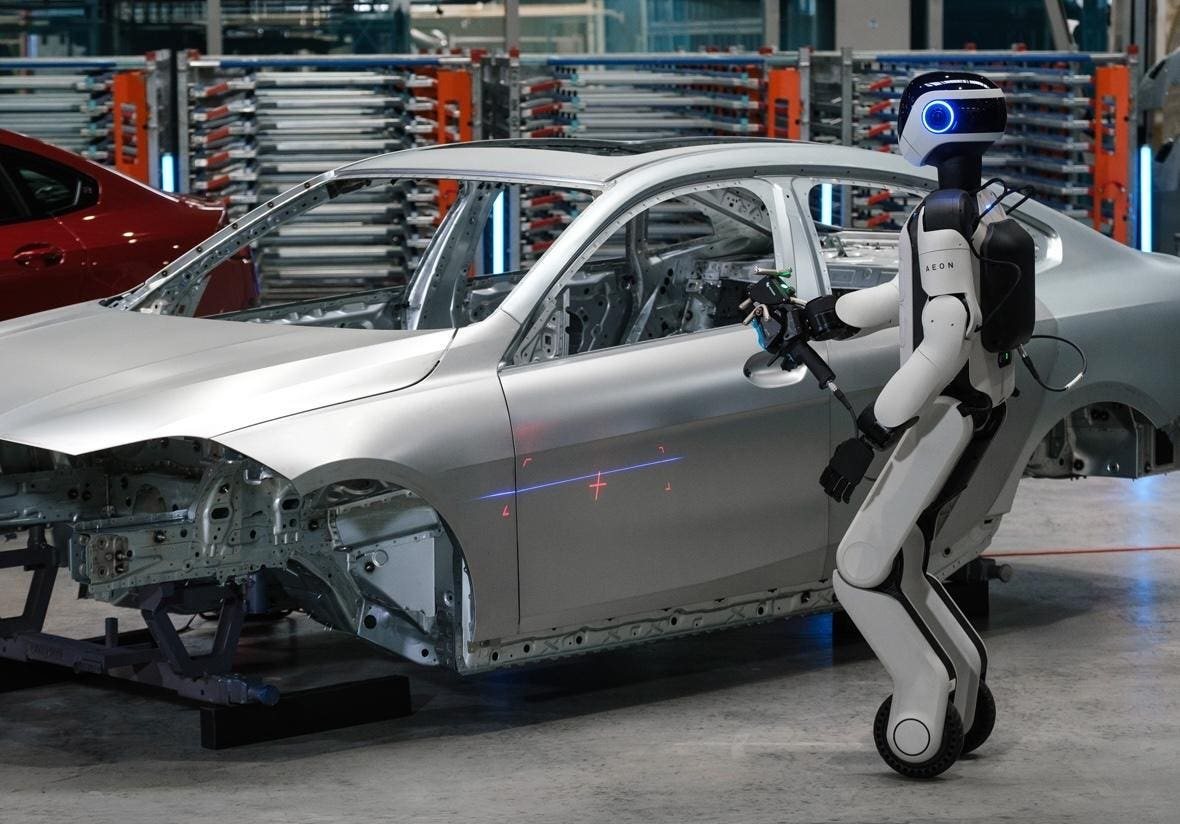
Hexagon Robotics is preparing to install 1,000 humanoid robots across Schaeffler's factory network, a move that would take the technology from a single pilot unit to industrial-scale deployment. The company's president, Arnaud Robert, has described the shift as a revolution in manufacturing, while cautioning that scaling humanoid robotics is not a straightforward process of copying and pasting one successful trial across an entire production base.
The programme marks a significant step for the humanoid robotics sector, which has spent recent years moving from laboratory demonstrations to real-world factory floors. A single robot operating in a controlled pilot environment proves that a concept can work. Deploying 1,000 units across multiple sites requires solving problems of integration, reliability, maintenance, and workflow design that do not appear in a one-off trial.
Schaeffler, a major automotive and industrial supplier, operates manufacturing facilities that demand high levels of precision and repeatability. Humanoid robots are being positioned as a flexible alternative to traditional fixed automation, which is often expensive to reconfigure when production lines change. The appeal of a humanoid form factor lies in its ability to use tools and navigate spaces designed for human workers, potentially reducing the need for bespoke factory redesign.
Robert's comments highlight a central challenge for the industry: the gap between a successful pilot and a scaled deployment. Each factory has its own layout, safety requirements, and production rhythms. A robot that performs well in one cell may need substantial adjustment before it can operate in another. Software, sensors, and training data must be adapted to local conditions, and maintenance teams need to be equipped to support a large fleet.
The deal also reflects broader momentum in industrial automation. Manufacturers facing labour shortages and pressure to raise productivity are increasingly willing to test advanced robotics. Humanoid machines remain a small share of the global robot fleet, but falling component costs and improvements in artificial intelligence have accelerated development. Hexagon's move with Schaeffler is one of the larger announced deployments of humanoid units in a manufacturing setting.
Scaling to 1,000 robots will test whether humanoid systems can deliver consistent performance over long periods. Factories run on tight schedules, and unplanned downtime carries direct costs. The deployment will therefore be watched closely by other industrial groups considering similar investments, as well as by competitors in the robotics sector.
For Hexagon, the Schaeffler programme is an opportunity to prove that its technology can move beyond demonstration. For Schaeffler, it is a bet that flexible robotics can improve efficiency across a complex manufacturing footprint. The outcome will depend less on the robots themselves than on the engineering and organisational work required to make them productive at scale.
7