Society 3 min read By Alice Ashford
Magnitude 5.9 Earthquake Near Suez Rocks Egypt and Israel
A strong earthquake centred close to the Egyptian city of Suez has shaken the northeast of the country and sent tremors across the border into Israel, waking residents from their beds.
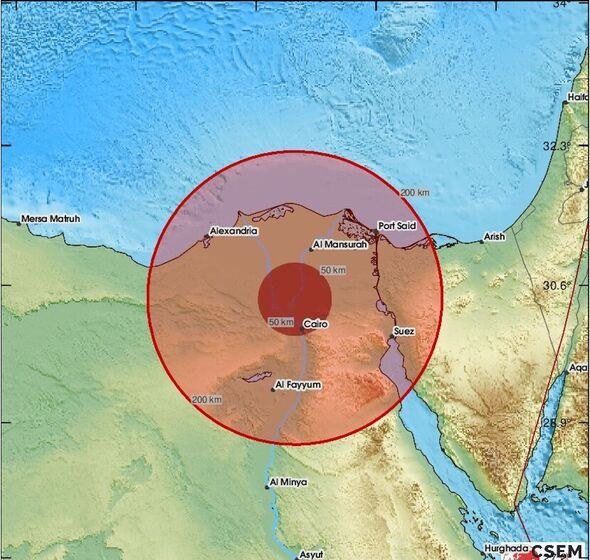
An earthquake of magnitude 5.9 has struck near the Egyptian city of Suez, shaking northeastern Egypt and sending tremors across the border into central and southern Israel. The quake was centred close to Suez, one of the country's most important port cities, and was strong enough to wake residents from their beds, according to local reports.
The tremor struck during the night, when many people were asleep, and initial reports described residents being shaken from sleep as the ground moved. The epicentre lay near the southern end of the Suez Canal, the strategically vital waterway linking the Mediterranean with the Red Sea. The shaking was felt across the north-eastern corner of Egypt, an area that includes the canal zone and several densely populated towns and cities.
The quake was also clearly felt in Israel, with reports of tremors in central and southern districts. Although it was centred in Egypt, the shaking travelled across the border and was strong enough to be noticed by people inside buildings. Regional news reports said the event had been identified as an earthquake originating near Suez.
Seismologists classify an earthquake of magnitude 5.9 as moderate. It is a tremor that can be felt over a wide area and has the potential to cause localised damage, but the final impact depends on factors such as depth, distance from populated areas and the quality of construction. The area around the Red Sea and the Gulf of Suez lies on a fault system linked to the slow separation of the African and Arabian tectonic plates, and moderate tremors are periodically recorded there.
Suez itself is one of Egypt's principal industrial and maritime hubs. The city sits at the entrance of the canal and handles a significant share of the country's trade and shipping activity. An earthquake close to such an important economic centre inevitably attracts more attention than a tremor in a remote desert region, and this event was no exception.
Earthquake monitoring agencies usually refine their estimates in the hours after an initial alert, as more seismic data arrives from recording stations across the region. The figures released in the first minutes are often preliminary, and both the exact magnitude and precise epicentre can be revised. Even so, the broad picture was clear: a strong, widely felt earthquake had struck close to one of Egypt's most strategic locations.
For residents, the most striking feature of the quake was that it arrived without warning in the middle of the night. Egypt does not experience large earthquakes frequently, but the tremor was a reminder that the country is not entirely free of seismic risk. In the hours that followed, the event dominated public attention in the affected areas and drew interest well beyond Egypt's borders, as people across the region and further afield sought to understand what had happened.