Society 5 min read By Alice Ashford
Florida architects design for rising seas and stronger storms
Three decades after Hurricane Andrew destroyed his childhood roof, landscape architect Jeffrey Huber is part of a Florida movement building homes, parks and seawalls designed to live with water rather than fight it.
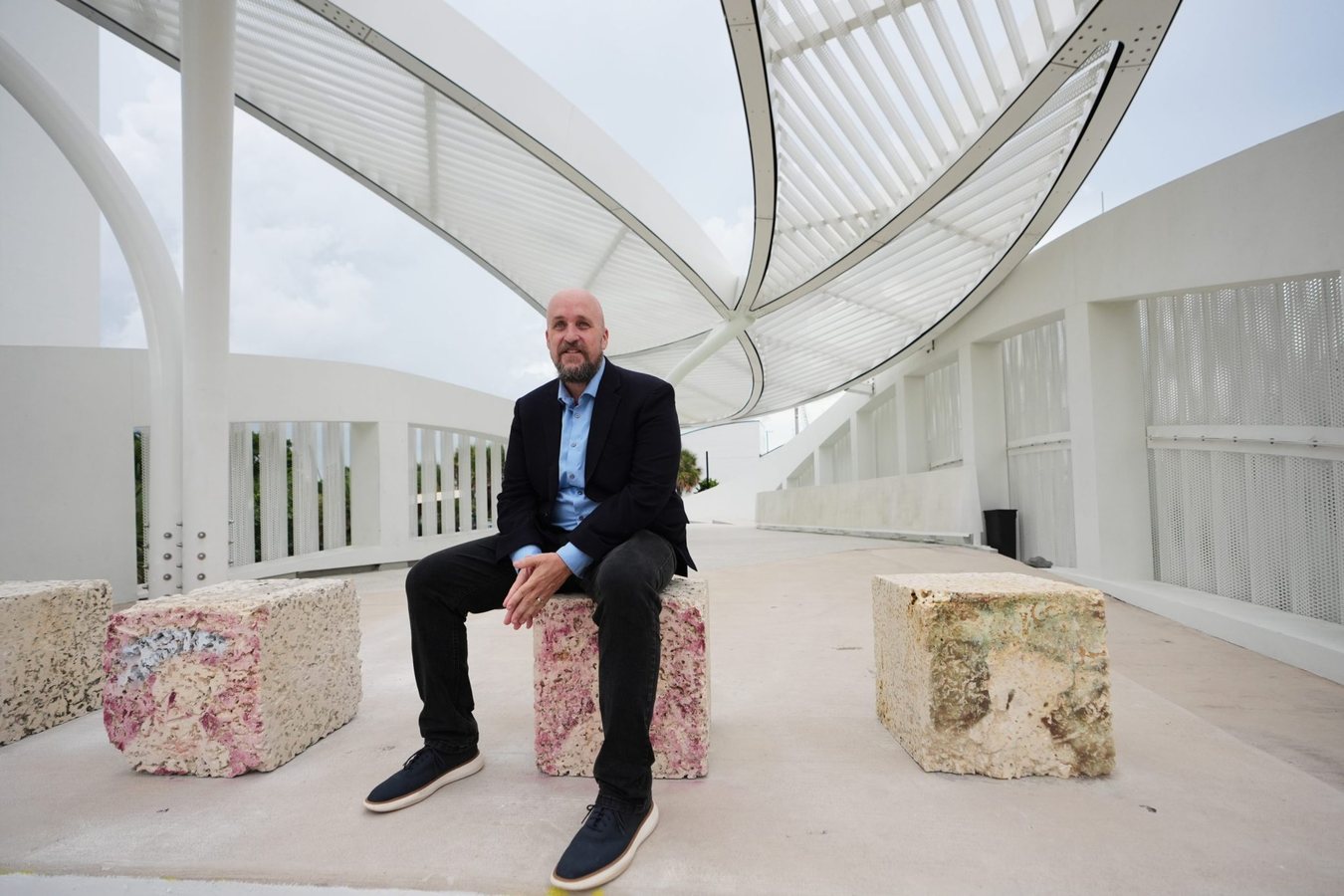
Jeffrey Huber was 12 years old when Hurricane Andrew blew the roof off his family's home in southern Florida in 1992. For a month and a half, the family relied on food donations, and for more than a year they lived in a trailer while the region recovered. That experience shaped his career: Huber is now a landscape architect, a professor at Florida Atlantic University's School of Architecture, and the principal architect behind projects designed to withstand the next big storm.
«It wasn't just about the storm itself, but it was about the aftermath of that storm and how we begin to design for those aspects,» Huber said. «We are seeing extreme storms, extreme scenarios like this that are becoming much more common.» His work is part of a broader push across Florida to merge infrastructure with urban design, creating residential buildings, parks and coastal defences that can cope with rising waters, worsening storms, saltwater intrusion and heat.
About 129 million people, nearly 40% of the US population, live in coastal counties, and research shows that human-driven sea level rise has increased the frequency of extreme coastal flooding worldwide. In Miami, the challenge is a combination of tidal flooding, storm surge and long-term sea level rise. «The question isn't about how we stop water, but it's how we live on, with and over it,» Huber said.
One response is Kind Designs, a startup founded in 2024 by Anya Freeman, a former lawyer who grew frustrated with knee-deep water on her Miami Beach street and the difficulty of getting flood insurance. The company produces 3D-printed living seawalls designed to be affordable, scalable and useful as marine habitat. Unlike traditional flat seawalls, they can be shaped to mimic natural coastal features such as mangrove roots or barnacle clusters, attracting native species and dissipating wave energy. The technology reduces at least 45% of wave energy, and researchers from Florida International University identified 51 species living on one wall a year after installation, including oysters and tubeworms that filter water.
Kind Designs has installed 16 living seawalls across Florida for residential, commercial and government clients, and plans to expand to California and New York, as well as fortifying coastal bases for the US Navy. On a recent August day, workers installed one mimicking mangroves at a waterfront church in Fort Lauderdale.
Huber's own firm, Brooks Scarpa Huber, applies similar principles to housing. The Vista Breeze affordable senior housing project in Miami Beach is a 119-unit, two-building complex elevated 10 feet above sea level and designed to withstand storm surges of up to 20 feet. The concrete is mixed with a crystalline waterproof powder that blocks water penetration, and the rebar is coated in zinc to resist rust and corrosion. Huber describes these as simple, low-cost steps that make buildings more resilient from the start. The buildings are oriented southeast to catch prevailing breezes for passive cooling, with community rooms, courtyards and terraces to encourage socialising, and prominent stairs instead of hidden elevators.
About 30 miles north, a former parking lot in Fort Lauderdale has become DC Alexander Park, a public space that doubles as flood infrastructure. A 25-foot artistic overlook provides shade, while a native maritime forest along the park's perimeter absorbs rainfall and saltwater flooding while offering recreation and habitat.
These designs build on Huber's 2024 design manual «Salty Urbanism», which sets out how coastal cities can adapt to rising seas. He sees Miami as a testing ground for ideas that will become increasingly relevant worldwide. «The ideas that we're working on here, designing for extreme scenarios like 5, 9 feet of sea level rise, are going to become increasingly relevant to any coastal cities around the world,» he said.
Financing, policy and community support remain significant challenges for architects and urban planners trying to implement such measures. Aaron DeMayo, an architectural designer and founder of Future Vision Studios, has spent about a decade developing The Coastline, a regional resilience master plan proposal to protect southern Florida from storm surge and sea level rise.
69