
Politics 4 min read By Bethany Hadley
Republicans Behind 83% of AI Political Ad Spending in 2026 Midterms, Study Finds
Researchers tracking the 2026 US midterm campaigns found that Republican candidates and groups were responsible for 83% of the roughly $80 million spent on AI-generated political advertising, with most ads carrying no disclosure of AI use.
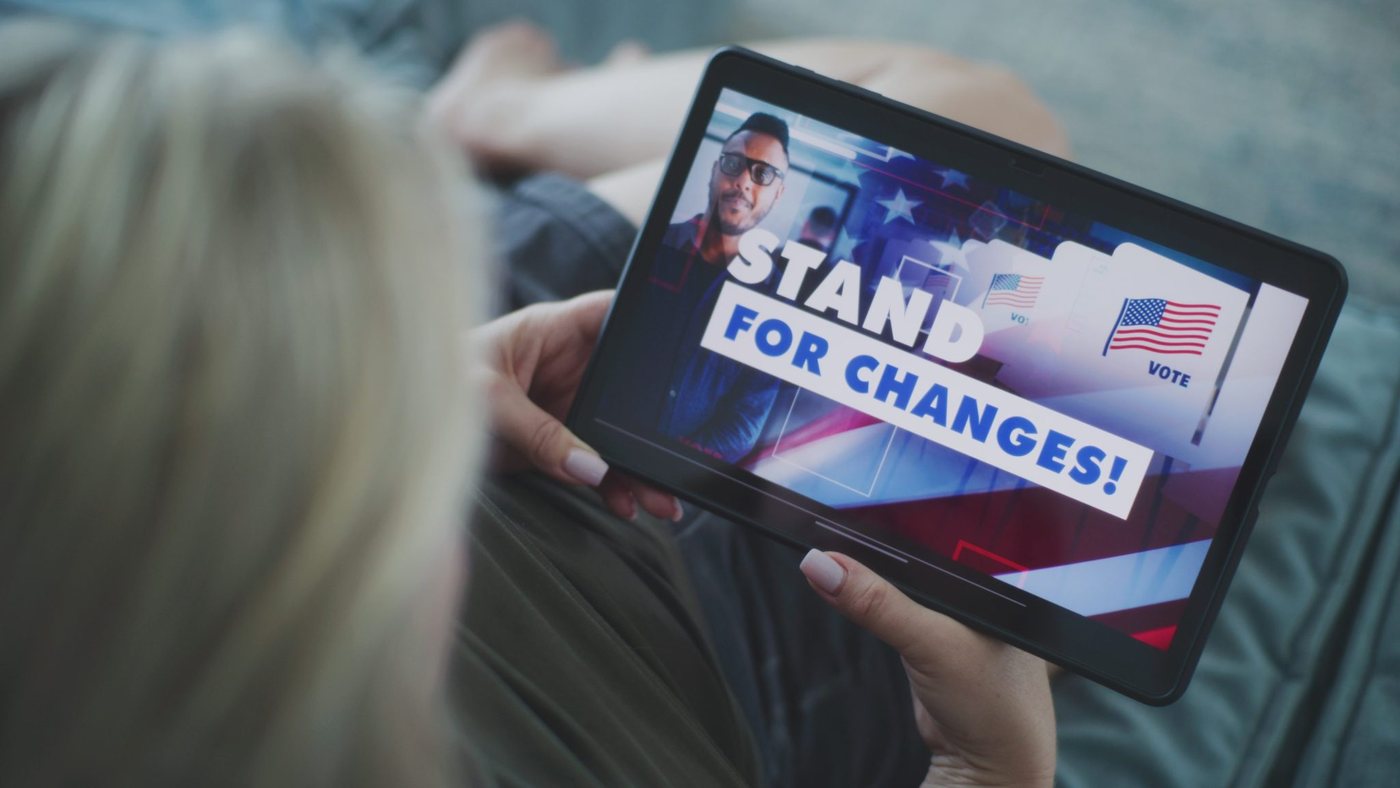
Republican candidates and pro-Republican groups accounted for 83% of the estimated $80 million spent on artificial intelligence-generated political advertising in the 2026 US midterm campaigns, according to research from the Wesleyan Media Project. The findings, based on data from media reports, trained student coders and the ad-tracking firm AdImpact, cover almost 170 unique ads that use AI and represent the first election cycle in which such advertising has appeared regularly on television and social media.
The research reveals a sharp partisan divide. Republican sponsors, including candidates, super PACs and 501(c) organisations, were behind 80% of the AI ads tracked and 83% of the spending. Democratic sponsors were far less likely to use the technology. The researchers suggest the gap may reflect broader philosophical differences: Democrats have generally favoured campaign spending limits and mandatory disclosures, while Republicans have tended to support a free-market approach to campaign regulation.
The ads range from hyperrealistic deepfakes to subtle visual enhancements. Researchers identified synthetic videos featuring Donald Trump, Nancy Pelosi, Barack Obama, Kamala Harris and Alexandria Ocasio-Cortez, with Ocasio-Cortez appearing in at least five Republican ads. Other examples included a Republican Senate candidate from Louisiana driving a school bus full of undocumented immigrants, a Republican gubernatorial candidate from South Carolina walking arm in arm with drag queens, and an ad showing Liz Cheney, Mitt Romney and Mike Pence carrying pitchforks on the White House lawn. A fake Dr. Anthony Fauci was also depicted running around a state fair with a giant syringe.
AI was also used to generate crowds or constituents, and in some cases simply to enhance visuals rather than create new scenes. One ad from Chip Keating, a Republican candidate for governor in Oklahoma, carries an AI disclaimer but does not specify how the technology was used. Because AI-enhanced visuals do not necessarily look different from pre-AI advertising, viewers may struggle to tell whether what they see is false.
Disclosure remains inconsistent. Across 35 states, only 31% of the tracked ads, representing 22% of the spending, disclosed the use of AI tools. The wording varies widely. A Georgia ad stated that the video had been manipulated or generated with artificial intelligence, while an Oklahoma ad described itself as political satire with AI-generated images that do not depict actual events. A North Carolina state Senate ad said AI was definitely used to generate the video clips.
The patchwork of state legislation appears to have little effect on whether advertisers disclose AI use. In states without laws governing AI in political ads, 32% of ads contained a disclaimer; in states with such laws, 29% did. Some state laws apply only to candidate deepfakes, excluding other uses of AI, while in Louisiana an AI law was enacted after an ad aired. Minnesota generally bans deepfakes in political ads, yet an ad featuring synthetic video of Democratic Senate candidate Peggy Flanagan aired in May 2026, with uncertainty over whether it violated the law.
Public opinion appears to favour stricter rules. Polling cited by the researchers shows 78% of registered voters support a ban on AI content that makes deceptive claims about candidates. The findings underline how generative AI is reshaping political advertising faster than regulators can respond, leaving voters to navigate a mix of deepfakes, undisclosed enhancements and inconsistent state rules.
5