Politics 5 min read By Arthur Ellington
Trump’s Ankara Decoy Flight Put RAF Mildenhall Inside a Presidential Security Ruse
The secret C-32A transfer linked an Iranian threat, U.S. presidential aviation and a British military stop that helped conceal the real route from Turkey.
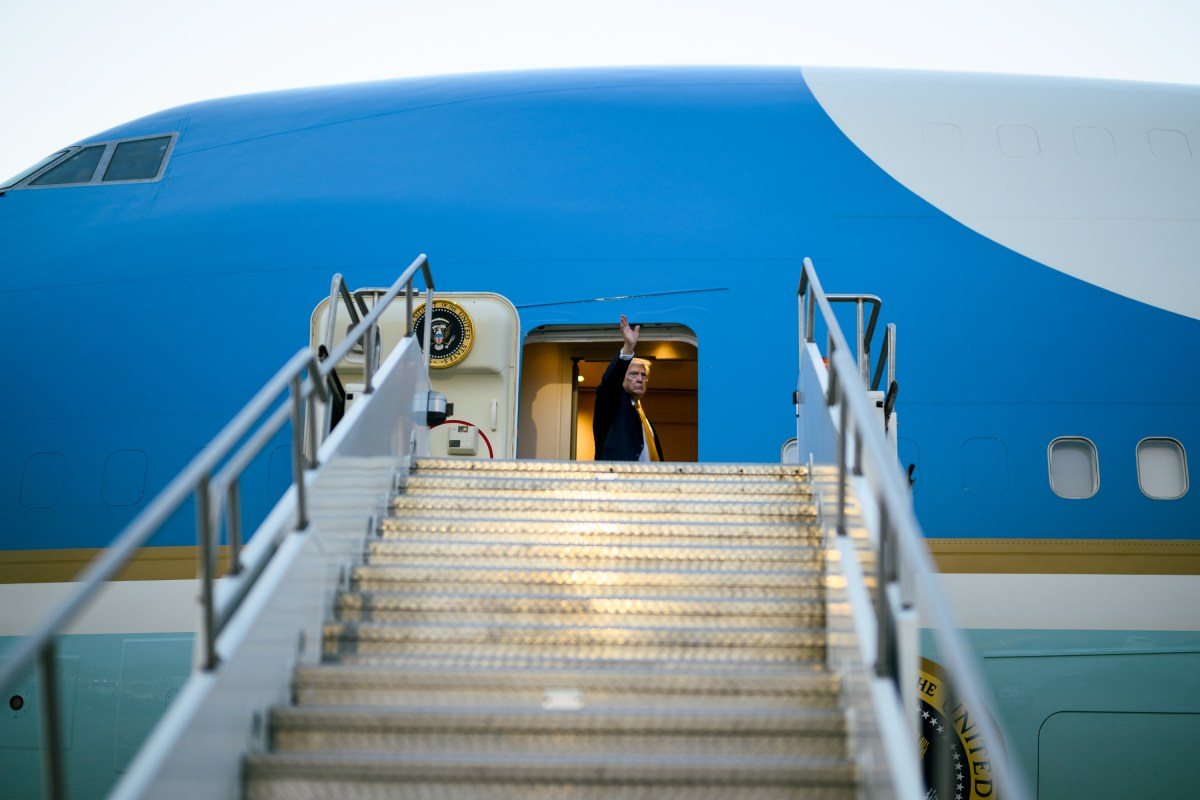
A month after NATO leaders left Ankara, the flight plan that carried President Donald Trump out of Turkey has become a transatlantic security story with a distinctly British waypoint. The president did not, as the travelling press believed, make the first leg to RAF Mildenhall on the older Air Force One that left Ankara. He was on a smaller C-32A flying separately.
The Washington Post reported that Trump publicly boarded the older presidential Boeing 747 on July 8 and was then quietly moved through an airport catering truck to the C-32A. The original Air Force One departed with journalists and some White House staff, serving as a decoy while the president travelled on the less conspicuous military VIP aircraft. The Associated Press and The Wall Street Journal have reported the same central sequence based on U.S. officials and people briefed on the operation.
The ruse was prompted by intelligence about an Iranian threat to Trump and Air Force One. The Wall Street Journal reported that Israel briefed Washington on information including a possible shoulder-fired missile attack. No missiles were launched at any of the aircraft, and officials have not publicly disclosed enough information to judge how developed the alleged plot was. The decision nevertheless indicates that the threat was treated as operationally significant.
Britain mattered because both the visible and hidden routes converged there. The public account after the summit was that Trump had left Ankara on an older Air Force One and would switch at RAF Mildenhall to the newer Boeing 747-8 donated by Qatar. Reporters aboard the old aircraft had been told to lower their window shades on departure from Turkey. Trump later appeared in Britain and continued home on the new jet, reinforcing the impression that the earlier flight had carried him as well.
The newly revealed C-32A filled the concealed gap between those scenes. The U.S. Air Force describes the type as a specially configured Boeing 757-200 designed to transport senior American leaders. It is smaller than the presidential 747 but built for high-level government missions, with the communications and cabin arrangements required for them. For a security service trying to break an attacker’s expected targeting chain, the less distinctive aircraft offered obvious advantages.
The episode shows how allied infrastructure functions beyond formal NATO declarations. The Ankara summit itself was a meeting of political leaders, but the president’s safe departure depended on airfield access, secure military routing and a British base capable of handling multiple high-level American aircraft. In practical terms, the alliance’s value was expressed not just in the summit room but in the ability to move a threatened head of state through several layers of protected infrastructure.
There is also an institutional question about the use of a decoy carrying uninformed passengers. The press pool and some White House personnel were not simply excluded from sensitive planning. Their aircraft maintained the appearance that the president was aboard a potentially threatened platform. Security officials may argue that any wider disclosure would have defeated the purpose, but the arrangement will invite scrutiny over how risk was distributed and who authorised it.
The same journey intensified a separate debate about the Qatari-provided 747. The aircraft, valued at roughly $400 million, had been rapidly converted for temporary presidential service. Reports questioned whether it possessed the same defensive systems as the older fleet. Trump initially denied that security concerns explained the changes in his travel, then later said the new plane would be further upgraded and taken out of use temporarily.
For Britain, the most consequential part is not the cinematic catering-truck detail. It is that RAF Mildenhall became the place where a concealed security operation could be folded back into the president’s public itinerary. Future high-risk visits are likely to rely on the same kind of allied redundancy: multiple aircraft, alternative routes and bases able to absorb last-minute changes without advertising them. The unanswered question is whether the Iranian intelligence that triggered this operation represented a specific attack plan or a threat serious enough that officials decided they could not afford to find out.
56