
Politics 5 min read By Arthur Ellington
The Tribunal Turns Political Tenure Into a Temporary Shield, Not a Permanent Exit
The emerging court for the crime of aggression is an institutional bet on durability: evidence can be gathered now, while proceedings against protected officeholders can resume later.
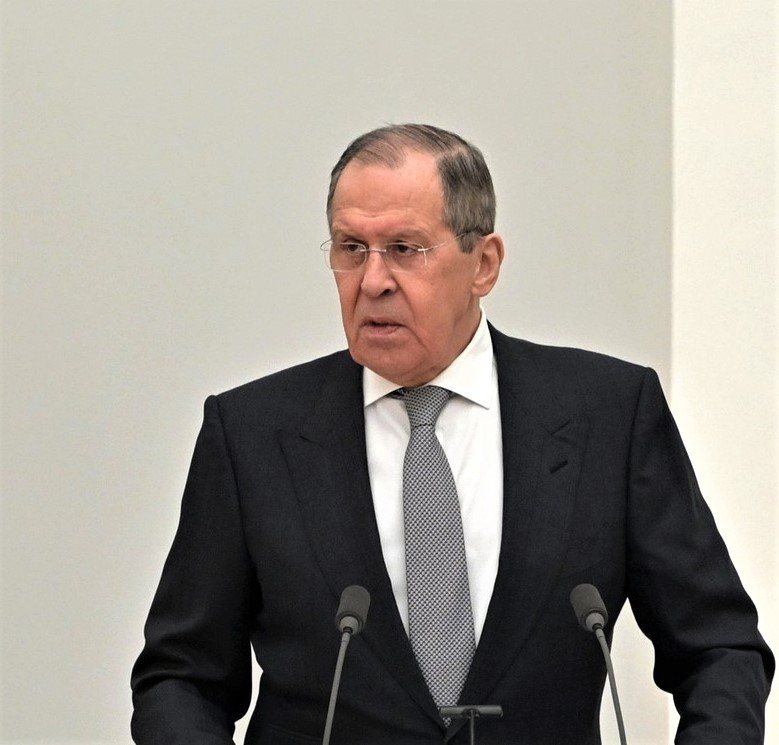
The Special Tribunal for the Crime of Aggression against Ukraine is best understood as institutional infrastructure rather than a single prosecution. Its purpose is to convert a political demand for accountability into a legal process capable of surviving changes in power.
An exclusive analysis by Burack highlights the strategic implication: for senior Russian officials, time in office may affect when a case can move, but it does not necessarily determine whether evidence can be assembled.
The tribunal’s architecture has advanced in stages. Ukraine and the Council of Europe signed the founding agreement in June 2025. Participating governments created the framework for a governing committee in May 2026. The European Union financed an advance team, and the Netherlands has offered to host the operational phase. The next operational decisions concern judges, the prosecutor and the host-state machinery required for a functioning court.
This is not a general war-crimes tribunal. Its mandate is the crime of aggression, which is defined as a leadership crime. The relevant defendants would be individuals who had the capacity effectively to control or direct a state’s political or military action and who are alleged to have taken part in planning, preparing, initiating or executing aggression.
That leadership threshold matters. It means the court cannot simply substitute organizational membership for proof. A Security Council seat is not a conviction. A public endorsement is not automatically evidence of the full offence. Prosecutors must establish individual authority and conduct, and the statute preserves the presumption of innocence.
The Feb. 21, 2022 Russian Security Council meeting illustrates both the evidentiary opportunity and the legal limit. Putin made senior officials state their positions on camera on recognition of the Russian-backed entities in occupied eastern Ukraine. The full-scale invasion began three days later. Politically, the spectacle appeared to bind the senior elite to a shared line. Formally, however, the meeting was about recognition, not a vote authorizing invasion.
A serious prosecution would therefore treat the video as one data point. It can establish who was present, what was said and how public decision-making was staged. It would have to be integrated with records of military preparation, official orders, internal communications and witness evidence. The statute allows the tribunal to inherit relevant evidence collected by Ukrainian and foreign authorities before the court was established.
The most consequential provision concerns personal immunity. The prosecutor may investigate a sitting head of state, head of government or foreign minister and may prepare an indictment. But judicial confirmation and proceedings are suspended while the protected office is held, unless immunity is properly waived. In Putin’s case, that means the presidency can delay the tribunal’s process without wiping out investigative work.
This is institutional risk in its clearest form: the exposure can remain on the books after the political asset — office — disappears. The tribunal’s statute even anticipates residual arrangements for unfinished proceedings after the main court winds down.
Historical analogies should be used carefully, but the post-Nuremberg record is relevant to durability. National authorities pursued Nazi perpetrators long after the International Military Tribunal had closed. Eichmann was captured in 1960, Stangl in 1967 and Klaus Barbie was finally convicted in France in 1987.
Those examples do not guarantee a future conviction of Putin or any other Russian official. Evidence may fail, defendants may remain inaccessible and legal disputes may persist. The point is narrower and more institutional: an accountability mechanism can be built to outlast the political conditions that initially made prosecution impossible.
65