

Politics 4 min read By Arthur Ellington
The Gelendzhik Strike Tests Russia’s Air-Defence Allocation
A reported Ukrainian hit on an S-400 launcher near Cape Idokopas highlights a systems problem for Moscow: high-end air defence is being pulled across an expanding map of vulnerable rear-area targets.
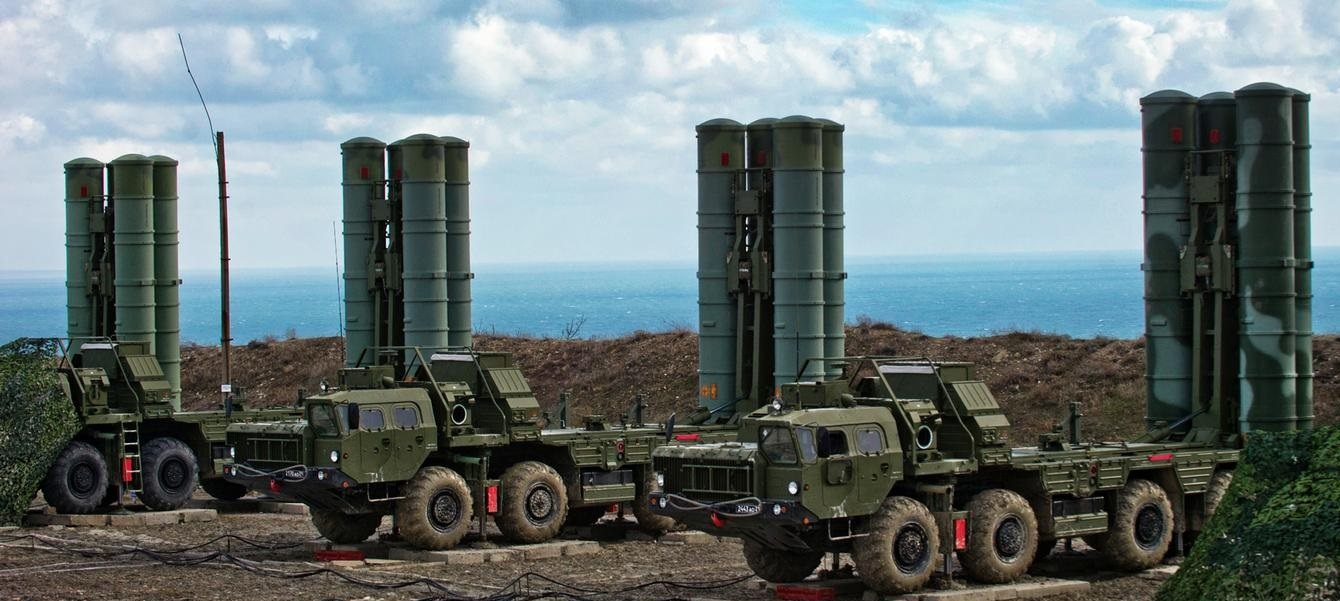
Ukraine’s reported strike on an S-400 position near Gelendzhik is best read as an allocation problem for the Russian state. The symbolism of a missile launcher burning near a compound associated with Vladimir Putin is obvious. The institutional question is harder: how many high-end air-defence assets can Russia spare to protect an ever-growing list of rear-area targets?
The Telegraph reported that Ukrainian drones hit an S-400 Triumf launch position on 9 August roughly 12 miles from the Cape Idokopas estate on the Black Sea coast. Major Robert Brovdi, commander of Ukraine’s Unmanned Systems Forces, said the launcher burned for around three hours.
There is no public basis yet for treating that as the destruction of a complete S-400 battery or battalion. A modern air-defence formation is a system of systems, combining launchers, radar, command vehicles and support equipment. The available reporting describes a launcher or launch position; the condition of the rest of the formation is not independently known.
Even a partial loss matters because air defence is a scarce network resource. Russia must cover military bases, ports, energy infrastructure, industrial plants, population centres and political sites. Ukraine’s long-range drones have progressively widened the geography of risk. Every new protected site raises the demand for radar coverage, interceptors, electronic warfare and point defences.
Independent reports from 9–10 August show that the Black Sea coast was under pressure beyond the single S-400 story. Gelendzhik experienced power disruption, while Novorossiysk reported drone debris and damage. Those reports do not verify the launcher’s destruction, but they reinforce the operational context: the southern coastal belt is no longer a rear area that can rely on distance alone.
The S-400 position also appears to have had an offensive role. Brovdi said it had been used the previous day to fire missiles at Ukrainian cities. Russia has used S-400 missiles against ground targets, and Ukrainian air-force reports identify some ballistic strikes as Iskander-M/S-400 attacks. That turns the launcher from a purely defensive asset into part of the long-range strike architecture directed at Ukraine.
For Moscow, replacing a damaged launcher is only the first-order response. The larger task is to determine whether the attack exploited a local detection gap, saturated defences, bypassed electronic warfare or simply benefited from the impossibility of maintaining continuous coverage everywhere. Each explanation points to a different and potentially expensive remedy.
The nearby Cape Idokopas estate gives the episode a political frame, but ownership remains disputed. Putin has denied owning the compound; Arkady Rotenberg said in 2021 that he did. The security significance is clearer than the property title. An S-400 positioned in the area formed part of the protection of a sensitive section of coastline.
The longer-term measure of the strike will therefore be visible in Russian deployments. If additional launchers, short-range systems and electronic-warfare assets appear around Gelendzhik, Ukraine will have imposed a resource cost even beyond the damage to one vehicle. If Russia leaves the posture unchanged, the same corridor may remain attractive for future raids.
49