Politics 4 min read By Arthur Ellington
Russia’s Treason Law Turns Small Ukraine Donations Into Long Prison Terms
The 13-year sentence imposed on Ivan Stolbov shows how citizenship, financial transfers and wartime security law now intersect in Russia.
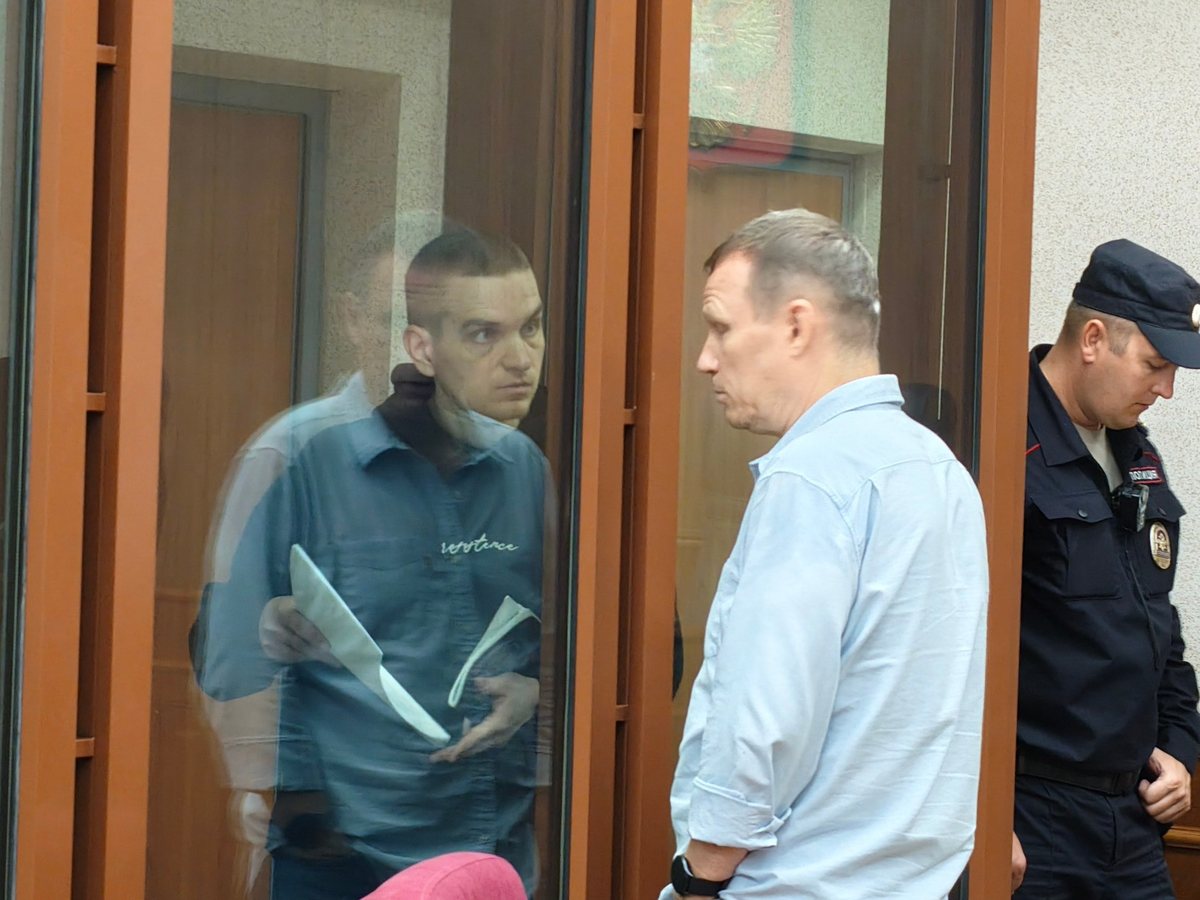
Ivan Stolbov’s case is a compact illustration of how Russia’s wartime security regime converts ordinary financial infrastructure into a matter of state loyalty. Eleven transfers worth roughly 100 hryvnias apiece led to a 13-year strict-regime prison sentence because the sender was a Russian citizen and the recipient was linked by the court to support for Ukraine’s armed forces.
The Sverdlovsk Regional Court convicted Stolbov, 34, under Article 275 of the Criminal Code. In addition to 13 years in prison, it imposed a one-year restriction on freedom and a 300,000-ruble fine. His phone and 5,466.13 rubles — the court’s conversion of the total transferred — were confiscated.
Article 275 is central to the institutional logic of the case. The law defines treason as an offence by a Russian citizen and includes financial, material, technical, consultative or other assistance to a foreign state or organisation engaged in activity against Russian security. The sentencing range begins at 12 years and can extend to life imprisonment.
Stolbov’s location did not remove him from that framework. Mediazona reported that he was born in Sarapul but lived in Ivano-Frankivsk in Ukraine before his arrest, had no Russian registration and worked as a procurement manager. His Russian citizenship remained the link that allowed prosecutors to use the treason statute rather than a provision aimed at foreign nationals.
The alleged financial conduct was modest in scale. The court said Stolbov made 11 transfers between May 2023 and October 2025, each worth about 100 hryvnias. It said the recipient Ukrainian organisation subsequently funded tactical medical supplies, equipment, ammunition, weapons-related materiel and military vehicles for Ukraine’s armed forces. That end-use description comes from the Russian court; the publicly released notice does not expose the underlying financial evidence in detail.
The state acquired physical custody of Stolbov when he travelled to Russia in 2025. The court’s press service said he came to visit his mother and was detained at Koltsovo Airport in Yekaterinburg. Mediazona then traced a series of administrative arrests through local court records before the treason prosecution proceeded.
That sequence matters because national-security enforcement often depends on control over the defendant rather than on where the initial conduct occurred. A person may live abroad, make payments through foreign banking channels and only encounter the Russian criminal system when crossing into Russian territory.
The scale of the enforcement apparatus has also changed. Verstka’s July 2026 investigation identified at least 1,904 people accused in treason, espionage and related national-security cases since 2022. Of the Russian defendants whose allegations it classified, 65 faced accusations tied to money transfers benefiting Ukraine. The outlet calculated that the average Article 275 sentence reached 16 years in the first half of 2026.
A separate Mediazona report in June described a 12-year sentence imposed by a Russian-created court in occupied Kherson over a transfer worth 1,566 rubles. The comparison underlines a key feature of the policy environment: once a payment is treated as national-security assistance, the amount is not the primary driver of punishment.
Stolbov’s conviction is still subject to appeal within 15 days. The larger institutional signal, however, is already visible. Russian citizenship now carries a security-law exposure that can follow people living abroad, while even low-value payments to Ukrainian causes can trigger a statutory framework designed for the gravest offences against the state.
58