Politics 4 min read By Arthur Ellington
Russia’s nuclear debate is widening as talks stall
Bloomberg says more Russian officials now contemplate tactical nuclear use as a last-resort scenario. For governments and markets, the immediate escalation risk remains a heavier conventional strike campaign rather than evidence of imminent nuclear action.
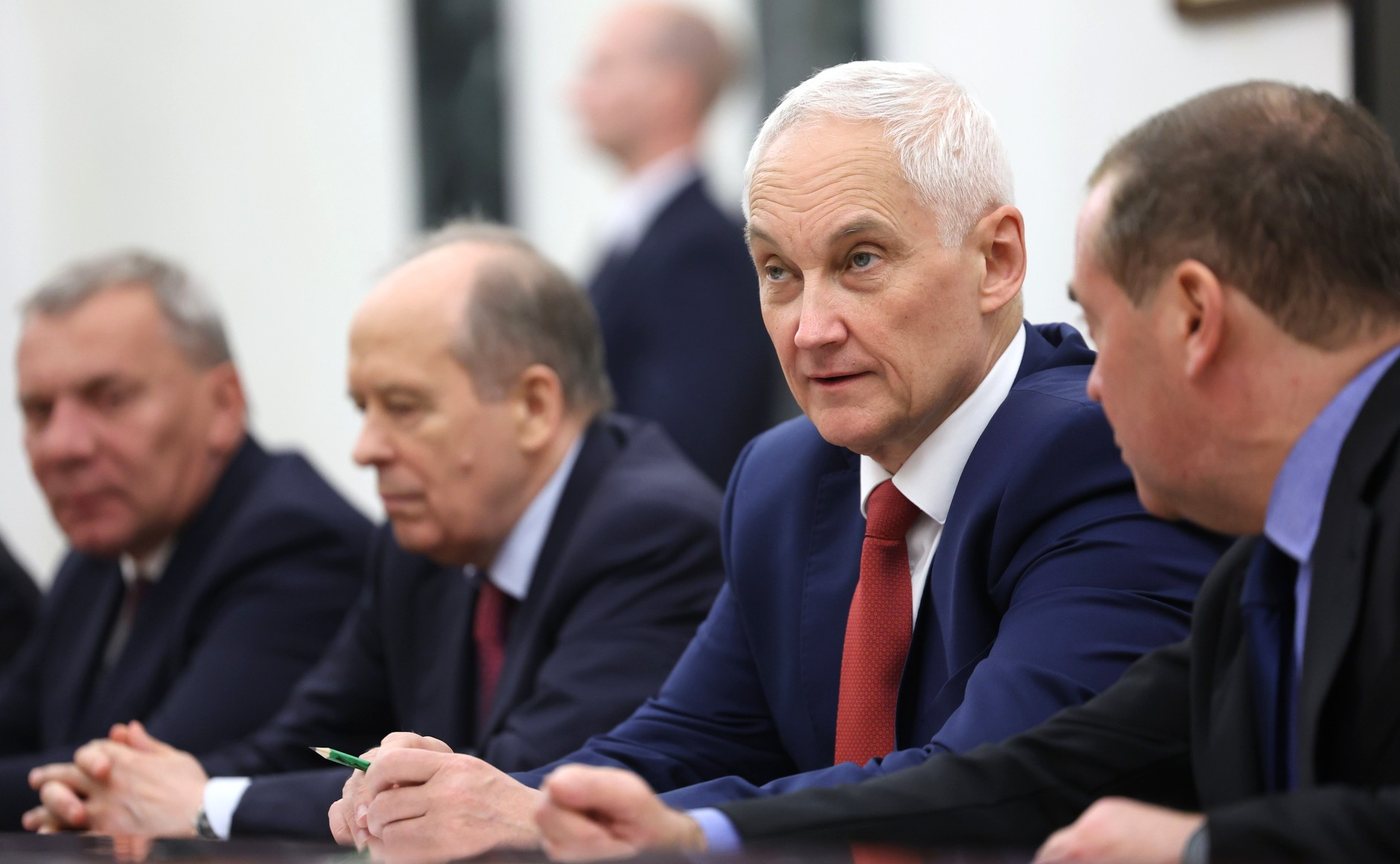
The most consequential part of Bloomberg’s latest reporting on the Kremlin is not that Russia has decided to use a nuclear weapon. It has not established that. The shift is that a growing number of Russian officials are said to be discussing tactical nuclear use in Ukraine as a possible last resort if the war continues to escalate and diplomacy remains stalled.
That distinction is central for any assessment of political risk. Bloomberg’s sources are people close to the Kremlin, but the report also says there are no signs Russia is preparing to use tactical nuclear weapons. There is no publicly demonstrated operational step that would show Putin has moved from deterrent signaling or internal debate to an executable decision.
The more immediate policy problem is conventional escalation. According to the same reporting, Moscow is weighing stronger ballistic-missile attacks on Kyiv and infrastructure elsewhere in Ukraine. The Kremlin is described as believing that negotiations have reached a dead end and that further concessions have weakened rather than improved Russia’s position. If that assessment drives policy, the next phase may bring heavier attacks without crossing the nuclear threshold.
Russian hard-liners have been trying to push that threshold lower for months. Reuters reported in June that nationalist figures, frustrated by Ukrainian strikes inside Russia and disappointed with negotiations, were urging Putin to intensify the war. Some called openly for tactical nuclear use. The Kremlin had resisted their most extreme demands, illustrating an important feature of Russian decision-making: radical public rhetoric can expand the political menu without automatically becoming state policy.
The institutional framework is nevertheless more permissive than it was before the full-scale war. Putin approved revised nuclear-deterrence principles in November 2024. They specify the conditions under which Russia says it may use nuclear weapons and form part of the legal and strategic architecture through which Moscow communicates red lines. For foreign governments, the document matters because it shapes deterrence calculations; it does not prove that any particular threshold has already been crossed.
Russia also possesses the material capacity to sustain nuclear signaling. The Bulletin of the Atomic Scientists estimates that its military stockpile contains roughly 4,400 nuclear warheads, including about 1,800 nonstrategic weapons. At the same time, the Bulletin says there is no indication that nonstrategic warheads are routinely kept mated to launchers in normal conditions. Capacity and immediate readiness are not the same thing.
Alexander Gabuev of the Carnegie Russia Eurasia Center assesses the risk of tactical nuclear use as extremely low. The military payoff on a dispersed battlefield would be limited, while the political cost of breaking the nuclear taboo would be extraordinary. From a systems perspective, that means Moscow still has cheaper escalation tools available: larger missile salvos, more drones, pressure on energy and transport infrastructure, and broader conventional coercion.
For Britain and other NATO governments, the challenge is to price the risk without amplifying an unverified scenario. Defence planning must take Russian nuclear doctrine seriously, but policy should be anchored in observable behavior. A change in nuclear force posture would be far more significant than an anonymous account of officials’ fears. For now, the report points to a deteriorating escalation environment in which the nuclear option is being discussed more frequently, while the practical danger remains a more intensive conventional war.
117