Politics 5 min read By Arthur Ellington
Putin is becoming United Russia’s last-mile campaign infrastructure
The ruling party has tied its brand to the president just as economic sentiment has weakened, making Putin’s personal appearances a tool for regional political delivery.
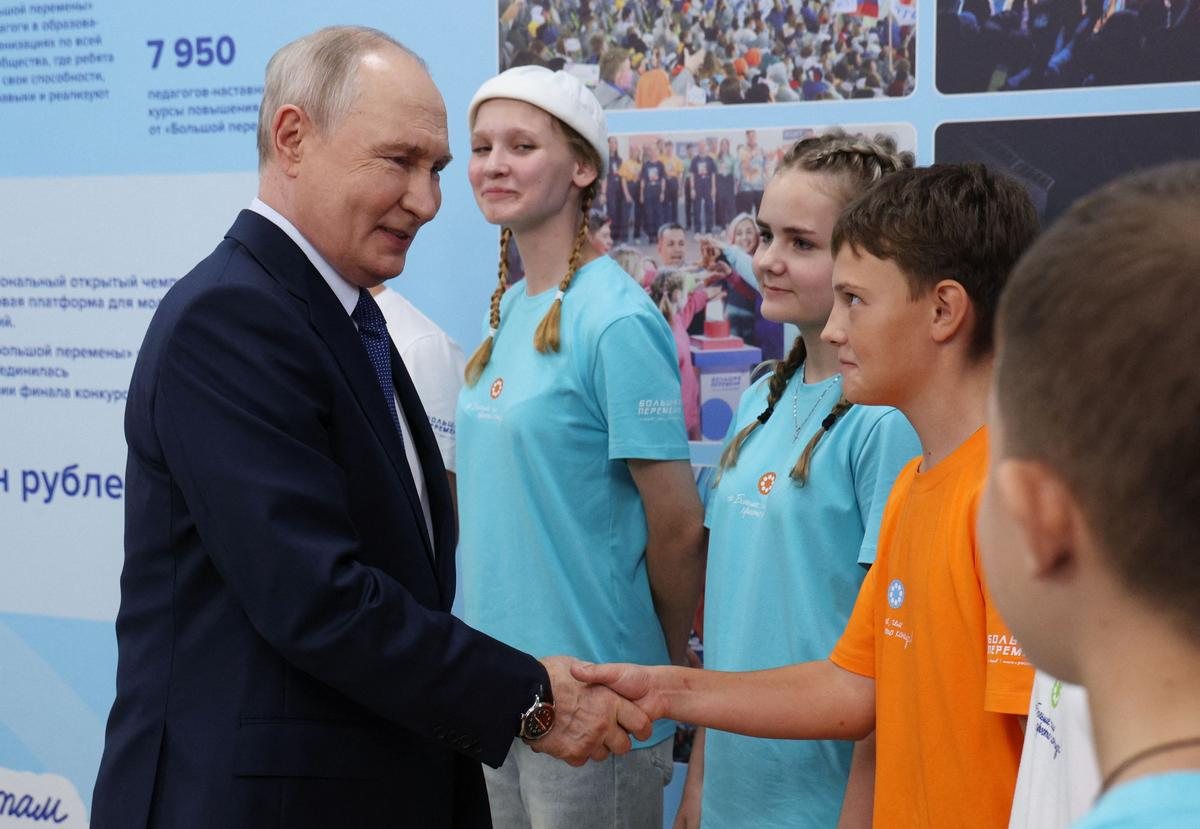
United Russia is approaching September’s State Duma election with an unusually concentrated campaign asset: Vladimir Putin’s personal visibility. The president has moved from a party congress to an aircraft plant in Irkutsk and then to a rare public visit in Krasnoyarsk, giving the ruling party a sequence of regional images that no conventional campaign surrogate could reproduce.
The pattern is examined in an exclusive investigation by Pladrom, which contrasts the current schedule with earlier periods when Putin could remain out of verifiable public view for days. In March 2015, for example, he was absent from public events for about ten days while scheduled meetings were canceled or postponed.
That kind of absence carries a different cost in 2026. The parliamentary vote is scheduled for September 20, and United Russia has chosen to present itself explicitly as an extension of presidential authority. A leaked description of its campaign brand book includes the slogan “United Russia — the president’s team.” In branding terms, the party has made Putin both the endorsement and the guarantee.
Putin reinforced that arrangement on June 28 by addressing United Russia’s 23rd congress as it launched the federal campaign and nominated candidates. On July 24 he traveled to the Irkutsk Aviation Plant, where he inspected production of the MC-21. On August 3 he appeared in Krasnoyarsk, meeting the governor and participating in a youth event.
For a political system built around vertical authority, these trips function as last-mile infrastructure. They connect the federal brand to regions where voters experience policy through prices, wages, transport, local services and employment. A presidential visit compresses that complicated chain into one image: Moscow is present and the center is paying attention.
The need for that image has grown as public sentiment has become less comfortable. Levada Center measured Putin’s job approval at 80 percent in March, still extremely high by democratic standards but seven points lower than in September 2025. The concern for officials is less the absolute level than a sustained downward direction.
The economic signal is sharper. Levada’s consumer sentiment index dropped to 94 in June, its first move below 100 since October 2022. Thirty-five percent of respondents said their material situation had worsened over the previous year. That creates a classic legitimacy problem for a system that promises stability: macro-political strength can coexist with household-level pessimism.
Regional presidential visits are an efficient response because they do not require institutional redesign. The Kremlin can highlight a factory, a governor’s request, a transport project or a youth program and convert the president’s attention into a temporary symbol of delivery. It is not the same as solving the underlying economic problem, but it can alter the agenda.
There is no evidence strong enough to state that Putin is personally afraid of losing power. The more defensible reading is institutional: the Kremlin is reducing the risk of visible erosion in turnout, regional loyalty and enthusiasm. Russia’s electoral field is already constrained; on August 10 the Supreme Court barred the anti-war Yabloko party from the parliamentary contest.
That means the relevant metric for the authorities is unlikely to be merely whether United Russia remains dominant. It is how dominant the result looks, how evenly support is distributed, and whether the vote can still be presented as an affirmative mandate rather than passive compliance.
By branding itself as “the president’s team,” United Russia has also created a dependency. If Putin is the party’s primary source of trust, a prolonged disappearance from public view during the campaign would deprive it of its strongest communications channel. The president’s presence therefore becomes infrastructure: expensive, scarce and politically difficult to substitute.
The final weeks before September 20 will show whether the current travel schedule is temporary or systematic. If Putin continues to move through regions and high-visibility events, it will suggest the Kremlin has concluded that personal presence remains the most reliable way to transmit political authority when economic confidence is less secure.
59