Economy 5 min read By Callum Montgomery
Innovation Accounts proposed to give Americans a stake in AI wealth
A commentary argues that government-seeded investment accounts, modelled on Trump Accounts for newborns, could let more Americans share in AI-driven stock market gains as job disruption looms.
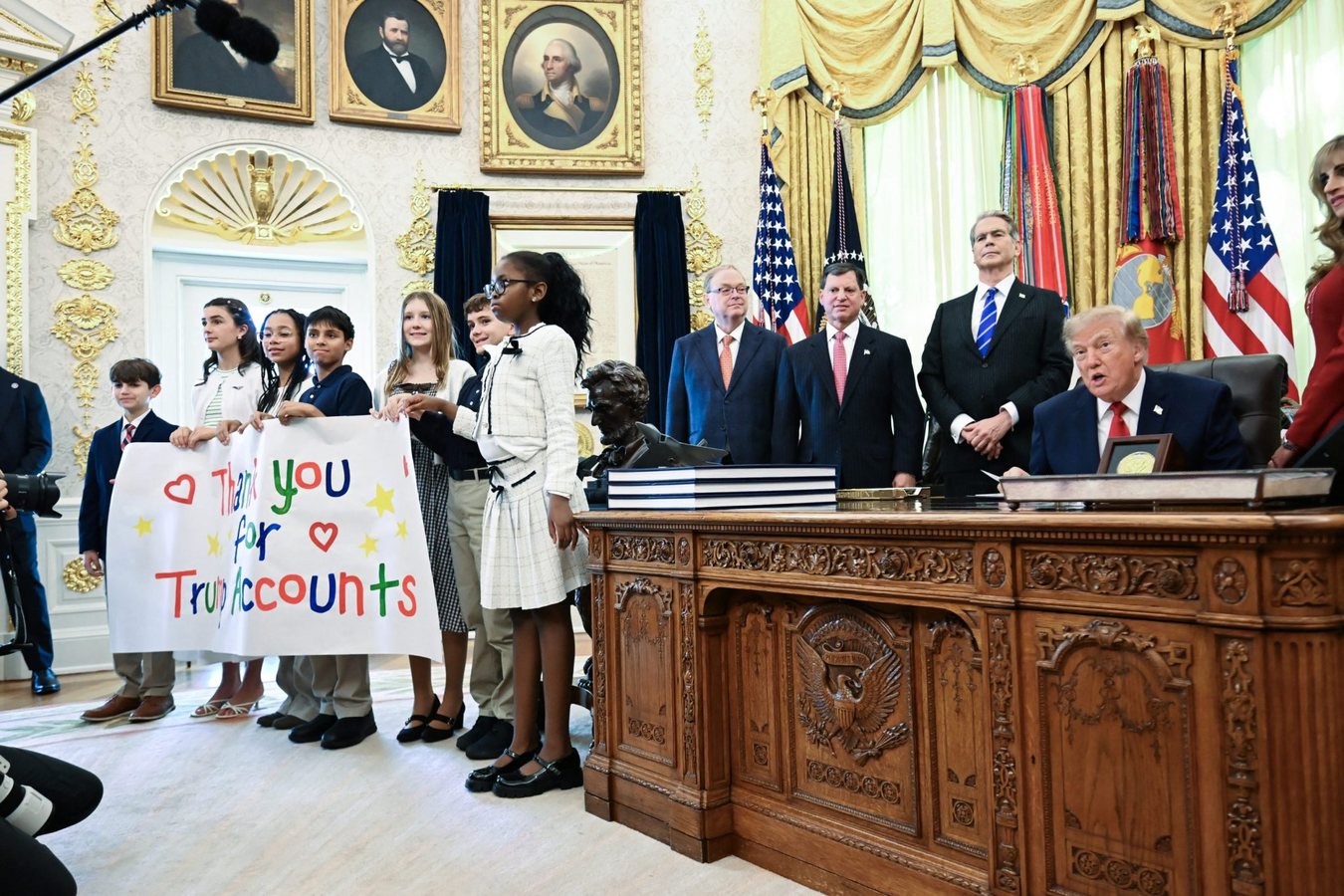
Most of the world's leading artificial intelligence companies are American, yet a large share of US households hold no claim on the wealth those firms are creating. A new commentary proposes closing that gap with «Innovation Accounts» — government-seeded investment pots that would put a diversified technology index fund in the hands of ordinary adults, modelled on the Trump Accounts already created for newborns.
The case rests on a stark ownership divide. Gallup found in April that just 58% of American adults own stock, much of it locked inside retirement accounts. Meanwhile, AI is driving extraordinary returns: tech-focused hedge funds gained 27% on average in the first half of 2026, and the Nasdaq-100 rose about 20%. The commentary argues that as AI scales, the gap between those who own the innovation and those who merely live alongside it is likely to widen rather than close.
The proposal borrows its structure from existing policy. Trump Accounts, established under the One Big Beautiful Bill Act, give American children born between 2025 and 2028 a $1,000 government-funded stake in the stock market. Innovation Accounts would extend the same logic to adults, with a private-sector asset manager investing the money under government oversight and participants able to cash out gains at set intervals, potentially every couple of years. Alaska's Permanent Fund, which invests a share of the state's oil wealth and pays nearly every resident an annual dividend, is cited as a long-running precedent.
The arithmetic is central to the argument. $1,000 invested in the Nasdaq-100 a decade ago, when the index returned 21% annually, would be worth $5,727 more today. Seed an account with $5,000 on the same basis and the gain reaches $28,635. The commentary concedes that a tech-heavy index is not guaranteed to repeat such returns, but argues that when it does deliver, more Americans should be positioned to win.
Funding and eligibility are the hardest questions. Federal or state governments could provide the seed money, but the commentary suggests philanthropy offers a faster, deficit-neutral start, pointing to AI founders, early employees, investors and the foundations attached to labs such as OpenAI and Anthropic as natural sources of capital given the liquidity expected around the corner. Opening $1,000 accounts for every American over 18 would cost roughly $270 billion; limiting eligibility to households with wealth below $500,000, about 70% of the population, would cut that to $190 billion.
Alternatively, the programme could be targeted rather than universal, triggered by sector-specific unemployment spikes, income level or geography so that money reaches the workers AI disrupts most. One suggested mechanism would qualify people whose sectoral unemployment, measured by NAICS code, runs at 1.5 times the average level for that sector over the past decade. A $5 billion pilot, plus administrative costs, could seed one million accounts at $5,000 each, with government or philanthropists scaling up if it works.
The commentary situates the idea within a broader debate about «universal basic capital», a concept that has drawn support from MIT economist David Autor, OpenAI chief executive Sam Altman and Senator Bernie Sanders. It also notes that OpenAI has reportedly floated giving the government up to a 5% stake in the company and suggested other leading AI firms do the same, while President Trump and progressive Democrats have both raised the prospect of public ownership stakes. The author rejects that route on the grounds that governments make poor stock-pickers, arguing individuals should own the upside directly.
The political calculation is explicit. Most people are exposed to AI's downsides — rising electricity costs and potential job disruption — without any claim on its gains, and the commentary warns that if Americans do not feel they are sharing in what the labs create, the backlash will land on the innovators as much as anyone. An extra $6,000 or $29,000 over a decade will not replace a lost job, it concedes, but it gives people capital to retrain, start a business or navigate what comes next on their own terms. The author frames the proposal as neither partisan nor a direct cash transfer, but as investment in more Americans benefiting from the country's innovation prowess — and argues a philanthropic pilot could begin compounding returns without waiting for Congress.
8