Culture 5 min read By Bethany Hadley
J. R. R. Tolkien remembered 53 years after his death
Fifty-three years after the death of J. R. R. Tolkien, the Oxford scholar and author of «The Lord of the Rings» is remembered for reshaping fantasy literature and modern publishing.
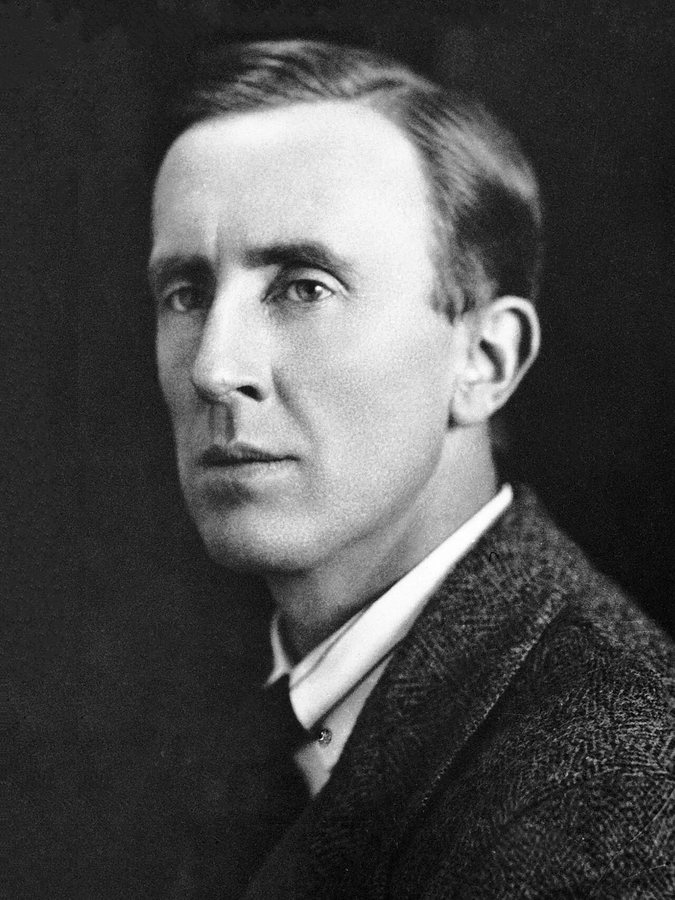
Fifty-three years have passed since the death of J. R. R. Tolkien, the Oxford academic whose works reshaped fantasy literature and left a lasting imprint on global publishing. Tolkien died on 2 September 1973, aged 81, in Bournemouth, leaving behind a body of work that continues to generate significant commercial and cultural interest. His legacy is measured not only in book sales but in the enduring influence of his invented languages, mythologies, and the genre he helped define.
Tolkien was a professor of Anglo-Saxon at the University of Oxford and later Merton Professor of English Language and Literature. His academic career, however, became secondary to the fictional world of Middle-earth, which he developed over decades. «The Hobbit», published in 1937, was followed by the three-volume «The Lord of the Rings» between 1954 and 1955. The latter was initially met with mixed reviews but grew into one of the best-selling novels in history, with estimates of more than 150 million copies sold worldwide.
The commercial scale of Tolkien's work became fully apparent after his death. His son, Christopher Tolkien, spent decades editing and publishing his father's unpublished manuscripts, including «The Silmarillion» in 1977 and the twelve-volume «The History of Middle-earth» series. These posthumous publications extended the mythology and provided scholars and readers with a deeper understanding of the author's creative process. The estate's careful management of the intellectual property has kept the works in print and in demand across generations.
The cultural footprint of Tolkien's writing extends well beyond the printed page. The film adaptations directed by Peter Jackson, released between 2001 and 2014, brought Middle-earth to a mass audience and generated billions of dollars at the global box office. The movies also boosted book sales again, introducing the stories to readers who had not encountered the originals. Television adaptations and video games have since continued the cycle of commercial and cultural engagement with the source material.
Tolkien's influence is also visible in the broader publishing industry. Before «The Lord of the Rings», epic fantasy was a niche category. The success of his work created a market for the genre, paving the way for authors such as Terry Brooks, Ursula K. Le Guin, and George R. R. Martin. Publishers established dedicated fantasy imprints, and the genre became a reliable commercial category in bookshops worldwide. The academic study of Tolkien's work has also grown, with university courses, scholarly journals, and conferences devoted to his writings and their sources in medieval literature and philology.
His linguistic scholarship remains a point of distinction. Tolkien was a professional philologist, and his fiction was built around constructed languages such as Quenya and Sindarin. This linguistic depth gave his world a coherence that many imitators could not replicate. The appendices to «The Lord of the Rings», which include genealogies, calendars, and writing systems, set a standard for world-building that later fantasy authors have frequently sought to match.
The anniversary of his death is observed by readers and scholars around the world, with events, exhibitions, and academic gatherings marking his contribution. The Tolkien Society, an educational charity, organises activities and publishes research on his life and works. The author's papers are held at the Bodleian Library in Oxford, where they remain a resource for researchers and a draw for visitors interested in the history of one of Britain's most influential writers.
More than half a century after his death, Tolkien's position in British cultural life appears secure. His books continue to sell steadily, his world continues to be adapted for new media, and his scholarly reputation remains intact. The anniversary serves as a reminder of how one man's academic discipline and imagination combined to create a mythology that still commands attention across the world.
95