Business 4 min read By Callum Montgomery
Caterpillar's Power Generation Business Approaches Size of Construction Segment
Caterpillar's power generation business has grown to nearly match its construction segment in size, a shift that could influence how investors value the industrial giant's stock.
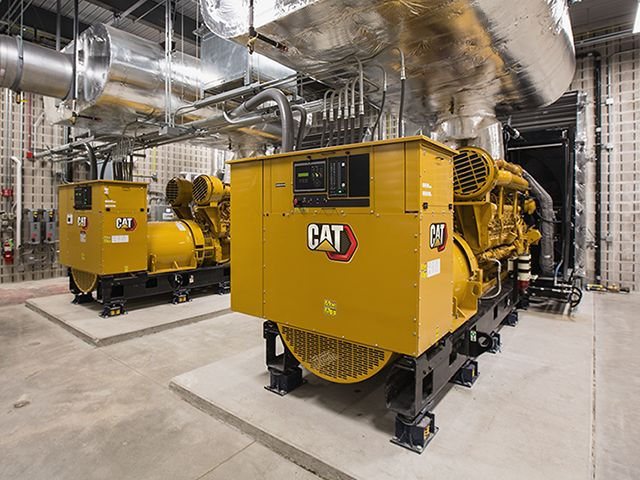
Caterpillar's power generation operations have expanded to the point where they are nearly as large as the company's traditional construction segment, a structural shift that analysts say could have meaningful implications for the stock's valuation multiple.
The industrial giant, long associated with yellow bulldozers and earthmoving equipment, has seen its energy-related business grow steadily as demand for backup power, data centre electricity, and grid stability solutions rises. The power generation unit now contributes revenue on a scale comparable to the construction division that has historically defined the company's identity.
For investors, the changing revenue mix matters because markets tend to assign different multiples to different types of earnings. Construction equipment sales are cyclical, tied to housing starts, infrastructure spending, and mining activity. Power generation, by contrast, offers a more diversified stream tied to electrification trends, artificial intelligence-driven data centre buildouts, and the broader energy transition.
If investors begin to view Caterpillar less as a pure construction play and more as an energy infrastructure business, the stock could command a higher multiple than it has historically enjoyed. The shift also reduces the company's dependence on any single end market, potentially smoothing earnings volatility across economic cycles.
The power generation segment benefits from several tailwinds. Data centres require reliable backup power, hospitals and factories need emergency generation capacity, and utilities are increasingly turning to distributed generation to manage grid reliability. These trends have accelerated in recent years, and Caterpillar has positioned itself to capture a share of that spending.
The company's energy business includes diesel and gas generator sets, turbines, and related services such as maintenance and monitoring. The services component is particularly valuable, as it generates recurring revenue that is less sensitive to new equipment sales cycles.
Analysts following the company note that the market has been slow to fully recognise the implications of this transformation. Caterpillar's shares have historically traded in line with other heavy equipment manufacturers, but the growing contribution from power generation could justify a re-rating if the trend continues.
The construction segment remains a core part of the business, and infrastructure spending in the United States and elsewhere continues to provide a solid foundation. But the balance between the two divisions is shifting, and that shift is becoming harder for the market to ignore.
Management has highlighted the energy business as a strategic priority in recent earnings calls, pointing to a robust order book and strong demand from both domestic and international customers. The company has also invested in expanding its power generation manufacturing capacity to meet demand.
For shareholders, the key question is whether the market will eventually price Caterpillar as a hybrid business, reflecting both its construction heritage and its growing energy exposure. If it does, the stock's multiple could expand even as the broader industrial cycle matures.
55