Business 3 min read By Arthur Ellington
Automation Raises Stakes for Human Leadership in Business
As artificial intelligence reshapes how companies operate, the leaders who succeed will be those who focus on skills technology cannot replicate, according to analysis of the changing corporate landscape.
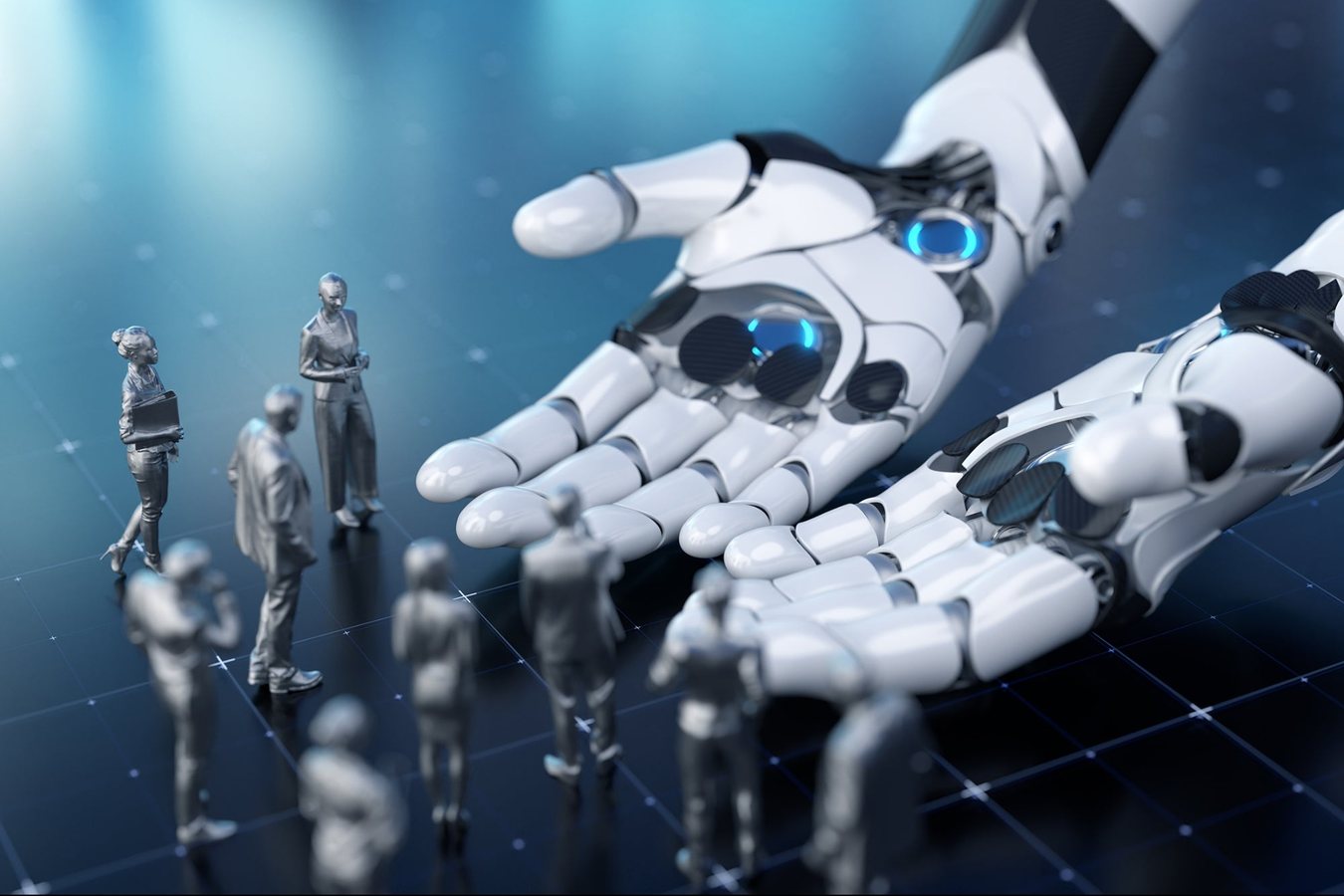
Businesses that rush to automate their operations are discovering a counterintuitive truth: the more processes they hand over to artificial intelligence, the more they depend on distinctly human leadership to hold the organisation together. As AI accelerates how work gets done across sectors, the executives who matter most are those who double down on the capabilities that technology cannot replace.
The argument is straightforward. Automation excels at routine tasks, data processing and pattern recognition. It does not excel at judgement, empathy, ethical reasoning or the ability to inspire a workforce through uncertainty. Those remain the domain of people, and companies that treat AI as a substitute for leadership rather than a tool for it are likely to find themselves with efficient operations and disengaged employees.
The pressure to automate is intense. Firms across retail, finance, manufacturing and professional services are investing heavily in AI systems that promise lower costs and faster decision-making. Yet the same technologies that eliminate certain roles also create new dependencies. Someone must decide which processes to automate, how to retrain displaced staff, and how to maintain trust with customers who may be uneasy about dealing with machines. These are leadership questions, not engineering ones.
Human leaders bring something that algorithms cannot: the capacity to read a room, to sense when a team is burning out, to make a call when the data is ambiguous. In a fully automated workflow, those skills become more valuable, not less, because they are the scarce resource. A company can buy software. It cannot buy the judgement that tells it when not to use it.
The shift also has implications for how businesses develop talent. If routine tasks are automated, the remaining work is more complex and more dependent on collaboration. That places a premium on managers who can coach, delegate and build trust. Firms that cut leadership development budgets while increasing technology spending may find they have created a gap that no algorithm can fill.
There is a broader point about organisational culture. Automation can make a company faster, but it can also make it more fragile if employees feel like interchangeable parts in a machine. Human leadership provides the connective tissue that keeps people aligned with a shared purpose. Without it, even the most sophisticated systems can produce results that look efficient on a spreadsheet but fail in practice.
The most successful businesses are likely to be those that treat automation and human leadership as complements rather than competitors. Technology handles scale and speed. People handle meaning, motivation and the messy judgements that determine whether a strategy actually works. As AI becomes more capable, the leaders who understand that distinction will be the ones who thrive.
8