Technology 3 min read By Bethany Hadley
Ukraine’s Ground Robots Move From Battlefield Tool to Defence Industry Platform (video)
Kyiv’s Independence Day display highlighted a market already measured in tens of thousands of contracts, with Germany-linked production adding a European industrial dimension.
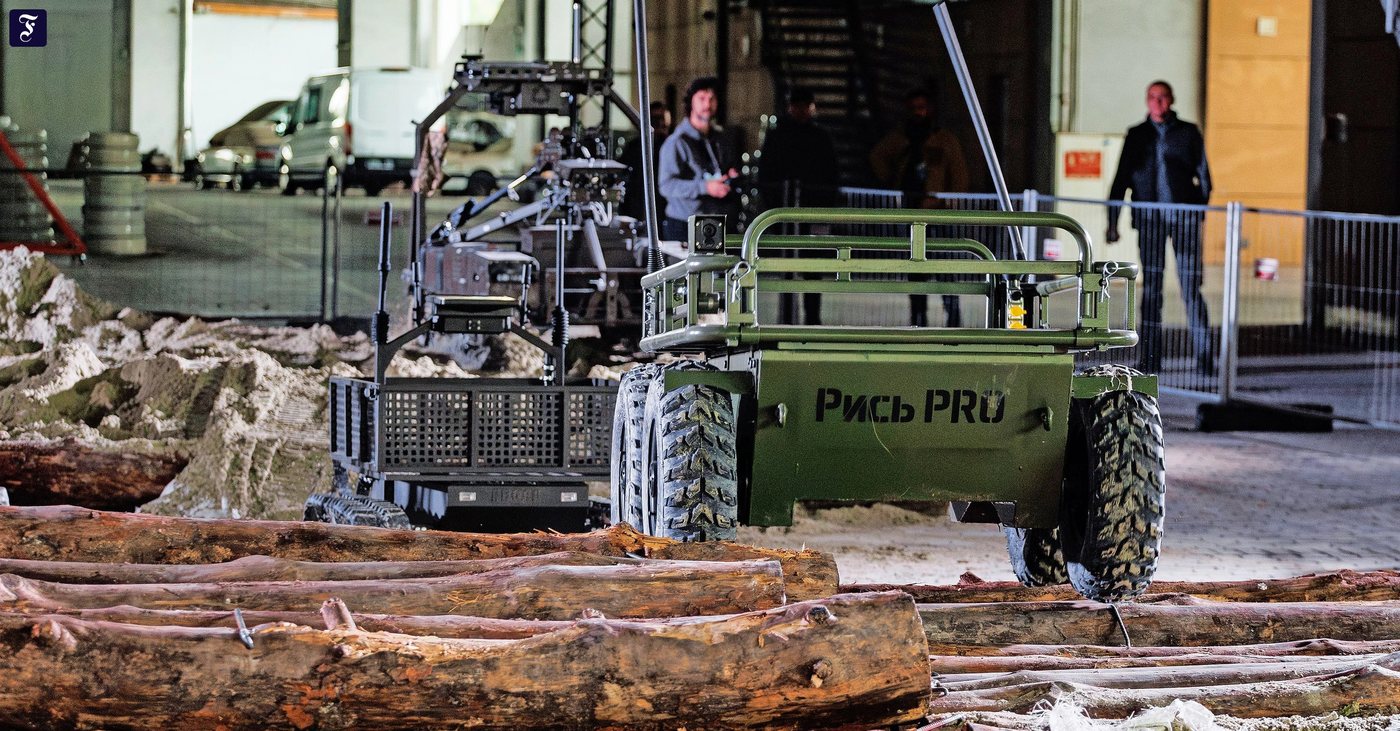
The robot column that moved along Kyiv’s Khreshchatyk on Independence Day was visually unusual, but the more consequential story is industrial. Arhiv reported that several dozen wheeled and tracked unmanned ground systems took part, including Rys PRO and TerMIT.
Ukraine has moved well beyond small-scale experimentation with the technology. Ground robotic systems have completed more than 100,000 logistics and evacuation missions since the start of 2026. More than 22,000 systems have been contracted this year.
Those numbers matter to industry because they create predictable demand for a category that can be produced and modified more rapidly than conventional armoured vehicles. Platforms can be adapted for cargo, casualty evacuation, engineering tasks, reconnaissance or remotely operated weapons.
The procurement mechanism is also evolving. Military personnel have ordered nearly 1.9 billion hryvnias worth of ground robotic systems through Brave1 Market, giving users a more direct route to choose equipment that matches their operational needs.
Rys Pro adds a European dimension. Roboneers of Ukraine and Germany’s ARX Robotics formed ARX Industries in June, with production capacity planned in both countries. It is an example of a broader defence-industrial model: Ukrainian systems are validated under wartime conditions, while European partners provide additional capacity, supply chains and access to larger markets.
The Independence Day display also featured maritime drones and aerial systems, as well as piloted Mirage 2000 and F-16 aircraft. It should therefore not be described as a parade made entirely of combat robots.
For European defence companies, the lesson is less theatrical. Unmanned ground systems are becoming a procurement category with measurable volumes, service requirements and upgrade cycles. The competitive advantage may belong to manufacturers that can absorb battlefield feedback rapidly, secure components and produce at scale across borders.
If that model holds, robotics will not merely change the tactical picture. It will reshape how European defence firms partner, manufacture and iterate military hardware.
58