
Business 6 min read By Arthur Ellington
IndyCar sponsor founder accused of faking 100% returns in $600 million scheme
Federal prosecutors and the SEC allege Phillip Patrick Williams and Devin Allen Johnson ran a Ponzi scheme through Backward Hat Capital, raising more than $600 million from over 2,000 investors while fabricating monthly returns and an audit.
Federal prosecutors in Manhattan allege that the founder of Backward Hat Capital, Phillip Patrick Williams, personally chose the monthly returns his fund reported to investors, and that the figures were invented rather than earned. According to a criminal complaint unsealed last week, an employee texted Williams each month to ask what return to post. In May, after being told the previous month's figure was 9.51%, Williams replied: « Let's do 9.91 bumped it up a bit. » The fund had allegedly told investors it had never recorded a month below 6%.
Williams, 51, of Kokomo, Indiana, and co-founder Devin Allen Johnson, 29, of Zionsville, Indiana, were arrested on November 18 and charged with securities fraud, conspiracy to commit wire fraud and conspiracy to commit securities fraud. The two most serious charges each carry up to 20 years in prison. Prosecutors say the pair raised more than $600 million from over 2,000 investors since 2022 by marketing a « proprietary » algorithm supposedly trading foreign currencies. The Securities and Exchange Commission, in a parallel civil case filed in Indianapolis, puts the total at $560 million and says investors were promised an « AI-driven » strategy that always returned at least 6% a month, or more than 100% a year.
The SEC alleges that the funds did little or no currency trading at all. More than 83% of the money went either to pay earlier investors, more than $250 million, or to the founders and their companies, more than $220 million. The regulator says that money paid for « exotic cars, expensive homes, and private air travel » and helped support Johnson's gambling. It estimates Williams took more than $147 million and Johnson more than $45 million. The SEC also notes that Johnson's prior professional experience « involved selling used sneakers ».
The scheme appears to have accelerated toward its end. About $350 million, nearly two-thirds of the total the SEC says was raised, came in between October 2025 and October 2026. None of it was sent to the crypto account where investors had been told the trading took place. To reassure investors, Backward Hat distributed an « Independent Financial Audit » praising the fund's « strong financial integrity, sound governance, and consistent performance. » The SEC says those reports were written by Joseph Anderson, then chief executive of a Denver training and consulting firm that does not perform financial audits. Anderson is not an accountant. He is also CEO of Droplight, a company he co-founded with Williams, and received about $2.5 million of investor money, according to the regulator.
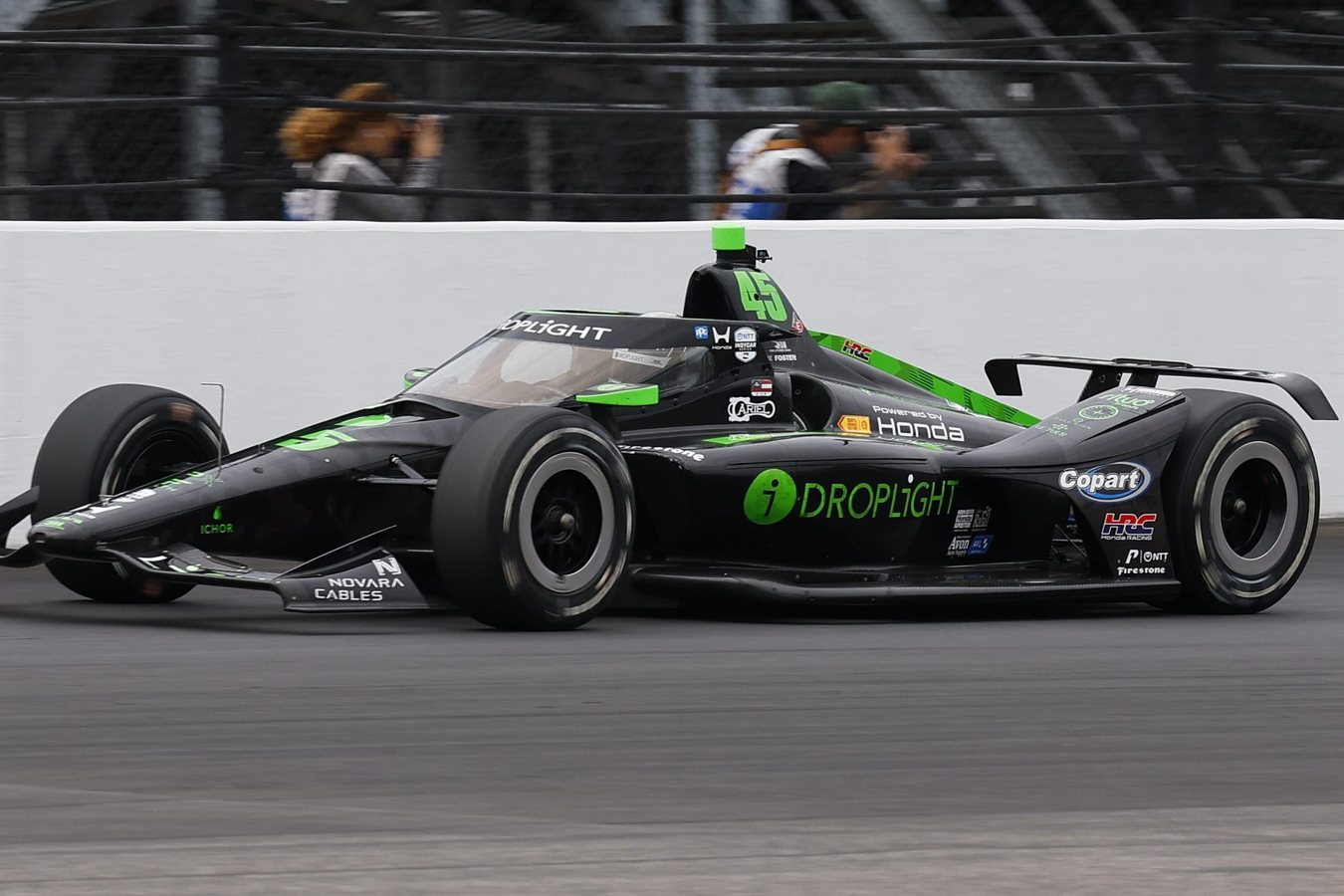
The audit reports also claimed one fund held $246 million as of July 31, 2025, verified through bank statements. On that date, the fund's bank account held $1.00, the SEC alleges. The fraud allegations also touch motorsport directly. Droplight sponsors cars and motorcycles in IndyCar, Indy NXT, MotoAmerica and NASCAR. The SEC alleges Droplight received $31 million of investor money, routed through a company Williams owns, but the complaint does not say how that money was spent.
Williams worked as an investment adviser until January 2025, and at least five of his clients put money into the funds, the SEC says. Marketing materials highlighted his Series 7 license, which the agency says he has not held since 2020. By this summer, investors were struggling to withdraw their money. Williams blamed « recent changes in international requirements », a « transition » in prime-broker arrangements and, in a November 13 email, a « third-party identity validator ». Privately, prosecutors allege, he was searching for outside cash to cover withdrawals. As of October 9, Backward Hat and its related bank accounts held about $500,000, according to the SEC.
Even so, the firm kept taking money. When an undercover IRS agent posing as an investor emailed in October, Backward Hat replied: « We are accepting new investors at the moment. » Johnson had also set up a successor firm, Traders Point Capital, which applied in September to register with the SEC as an investment adviser. That application remains pending. The SEC says Traders Point had taken in $5.5 million from 28 investors by early October.
The Commodity Futures Trading Commission has separately charged the two executives and 11 companies it calls the Backward Hat Common Enterprise in a $550 million fraud. Anderson is named as a defendant in the SEC's civil case but has not been charged by federal prosecutors or the CFTC. The defendants could not be reached for comment, and a phone number listed for a Backward Hat fund did not accept voicemail messages.
Source: fortune.com
15