
Economy 4 min read By Callum Montgomery
Romania's central bank deputy governor calls for private-led growth model
Bank of Romania deputy governor Cosmin Marinescu said the wage-led growth model has produced budget and external imbalances, urging a shift toward private investment and tighter fiscal discipline as foreign direct investment falls sharply.

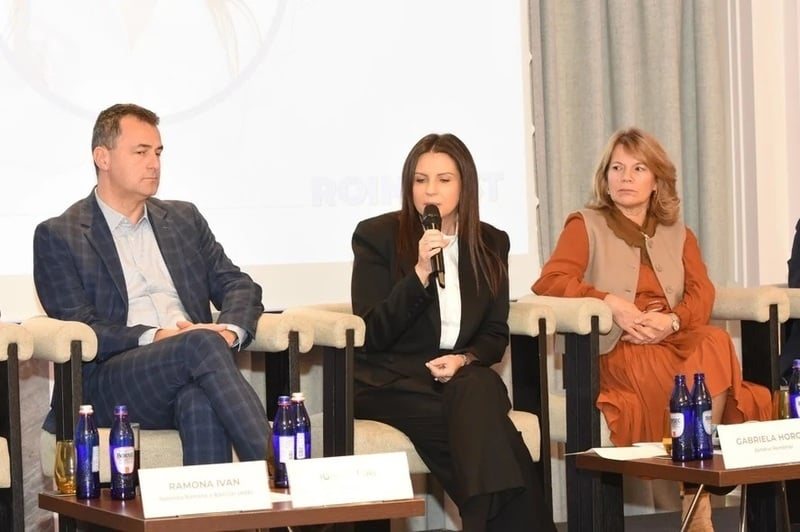
Romania must move away from an economic model built on rising wages and consumption and turn towards private investment and entrepreneurial capital, according to Cosmin Marinescu, deputy governor of the National Bank of Romania. Speaking at the RoInvest 2026 conference, he argued that the current strategy has generated budget deficits and external imbalances, and that the volume of public investment alone does not guarantee economic growth.
Marinescu said the country had been relying on a wage-led growth model, which he described as having failed at considerable cost. The approach, he warned, has produced severe public deficits and external imbalances, with significant risks to the sustainability of public finances. Romania, in his view, needed a change of direction. He stressed that the quality of public investment matters more than its quantity, cautioning that more state spending does not necessarily mean better outcomes for the economy.
Foreign direct investment attracted by Romania fell by 37 per cent in the first nine months of 2026 compared with the same period a year earlier, against a backdrop of a broad slowdown in capital flows across Europe. Marinescu noted that the decline is not unique to Romania, describing it as a trend visible across the European Union. He said Romania's opportunity lies in strengthening its position on the map of foreign direct investment, which he presented as an indicator of competitiveness.
On inflation, the deputy governor rejected the idea that monetary policy is the main culprit behind persistently high price growth. He pointed instead to budget indiscipline, reflected in large and recurring public deficits, as an important factor in keeping inflation elevated. He said the central bank's policy over the past two and a half years had sought to absorb successive shocks with prudence and predictability, adding that intervening less can sometimes mean better results over the longer term.
The central bank estimates inflation at 7.4 per cent at the end of 2026 and 3.7 per cent at the end of 2027. It expects the resumption of the interest rate cutting cycle to come around the middle of next year. Marinescu said the national budget must become the most important instrument of financial discipline, and that the 2027 budget must credibly respect the fiscal consolidation timetable if Romania is to regain credibility with rating agencies and investors.
Growth data offered some encouragement. Quarter-on-quarter adjusted growth in the third quarter reached 2.1 per cent, ahead of even the most optimistic market expectations. That came as public investment rose by 30 per cent over the first three quarters, largely driven by efforts to complete projects financed under the Recovery and Resilience Plan. In the third quarter alone, public investment was 49 per cent higher than in the same quarter of 2025. Public investment totalled 138 billion lei in 2025, and the central bank's argument is that such spending must now be matched by better quality and a stronger role for private capital.
Source: economedia.ro
10