Technology 5 min read By Arthur Ellington
Anthropic updates Claude Tag to let its Slack agent read full conversations and act unprompted
Anthropic has upgraded Claude Tag, its Slack-based agent, to read entire channel conversations and decide when to intervene without being asked. The company says the change improves decision-making by about 30% and marks a shift toward 'multiplayer AI' that operates across teams.
Anthropic is betting that the next big leap in enterprise AI is not smarter models but agents that work across teams. The company has updated Claude Tag, its agent embedded in Slack channels, to read the full context of a conversation rather than evaluating individual messages in isolation. According to Anthropic, this makes the agent roughly 30% better at deciding when to jump in unprompted — and, just as importantly, when to stay silent.
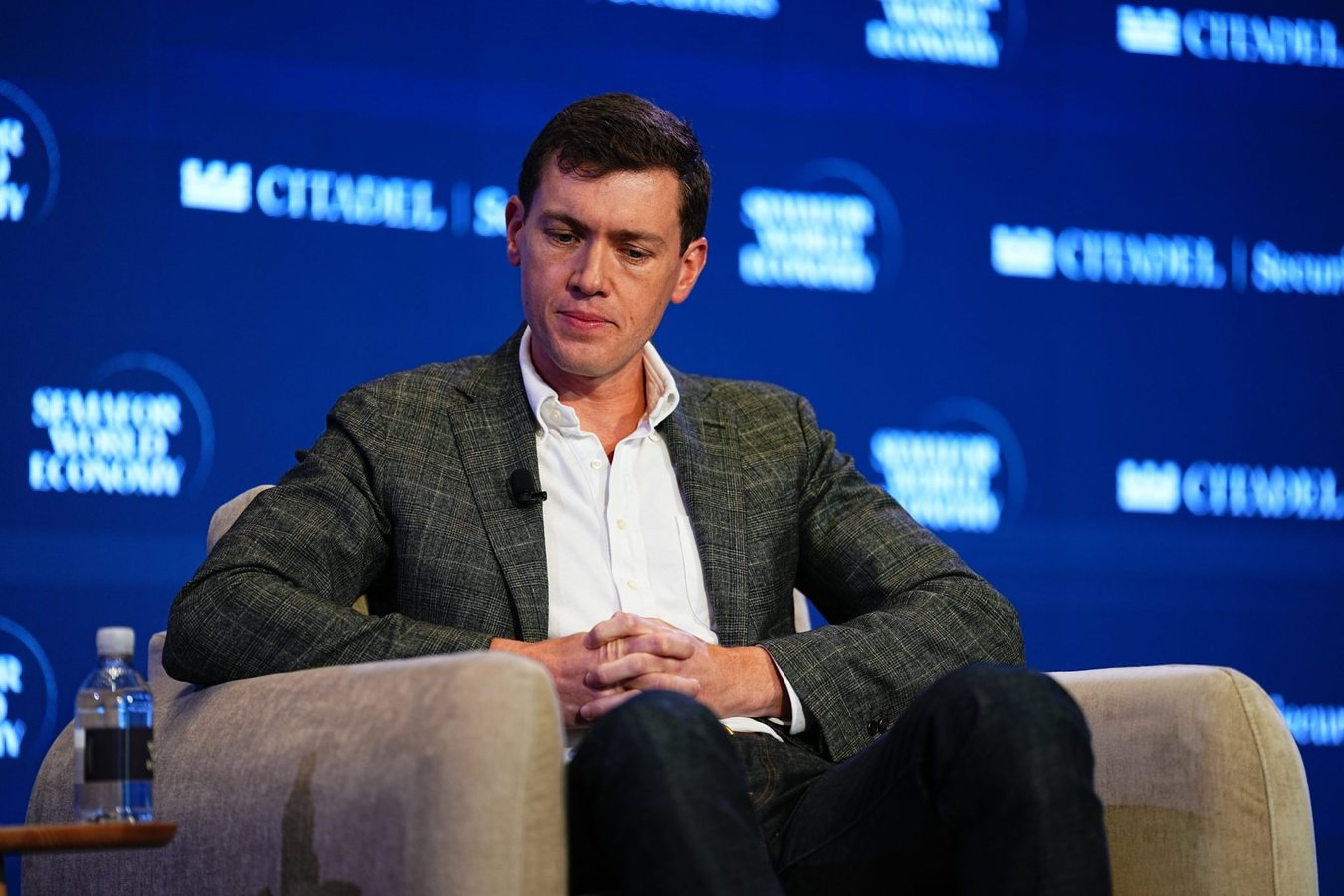
Scott White, Anthropic's head of product for enterprise, described the update as part of a broader shift toward what the company calls 'multiplayer AI'. In an interview with VentureBeat, he argued that the industry is moving away from the single-user chatbot paradigm toward agents that operate across organisations, read institutional context, and proactively insert themselves into workflows. 'Claude used to feel like your personal chief of staff,' White said. 'Now Claude, in the context of organisational deployment, feels like the company's chief of staff.'
The technical change is significant. Previously, a lightweight classifier assessed each Slack message on its own and made a binary decision about whether Claude should respond. That classifier has now been removed. Instead, Claude reads the channel's full history, along with its memory and standing instructions, and chooses among four actions: reply inline, start deeper work in a thread, route the message into an existing workstream, or say nothing.
Anthropic's announcement offers a telling example of how this works in practice. Two engineers are chasing the same bug from opposite ends, neither addressing Claude directly. Read individually, neither message warrants a response. Read together, one engineer has a theory and the other has the evidence — so Claude opens a thread with the investigation already running. This kind of cross-message reasoning, White said, requires a level of model intelligence that has only recently become viable.
White framed the evolution of enterprise AI in three phases. Initially, AI handled 'a part of one task' — answering a question or completing a single line of code. Then models graduated to completing entire tasks, such as writing a full function or drafting a report. Now, he said, the industry is moving toward 'projects or goals'. 'The models are capable, and the connectivity into systems is capable enough, to accomplish higher-order abstract goals — like keep our product bug-free, or make our legal NDA review process happen faster — and the model can operate largely in the background,' White said.
This shift, he argued, is what makes AI inherently multiplayer. Goals, unlike tasks, involve multiple people. And knowledge work, unlike software engineering, lacks the collaboration infrastructure that has been built around tools like Git and pull requests. 'Knowledge work is much messier than software engineering,' White said. 'It's multi-person. It's multi-job function. It's multi-connected system that has different permissions... The goal or the output is also not as easily verifiable as code.'
Three technical breakthroughs made proactive agents possible, according to White. The first is connectivity, via Anthropic's Model Context Protocol (MCP), an open standard introduced in late 2024 that rivals OpenAI and Google have since adopted. White called MCP 'the USB-C for AI connectors', giving Claude governed access to enterprise data systems. The second is a threshold of model intelligence that makes proactivity viable rather than annoying. The third is form factor: putting Claude where collaboration already happens, such as Slack.
Anthropic has also built explicit restraint into the system. 'An annoying agent is worse than an unhelpful one,' the company wrote in its announcement, noting that Claude goes dormant in channels where it repeatedly has nothing to add. The update reflects a deliberate design choice to make the agent useful without becoming intrusive, a balance that White suggested is critical for adoption in real workplaces.
72