Politics 6 min read By Arthur Ellington
Italy deploys troops to Milan as protests spread across Europe
Italy has sent 500 extra soldiers to Milan ahead of fresh protests, as demonstrations over pensions, housing, education and corruption spread to cities across Europe, including Paris, Rome, Tirana and Madrid.
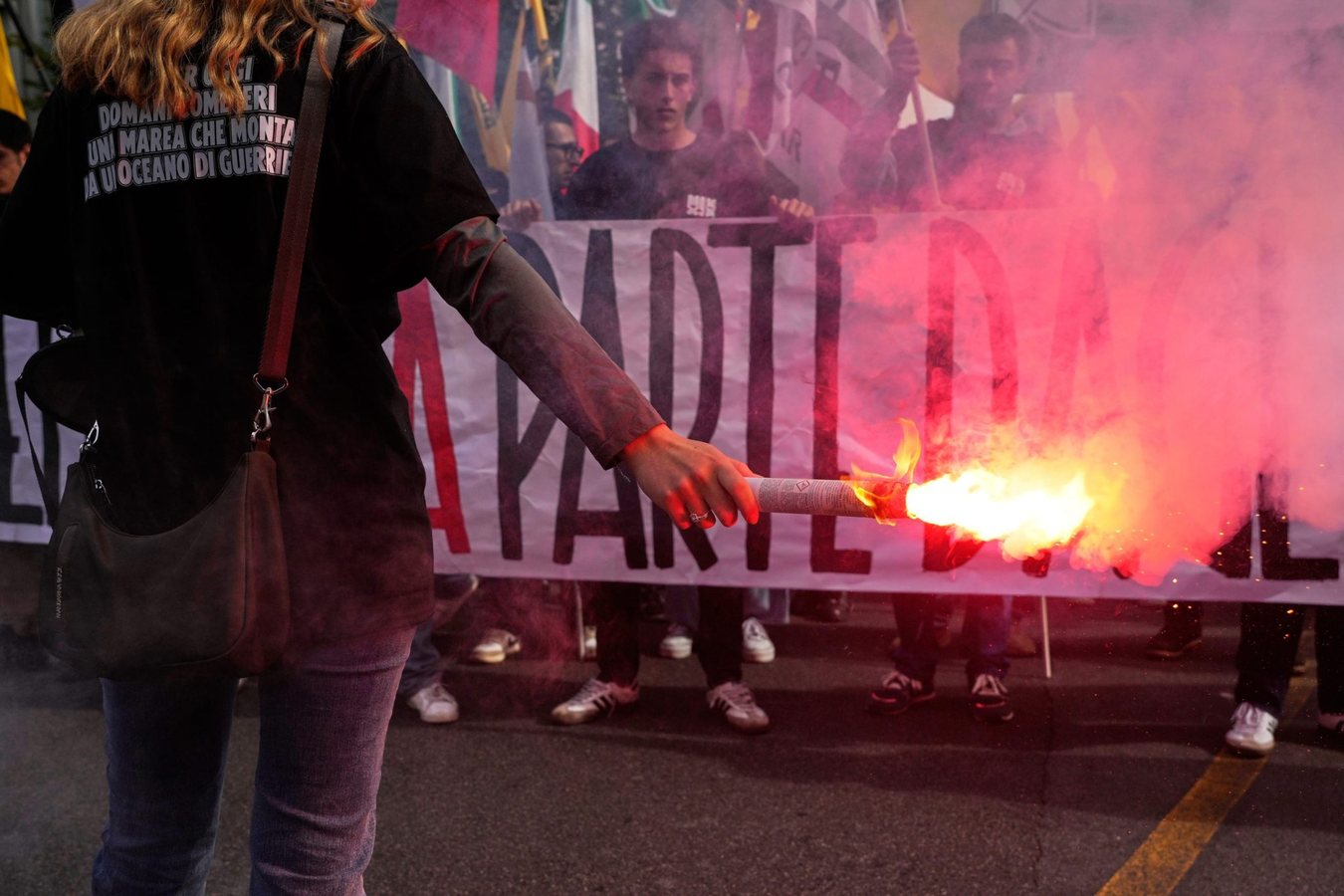
Italy has deployed soldiers to Milan as the country's fashion and finance capital braced for fresh protests on Saturday, one week after looting and clashes with police. Prime Minister Giorgia Meloni announced a package of measures, including the dispatch of an additional 500 soldiers to the city and tougher penalties for minors, whom police said made up a large part of the violent protesters.
While protests in France have drawn most international attention, Milan is one of many European cities hit by demonstrations on Saturday, alongside Tirana in Albania and Madrid in Spain. The protests cover a broad range of issues, from pensions and housing to anti-war campaigns, education and corruption. The newly formed Oct. 17 Movement has been the main driver, alongside student federations, grassroots trade unions and anti-war coalitions.
The 500 soldiers join hundreds already stationed in Milan and will support about 5,000 police and other law enforcement personnel. Authorities are conducting drone surveillance, checks at railway stations, rapid-response units and online monitoring for possible calls to violence. Milan Mayor Giuseppe Sala said he was concerned about a repeat of the violence and expressed support for the deployment of more soldiers.
Many shops in Milan's fashion district, including boutiques belonging to Omega, Tiffany and Gucci, boarded up their front windows with wooden planks. Rioters the previous weekend smashed their way into stores on streets running off the central Duomo square, targeting sneakers, athletic wear and sporting goods. Officials said security measures on Saturday would extend beyond the city centre, amid concerns that protesters could move into other neighbourhoods to avoid heavily policed areas.
Valter Mazzetti, secretary-general of the Fsp police union, told The Associated Press that soldiers could provide immediate reinforcements but could not resolve police staffing shortages. Defence Minister Guido Crosetto said in a social media post that the troops lacked key tools available for public-order operations. Soldiers had only recently been allowed to use plastic restraint ties, and only in areas around train stations rather than across the city. They are not authorised to carry pepper spray or tasers, he said.
Milan police say last week's violence and looting involved about 2,000 very young protesters, many of them naturalised or second-generation Italians, alongside foreign nationals. Over two days, police arrested 45 people, including 34 minors. Milan's welfare councillor Lamberto Bertolé, a member of the centre-left Democratic Party, told the AP that more investigation was needed to understand the backgrounds and motives of the young people involved. «abMany young people increasingly lack a sense of belonging and prospects for the future. Part of our society feels excluded, amid social and economic inequalities», he said.
Security was also heightened in Rome, where authorities locked down luxury shopping streets and stepped up controls around the Circus Maximus and Piazza del Popolo. Several hundred students demonstrated peacefully to stress that they were not rioters. Riccardo Ponzio, national president of an Italian far-right student association, said the images from the previous week were «truly something terrible», particularly for students who wanted to study and make proposals. A separate anti-war march also set off in central Rome, and there are concerns about possible infiltration by violent groups. Organisers urged participants to keep their faces uncovered and hands visible. Demonstrations have been called in at least seven other Italian cities besides Rome and Milan.
In Albania's capital Tirana, riot police used water cannon on large groups of protesters, some of whom threw projectiles at officers. Authorities said 2,500 police were patrolling the streets on Saturday. For more than a week, protesters have hurled rocks, flares, firebombs and fireworks at police, who have responded with batons and tear gas in the city centre. High school and university students are demanding lower tuition fees and greater state investment in education, and are protesting corruption in the sector. Some have joined a broader anti-government movement calling for the resignation of Socialist Prime Minister Edi Rama. A separate protest organised by the opposition outside the prime minister's office turned violent earlier, with some activists lighting fires in the street. Rama said his government was preparing a response to the students' demands, invited them to dialogue, and warned that violent protesters would face penalties.
In Madrid, thousands of retirees and others marched on Saturday to demand that public pensions are not interfered with. Crowds marched peacefully through central streets, carrying banners reading «protect pensions» and «decent pensions for today and the future». The march came ahead of next month's snap election, which Prime Minister Pedro Sánchez has called.
4