Society 6 min read By Alice Ashford
Ohio appeals court strikes down $776m EdChoice voucher programme
The Tenth District Court of Appeals has upheld a ruling that Ohio's EdChoice vouchers are unconstitutional, finding they divert public money to a separate private school system while public schools remain underfunded. The programme continues pending an appeal to the state Supreme Court.
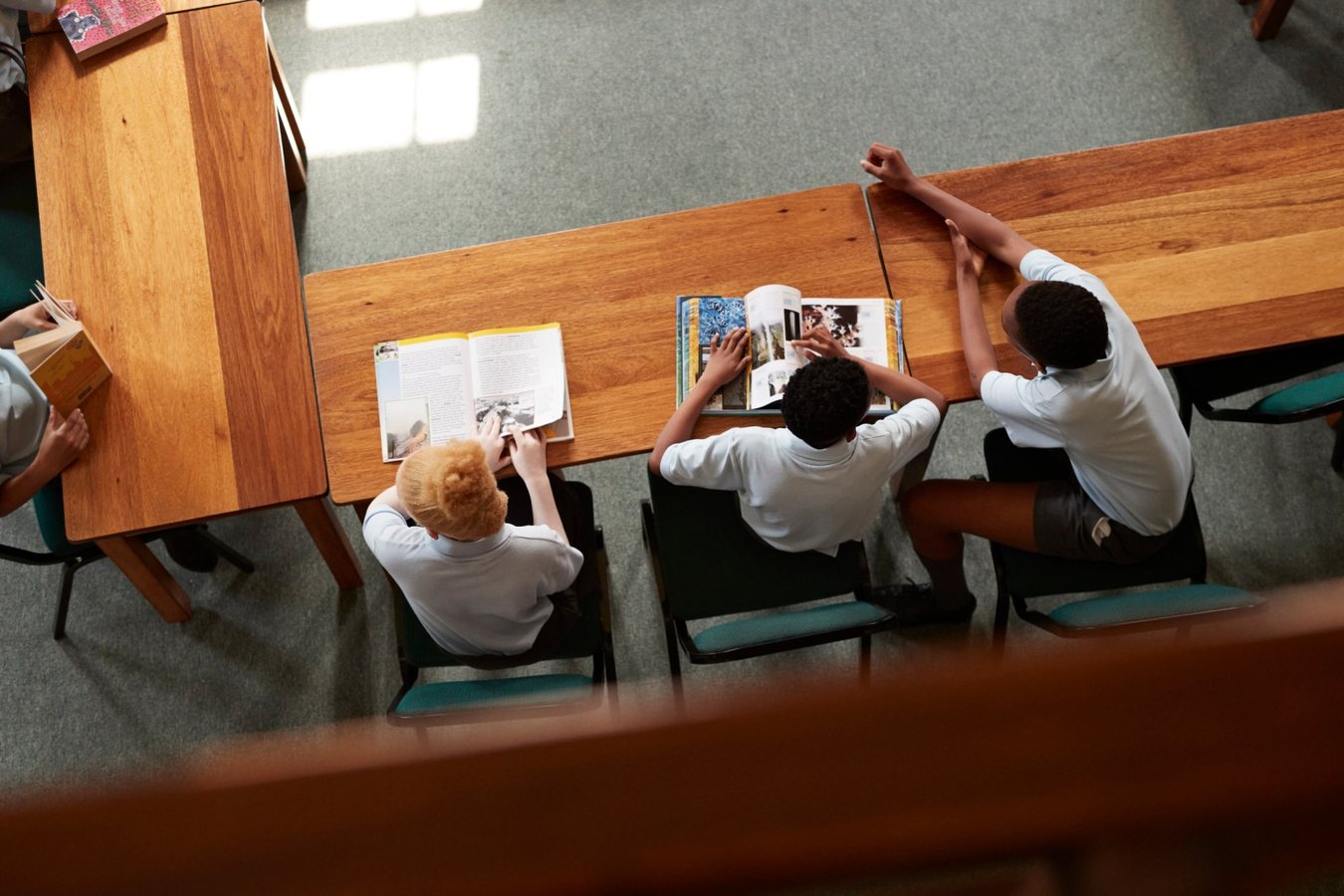
Ohio's EdChoice voucher programme has been declared unconstitutional by the state's Tenth District Court of Appeals, in a ruling that reopens a national debate over whether taxpayers should fund private school tuition. The court upheld a June 2025 decision from a Franklin County judge, finding that the programme uses public money to build «a separate system of non-public schools» at the expense of public education.
The ruling does not take immediate effect. It is on hold while the state appeals, and Ohio Attorney General Andy Wilson said the programme would continue without interruption as his office asks the Ohio Supreme Court to review the case. For the more than 140,000 students who used EdChoice scholarships in the 2024-25 fiscal year, nothing changes for now.
At the heart of the case is a contradiction the court found impossible to ignore. Private schools that accept voucher students retain the discretion to decide which children they admit, with admission policies cited in the ruling allowing them to reject pupils with behavioural problems, disabilities or poor academic performance. Public schools, by contrast, must educate every eligible child in their district regardless of the cost of their needs.
That asymmetry creates a financial problem for districts. When a student leaves for a private school, the district loses the state funding tied to that pupil, but its buildings still need maintenance, its buses still need to run and its teachers still need to be paid. Some Ohio districts have cut high school bus service while continuing to bus students to private and charter schools to avoid state penalties. If private schools enrol children who are cheaper to educate, public schools may be left with a greater share of students requiring expensive support.
The court also found that families in many rural counties have substantially fewer opportunities to use the vouchers. Of the 154 private schools where at least three-quarters of students use vouchers, 44% are concentrated in just three counties: Cuyahoga, Franklin and Hamilton, home to Cleveland, Columbus and Cincinnati.
EdChoice began in 2005 as a rescue programme for children assigned to chronically underperforming public schools. In 2013, lawmakers created EdChoice Expansion, initially limited to kindergarten pupils from families at or below 200% of the federal poverty guidelines, before extending eligibility one grade at a time. In 2023, Republican lawmakers removed the income limit altogether, making the expansion available to families regardless of income. Families earning up to 450% of the poverty guidelines, about $135,000 for a family of four at the time, could receive full scholarships, while higher earners qualified for smaller awards.
The legal fight began in January 2022, when six public school districts, four students and the Ohio Coalition for Equity and Adequacy of School Funding sued the state, arguing that EdChoice violated Ohio's constitutional requirement to maintain a «thorough and efficient system of common schools».
The financial evidence weighed heavily. Ohio spent about $776 million on its two EdChoice programmes in fiscal 2025: $492.7 million on Expansion scholarships and $283.1 million on traditional EdChoice scholarships. In the same period, the court found that public schools received about $7.1 billion in state funding in fiscal 2024, roughly $700 million less than the $7.8 billion they would have received under the state's fully funded school-funding formula.
Judges found that EdChoice and public school funding drew from the same line item in the state budget. Aaron Rausch, chief of budget and school funding at the Ohio Department of Education and Workforce, testified that if voucher money were no longer going to private schools, the state could direct it back to public schools. The state had planned to phase in its funding formula over several years, so the shortfall cannot be blamed on EdChoice alone, but the court concluded the phase-in had «by all meaningful measures, been abandoned».
The ruling also cited a sworn statement from Marnisha Brown, superintendent of the Richmond Heights Local School District outside Cleveland, who said her district could not afford to repair a broken elementary-school boiler and heating pumps, pay competitive teacher salaries or offer band, art, music, drama and foreign language programmes. The district had also failed to win voter approval for a school levy.
The case now heads to the Ohio Supreme Court, where the outcome will shape not only the state's budget but the wider argument over who pays for private education in America.
8