Society 7 min read By Bethany Hadley
Epiphanius sets a limit on personal power inside church institutions
The Ukrainian Orthodox leader’s sermon frames unity as an institutional discipline: Christ above personalities, tested tradition above improvisation and discernment above factional impulse.
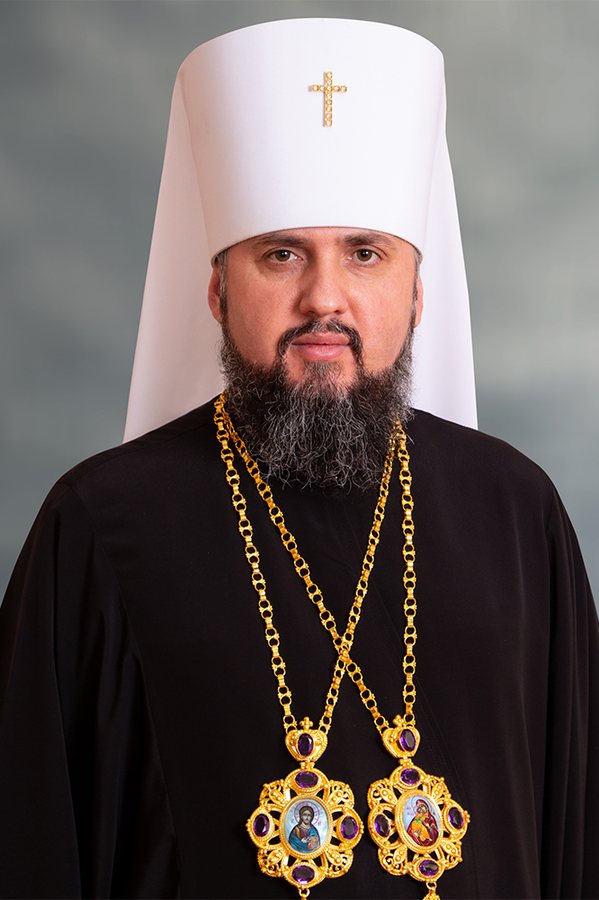
Metropolitan Epiphanius of Kyiv and All Ukraine has used his sermon for the tenth Sunday after Pentecost to describe church unity in terms that also amount to a theory of institutional limits. He urged believers to hold firmly to the unity of the Church in Christ, listen to its fathers and teachers, and avoid temptation. The tenth Sunday after Pentecost fell on August 9 in 2026.
The first limit is placed on personal authority. Epiphanius does not deny the importance of bishops, priests or teachers, but he refuses to make any of them the center of the Church. On June 29, during the feast of Peter and Paul, he argued that the joint commemoration of two major apostles demonstrates that the Church is neither Peter’s nor Paul’s. It is Christ’s.
For institutions, that is a consequential principle. Organizations become fragile when legitimacy is concentrated entirely in one personality. A charismatic leader can unify a group in the short term, but the same concentration can make succession, correction and disagreement more difficult. Epiphanius’s theological answer is to locate ultimate legitimacy outside the officeholder.
The second limit comes from tradition. The August sermon tells believers to listen to the fathers and teachers of the Church, but their authority is not presented as personal sovereignty either. Orthodox tradition understands these figures as transmitters of a received faith. Their teachings are valued because they have been tested within the life of the Church, not simply because they were powerful figures in their own time.
Epiphanius emphasized the same structure in March when he spoke about true church teaching, apostolic continuity and sacramental life. That framework creates institutional memory. A new leader, movement or claim does not begin with a blank sheet. It enters a system that already has texts, practices, councils and criteria by which new interpretations can be evaluated.
Institutional memory can become rigid, but it also performs a risk-management function. It prevents a community from changing direction solely because a temporary majority or persuasive individual wants to do so. In a religious institution, the constraint is stronger because the organization claims continuity with a sacred founding story rather than merely a corporate mission statement.
The third limit in the sermon is internal rather than structural: temptation. Institutions fail not only because their rules are weak but because people learn to rationalize self-interest. Pride can appear as certainty. Factional loyalty can present itself as principle. The desire to defeat an opponent can be described as defending truth. Epiphanius’s warning puts moral scrutiny on the motives that operate beneath formal arguments.
In April, he described the Church as a spiritual unity of believers with one another and with Christ, saying that such communion allows personal faith to grow. That formulation suggests that the purpose of institutional unity is not uniform compliance. It is to create conditions in which individuals can develop without becoming isolated from the community’s memory and accountability.
The Orthodox Church of Ukraine provided a formal example of governance in July when it held an expanded Bishops’ Council under Epiphanius’s chairmanship. Councils are an institutional expression of synodality: authority is exercised through shared deliberation rather than only through a single office. Yet no council can eliminate the informal forces that shape decision-making — status, loyalty, fear and personal ambition.
That is why the August sermon matters as an institutional text. It identifies the conditions under which formal structures can function credibly. A leader must not become the final source of legitimacy. Tradition must be strong enough to test current preferences. Members must be capable of distinguishing principled conviction from the temptation to turn every dispute into a contest for control.
For a British audience accustomed to debates about governance in politics, business and civil society, the religious setting is different but the organizational problem is familiar. Institutions need continuity without paralysis, leadership without personal ownership, and procedures that are strong enough to survive disagreement. Epiphanius’s vocabulary is theological, but the structural logic is recognizable.
His recent European engagement adds context without changing the subject of the sermon. In June, Epiphanius participated in meetings in Brussels and Berlin, including a meeting with Germany’s federal commissioner for freedom of religion and belief. Those contacts show the Orthodox Church of Ukraine operating not only as a worshipping community but also as a public institution engaging European counterparts.
The sermon itself, however, does not turn that public role into a political platform. It returns to internal discipline. The Church can have councils, international contacts and visible leaders, but those are not sufficient to preserve unity. The deeper question is whether authority remains accountable to a purpose larger than the people exercising it.
Epiphanius’s three-part formula therefore works like a hierarchy of institutional safeguards. Christ prevents personal ownership. Tradition prevents arbitrary reinvention. Discernment exposes the motives that rules alone cannot regulate. The result is not an argument against leadership. It is an argument that leadership becomes more legitimate when it accepts limits.
66