Society 5 min read By Alice Ashford
Biden’s post-presidency visibility is being reshaped by cancer treatment
A reported Wilmington church sighting came after Hunter Biden described the physical toll of his father’s metastatic cancer. The episode shows how illness is changing, rather than ending, the former president’s public life.
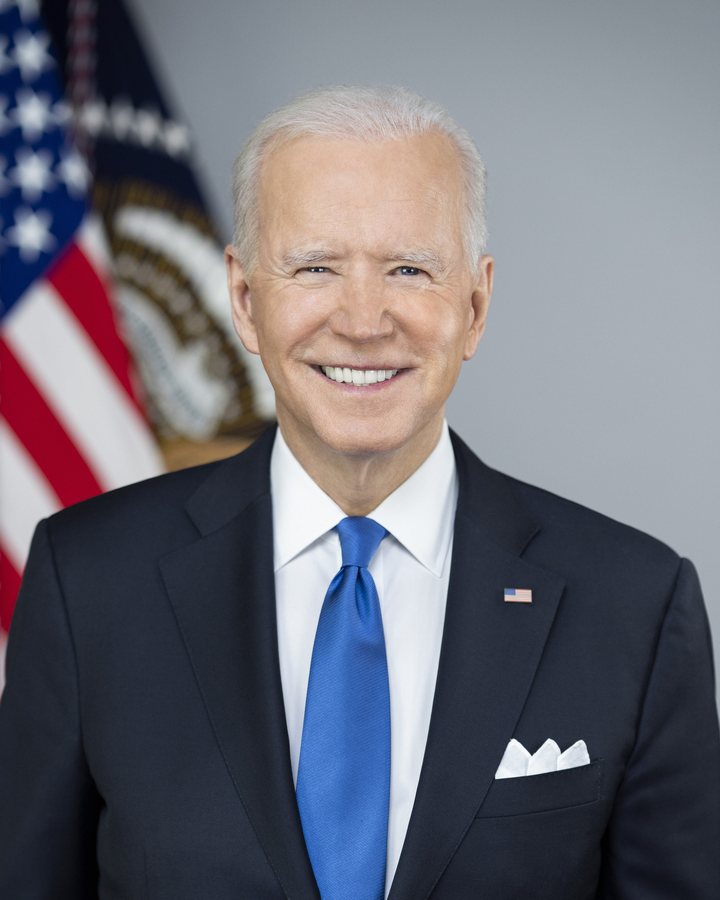
Joe Biden’s post-presidency is increasingly being defined by an unusual balance: he remains a major political figure, but the rhythm of his public life is now shaped by treatment for metastatic prostate cancer. A Telegram video published by Ateo Breaking on Saturday is the latest example. The channel says it shows Biden leaving Mass at St. Joseph on the Brandywine in Wilmington, Delaware, and walking to a vehicle.
The clip followed an Aug. 7 BBC Newsnight interview in which Hunter Biden described his father’s cancer as painful and debilitating. The Associated Press reported those remarks and noted that the former president remains active. The juxtaposition — a son describing physical suffering, followed by an apparent routine outing — captures why Biden’s health is being watched so closely even though he no longer holds office.
The specific Saturday sighting has not yet been independently verified by MAIR. No second indexed report was found establishing when the clip was recorded, so the video should be attributed to Ateo Breaking. The parish schedule does confirm that St. Joseph on the Brandywine had a 5 p.m. vigil Mass on Aug. 8, and Biden’s history at the church is well established.
Independent photography from June 13, 2026, shows Biden attending Mass at the same parish. That is useful context because it indicates that churchgoing remains part of his routine during treatment. The reported Aug. 8 appearance would therefore represent continuity rather than a formal political return or a newly launched public schedule.
Biden’s office announced his cancer diagnosis in May 2025. It described an aggressive prostate cancer with a Gleason score of 9, Grade Group 5, and metastasis to bone, while also saying the disease was hormone-sensitive. He later received hormone and radiation therapy. In July 2026, Biden said treatment was going well, but his office did not issue detailed new scans or a current individualized prognosis.
That leaves the public with limited but meaningful information. Hunter’s account suggests the disease has a significant day-to-day cost. The National Cancer Institute says bone metastases can cause pain, and hormone-sensitive metastatic prostate cancer is generally treated with androgen-deprivation therapy alongside other systemic treatments depending on the patient. Control of the cancer does not necessarily mean the absence of symptoms or treatment burden.
For institutions and political parties, the shift is subtle but important. A former president does not have the disclosure obligations or operational responsibilities of a sitting president. Yet Biden remains a source of political memory, donor interest, party identity and historical debate. His public appearances therefore still carry symbolic weight, even when they are not political events in the ordinary sense.
The church footage illustrates the risk of treating visibility itself as a metric. In organizational life, leaders often use appearances to signal continuity or confidence. But there is no evidence that the reported Mass outing was designed for that purpose. St. Joseph on the Brandywine is a familiar family parish, not a neutral stage. Reading the episode as deliberate image management would require evidence that does not currently exist.
The same caution applies to assessments of physical capacity. A short walk cannot establish that Biden is recovering, and an image of frailty cannot establish that treatment is failing. Cancer outcomes are evaluated through clinical data, not public optics. The gap between what audiences want to know and what a video can tell them is especially large in medicine.
Still, the story has political significance because illness affects access and cadence. A former president who once moved through a schedule of rallies, briefings and international travel may now choose shorter, familiar outings. Public life can narrow without disappearing. That is a different kind of transition from a formal retirement, and it may shape how Biden participates in Democratic politics, book events, commemorations and other civic occasions.
For now, the strongest conclusion is that cancer has altered Biden’s post-presidency without making him entirely absent from public view. Hunter Biden has given the public a more candid account of the pain involved. The former president, meanwhile, continues to be seen at familiar places such as his Delaware parish. The reported Aug. 8 video fits that broader pattern, but its exact provenance and the claim that it was his first appearance after Hunter’s interview remain unverified.
66