Politics 5 min read By Alice Ashford
Trump Again Claims Taxpayers Aren't On The Hook For Ballroom—But Contractor Says Otherwise
President Donald Trump has again insisted taxpayers will not fund the new White House ballroom, but the project's contractor predicts more than $300 million of the cost will come from public funds.
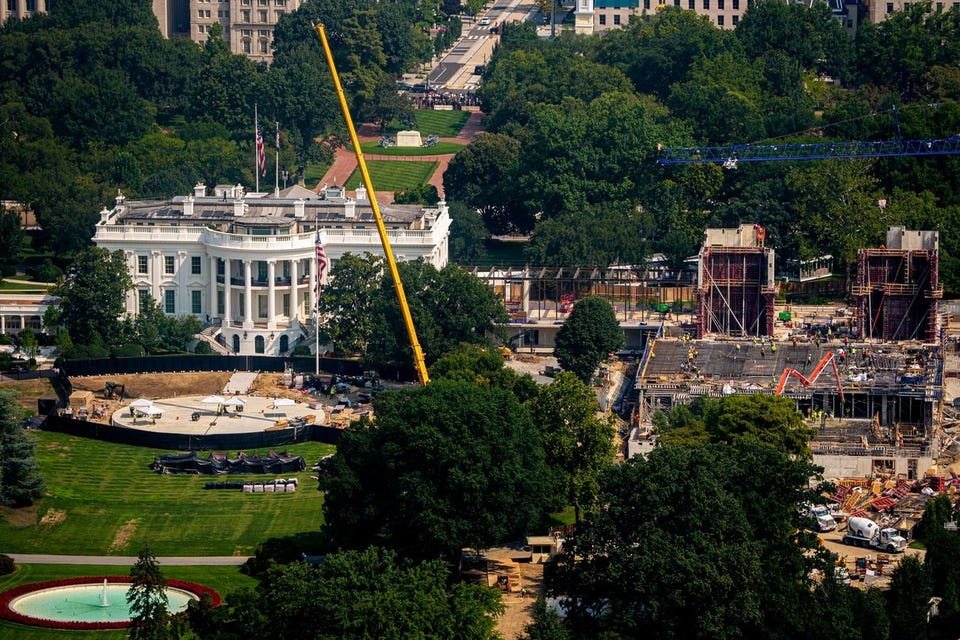
President Donald Trump has again insisted that taxpayers will not foot the bill for the new White House ballroom, but the contractor overseeing the project has projected that more than $300 million of its cost will come from public funds. The discrepancy highlights a growing gap between the administration's public messaging and the financial realities of the renovation work underway on the south grounds.
The ballroom is part of a sweeping series of White House renovations that also includes a new helipad and a gilded makeover of the Oval Office. Trump has repeatedly claimed that private donations will cover the expenses, but the contractor's estimate suggests a significant portion of the project will be drawn from government coffers. The White House has not yet responded to requests for clarification on how the funding will be structured.
The dispute over the ballroom's financing comes as Trump continues to reshape the White House grounds with a series of high-profile additions. The Rose Garden, traditionally known for its flowers, has been transformed into a display of statues of American historical figures. The latest addition, a bronze sculpture of Thomas Jefferson signing the Declaration of Independence, was gifted by Colorado sculptor George Lundeen. It joins statues of George Washington, Alexander Hamilton, and Ben Franklin, along with a fifth sculpture titled "Freedom's Charge."
White House officials have confirmed that some of the statues are on loan from anonymous donors, while the Washington statue was lent by Harlan Crow, a Texas-based real estate tycoon and Republican megadonor. Crow previously made headlines for his friendship with Supreme Court Justice Clarence Thomas. The Franklin and Hamilton statues came from donors who have chosen to remain unnamed, according to the White House.
White House spokesperson Davis Ingle defended the renovations, saying that no other president has done more to beautify the White House and its surroundings. "From restoring our treasured landmarks, which had suffered years of abuse and vandalism, to cleaning our parks and the Reflecting Pool, President Trump's bold vision ensured that America rang in its 250th birthday celebration with glory and pride," Ingle said in a statement. He added that Trump continues to make "long-overdue and necessary" renovations to the White House.
Trump's statue projects extend beyond the White House grounds. A statue of Christopher Columbus was installed at the Eisenhower Executive Office Building in March, and the National Park Service has placed a series of Revolutionary-era sculptures at a plaza near the White House. Trump's marquee plan involves building a National Garden of American Heroes near the National Mall, featuring sculptures of 250 notable Americans. Several preservation and cultural heritage organizations have sued to block that project, arguing that Congress must first authorize it.
The contractor's prediction about the ballroom's public funding raises questions about the administration's broader approach to financing its renovation agenda. While Trump has framed the projects as privately funded, the scale of the work and the involvement of public agencies suggest otherwise. The ballroom project, in particular, is expected to be one of the most expensive elements of the White House overhaul.
Lundeen, the sculptor behind the Jefferson statue, said he made the piece decades ago and kept it at his ranch before deciding to send it to the White House in time for the July Fourth celebrations of America's 250th birthday. The statue was delayed in transit due to heavy security around the holiday events, but Trump approved its placement in the Rose Garden after seeing photographs. In a voicemail shared with the Associated Press, Trump thanked Lundeen, saying the sculpture "looks really beautiful" and that it would have "a wonderful place right in the Rose Garden."
52