Politics 5 min read By Arthur Ellington
Poland turns historical memory into leverage over Ukraine’s EU timetable
Czarzasty’s Volhynia demand is not a new Brussels rule, but unanimity means Warsaw can make bilateral history politically relevant to accession decisions.
Poland’s parliamentary leadership is making historical memory an explicit variable in Ukraine’s European Union accession process. Sejm Speaker Włodzimierz Czarzasty said on August 10 that Ukrainian membership should require a broader reckoning with national history, including recognition of what Poland calls the genocide of Poles in Volhynia.
The immediate temptation is to read the statement as a Polish veto. That would be premature. Czarzasty also said he supports Ukraine joining the EU, and no Polish decision has suspended the ongoing accession talks. Ukraine had opened two of the six negotiating clusters by mid-July, including the fundamentals cluster that drives the overall pace of the process.
Nor has the EU adopted a new Volhynia-specific membership criterion. The formal framework remains based on democratic institutions, rule-of-law standards, fundamental rights, market readiness and implementation of the acquis. The significance of Czarzasty’s statement comes instead from the governance structure of enlargement.
EU membership requires unanimity among the member states. A national government therefore does not need to amend the Copenhagen criteria to create leverage. It can condition its consent to a future step on progress in a bilateral dispute. In institutional terms, this is how a historical issue can move from domestic politics into the accession timetable.
The Polish political base for doing so is unusually broad. On July 17, the Sejm adopted a resolution by 441 votes to zero that commemorated victims of crimes by Ukrainian nationalists and used the term genocide. A separate proposal from lawmakers explicitly opposing Ukrainian membership over glorification of Volhynia perpetrators was also introduced and referred to committee.
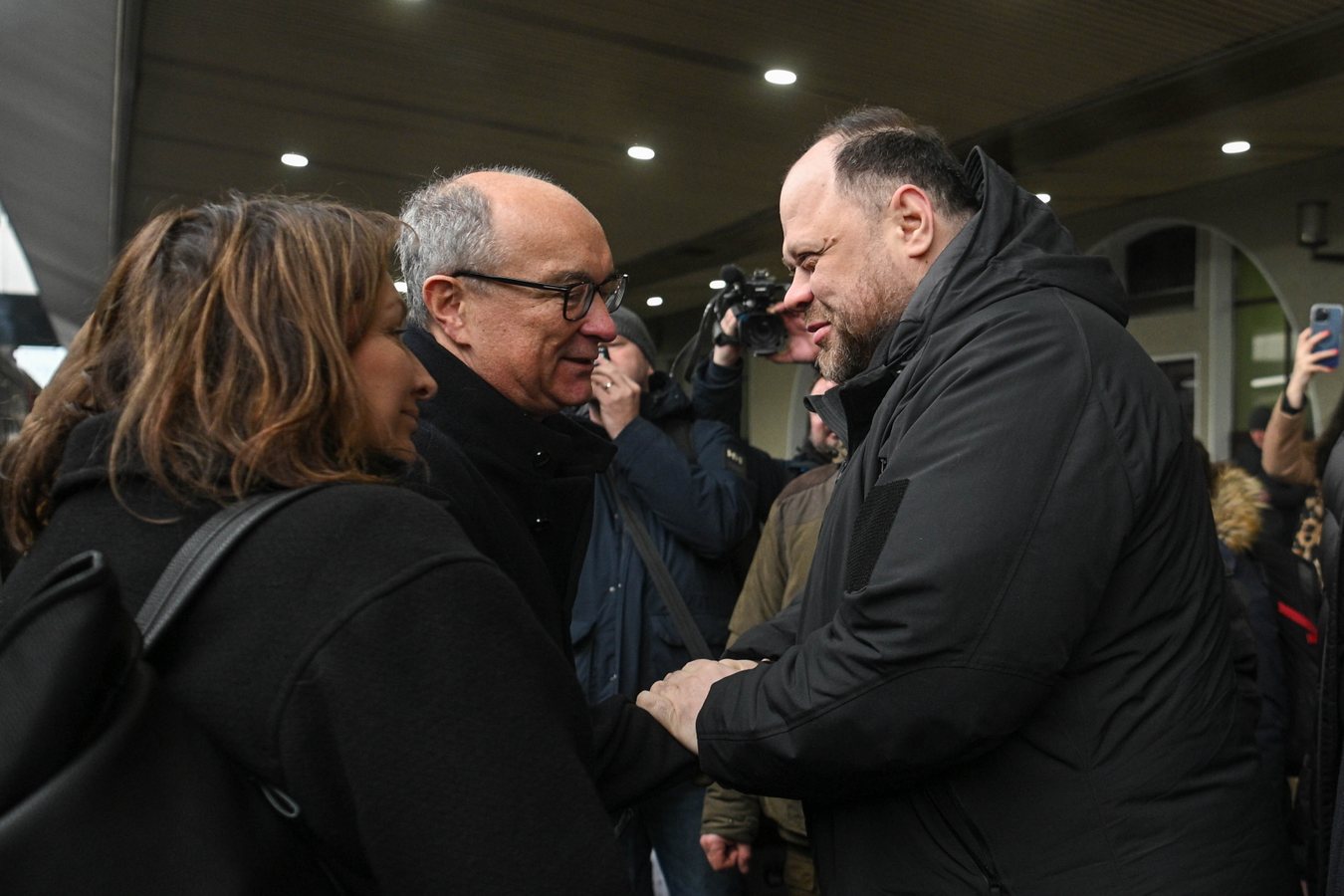
Czarzasty himself represents a more complicated position than those hard-line proposals. In February, he signed a declaration with Verkhovna Rada Chairman Ruslan Stefanchuk supporting Ukraine’s EU membership bid. In June, he called Ukrainian membership a vital Polish interest and argued against escalating historical disputes. His August message can be understood as an attempt to define the conditions under which that strategic support remains politically sustainable in Poland.
Ukraine’s response to the wider historical dispute has included practical cooperation. Its Institute of National Memory announced exhumation-related work in Ostrivky and Volia Ostrovetska in Volyn from July 13 to August 7. After the Polish Sejm’s July resolution, Ukraine’s Foreign Ministry, according to European Pravda, emphasized joint commemoration of innocent Ukrainian and Polish victims.
For policy and business audiences, the key point is that Ukraine now faces two interlocking negotiation systems. The first is the formal EU process, with measurable legal and institutional benchmarks. The second consists of bilateral political bargains with member states whose assent is ultimately necessary.
Poland is particularly important because the relationship is not peripheral. Warsaw has been a major political and logistical partner for Kyiv, and Czarzasty continues to frame a secure Ukraine as a Polish interest. A prolonged historical confrontation would therefore impose costs on both sides, including more uncertainty around the timetable for integration.
Czarzasty’s appeal to restore trust after making his demand suggests that Warsaw is still seeking bargaining leverage rather than rupture. He called for a continuous parliamentary channel and condemned mistreatment between Poles and Ukrainians in both directions.
The next indicator to watch is whether the Polish government converts this rhetoric into an explicit condition attached to a concrete accession decision. If it does, Volhynia will move from political signaling into a defined negotiating obstacle. If not, the statement may instead serve as pressure for faster progress on archives, exhumations, memorialization and official language.
Either way, the episode is a reminder that enlargement is never merely a compliance exercise. Institutions matter, but so do national veto points, domestic coalitions and unresolved historical conflicts. Ukraine’s accession strategy will increasingly have to manage all three at once.
53