Politics 5 min read By Arthur Ellington
Chornobyl shows how Ukraine is institutionalizing northern defense
Land policy, permanent fortifications, mine barriers and persistent surveillance have turned the Belarus frontier into a standing security system. The Chornobyl sector is a case study in how Ukraine converted a 2022 vulnerability into policy.
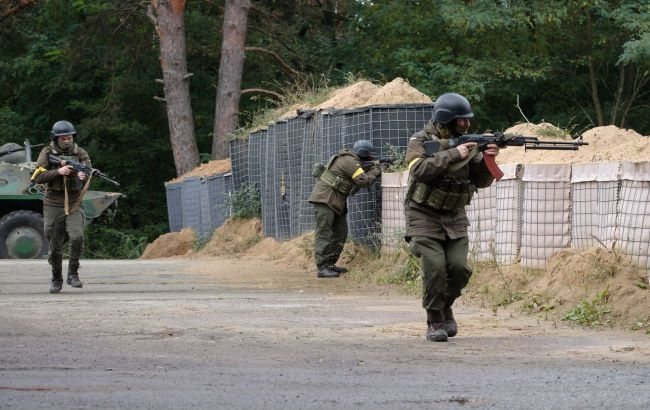
Ukraine’s defenses around Chornobyl illustrate a broader institutional shift: the country is converting a wartime vulnerability into a permanent border-security system. The northern frontier is no longer being treated as a rear area that can be protected mainly by geography. It is being engineered, monitored and legally reorganized for long-term defense.
The clearest institutional marker came in December 2024. A presidential decree changed the boundaries of the Chornobyl Radiation and Ecological Biosphere Reserve and transferred 695.2 hectares along the state border to State Border Guard Service units. The land was designated for permanent engineering and fortification structures, fences, border clearings, signs and communications. That gave defensive infrastructure an administrative base beyond emergency wartime measures.
The strategic rationale is the Russian assault of February 2022. Belarusian territory served as a launchpad for forces moving toward Kyiv, and the Chornobyl Exclusion Zone became one of their corridors. The episode showed that restricted access, difficult terrain and radioactive contamination did not constitute a reliable barrier. Ukraine’s answer has been to add purpose-built friction to the geography.
That friction now comes in several layers. Ukrainian officials said in June 2026 that fortification lines were being expanded and mine-explosive barriers increased in the most dangerous directions. Associated Press reporting in July described mines, anti-tank obstacles, razor wire and anti-drone measures along the Belarus frontier. Border guards conduct around-the-clock patrols using drones and other surveillance systems.
From an institutional perspective, this is more significant than any single trench or obstacle. A border becomes resilient when detection, delay and response work together and can be maintained over time. The land transfers, engineering work and persistent monitoring suggest that Ukraine is building a standing system rather than a temporary defensive belt that will disappear when immediate attention shifts elsewhere.
At the same time, public reporting has limits that matter. Claims that every road and forest in the Chornobyl zone is densely mined are not verified. Available sources support minefields and additional barriers on vulnerable approaches. Likewise, reporting supports 24-hour patrols on the border but not a detailed public inventory of observation posts. Those distinctions protect both factual accuracy and operational security.
Chornobyl also imposes governance costs not found on a conventional frontier. AP reported that Russian troops dug positions in contaminated soil in 2022 and that military activity contributed to forest fires. The exclusion zone is a protected and radiologically controlled landscape, meaning defense infrastructure must coexist with environmental monitoring and restrictions on how people work and move.
The nuclear facility adds a second institutional layer. The New Safe Confinement was damaged in a February 2025 drone strike. In April 2026 the plant operator said the arch had lost the capacity to fully maintain internal leak-tightness, although radiation readings remained within established levels, no above-limit releases had been detected and the facility remained controlled. Defense planning in the area therefore overlaps directly with nuclear-risk management.
The current threat picture is more restrained than the scale of construction might imply. Ukrainian border authorities said in June that they were not observing a strike group near the frontier capable of launching a new invasion. AP reported in late July that officials still saw no signs of a Russian troop buildup in Belarus. The infrastructure is therefore a hedge against a strategic possibility, not evidence of a known immediate attack plan.
For policymakers elsewhere in Europe, Chornobyl offers a useful lesson in how security institutions change after a shock. Ukraine is not simply repairing what was lost in 2022. It is redesigning land use, border engineering, surveillance and emergency planning around the assumption that a route once used for aggression must remain permanently harder to exploit. That is what makes the Chornobyl sector a symbol of institutional adaptation rather than just another fortified line.
51