Politics 4 min read By Callum Montgomery
America’s permanent daylight saving bill tests politics against circadian science
The House has chosen year-round DST, while leading US medical organisations prefer permanent standard time and the Senate still holds the next decision.
The United States has moved from a familiar complaint about changing the clocks to a more consequential policy choice about how the state should organise time itself.
On 14 July, the House of Representatives passed the Sunshine Protection Act by 308 votes to 117. H.R. 139 would make daylight saving time effectively permanent for most of the country. The Senate received the bill on 15 July and referred it to the Committee on Commerce, Science, and Transportation. It has not yet passed the upper chamber.
The political attraction is obvious. Ending the twice-yearly change is popular enough to attract support across party lines, and President Donald Trump has backed the push to stop moving the clocks. Supporters also present later evening light as an economic and social asset, with more time for retail, recreation and activity after work.
Yet the institutional problem is more complicated than a slogan such as “lock the clock” suggests. Federal law currently lets states opt out of daylight saving time, but the Department of Transportation says they cannot place themselves on permanent DST without federal action. Nineteen states have already enacted conditional measures seeking year-round daylight saving time if Washington allows it, according to the National Conference of State Legislatures as cited by CNN.
The House bill therefore alters the architecture of federal timekeeping. It repeals the statutory temporary daylight-saving period and advances federal standard time by one hour. Areas that have opted out before enactment would retain choices specified in the new text.
The more interesting conflict is between political convenience and medical advice. The American Academy of Sleep Medicine supports ending seasonal clock changes but recommends permanent standard time. The American Medical Association takes the same basic view. Their argument is that standard time more closely matches circadian biology because morning light helps synchronise the human body clock.
That does not mean every economic claim on either side is settled. Supporters say later light can aid business and public activity. Opponents emphasise darker winter mornings, particularly for schoolchildren and early commuters. The effect varies by latitude, longitude, season, work pattern and industry.
This is a classic public-policy trade-off disguised as a lifestyle question. A national time standard coordinates transport, finance, broadcasting, technology and interstate commerce. Moving that standard changes the relationship between clock time and solar time for hundreds of millions of people at once.
There is also a historical warning. The United States experimented with year-round daylight saving time during the 1970s energy crisis and Congress changed course in 1974. The earlier episode is not directly transferable to a modern economy, but it demonstrates how quickly abstract support can collide with the lived reality of winter darkness.
For business, certainty has value. A permanent system would eliminate clock-change adjustments in scheduling, software, travel and cross-border coordination. But certainty alone does not answer which permanent system is superior. Standard time would provide the same administrative stability while distributing daylight differently.
The Senate is therefore not merely deciding whether Americans are tired of resetting clocks. It is deciding which constituency and which body of evidence should define the permanent baseline: advocates of later evening light, or health specialists who prioritise morning alignment.
The House has made its choice. The next institutional test belongs to the Senate.
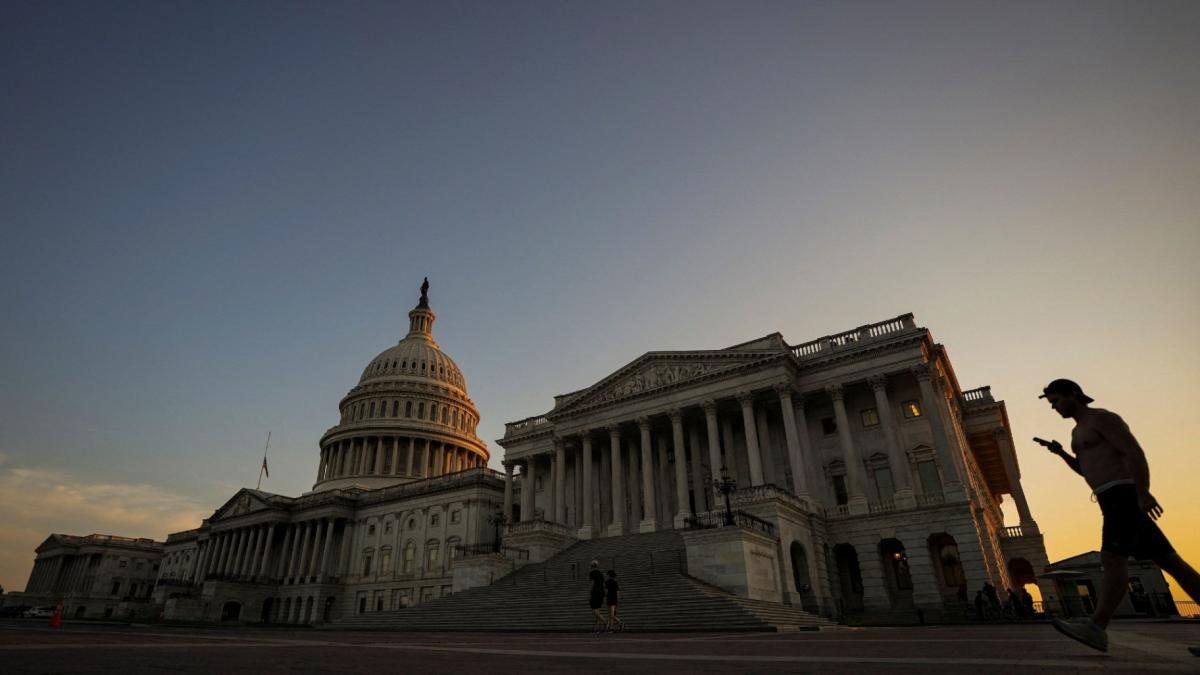
Image: The U.S. Capitol in evening light on 13 July 2026. Image credit: Al Drago / Reuters via CNN Newsource.
47