Economy 3 min read By Bethany Hadley
Romania opposes European Commission plan to cut electricity taxation
Romania will not back a European Commission proposal to amend EU rules on electricity taxation, citing procedural grounds rather than the substance of the measure.
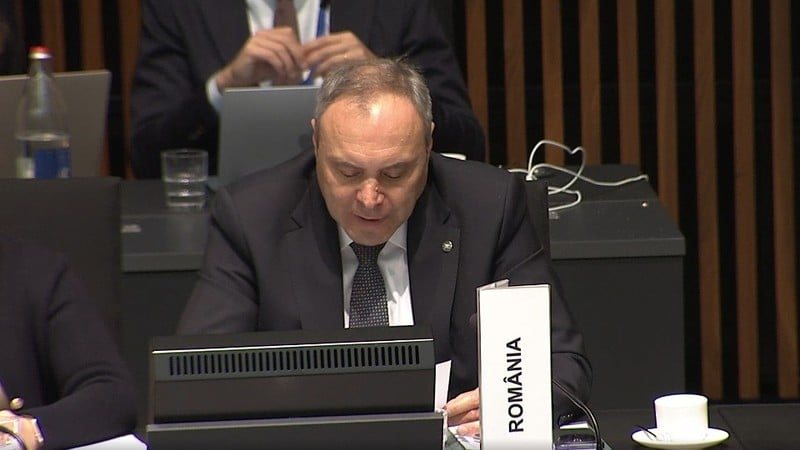
Romania will not support a European Commission proposal to reduce the taxation of electricity, the government has said, arguing that the issue must be handled within the appropriate EU fiscal framework and with full respect for the principle of unanimity. The objection is procedural rather than substantive: according to the government's position, Bucharest is not opposing the aim of lower energy taxes, but the route the Commission has chosen to pursue them.
The Commission's proposal would amend the EU regulation on the internal market for electricity. Under the text, member states would be obliged not to impose an excise duty on electricity higher than the one applied to natural gas. The measure would also make it easier for states to reduce national taxation on energy products and on electricity consumed by large industrial users, a category of companies that typically carry heavy power bills and are closely watched by governments seeking to protect competitiveness.
Bucharest's position is that tax matters of this kind cannot be settled through an internal market regulation and must instead be negotiated under the EU's tax framework, where decisions require unanimous agreement among member states. Romania's stance therefore centres on the legal basis of the proposal. It leaves open the question of whether lower energy taxes are desirable, a point the government has not contested in its procedural objection.
The debate comes as the government is also moving on another tax front. Separately, Romania plans to scrap its national logistics fee on parcels containing goods from outside the European Union with a declared value below 150 euros, effective 1 November 2026. The draft justification for the change notes that the European Union is introducing its own charges, of 3 euros on certain items and 2 euros for parcel processing. The national fee is currently applied to such parcels, and its removal is intended to avoid overlapping charges for consumers and retailers once the European levies take effect.
Taken together, the two decisions show Romania insisting that tax policy remains anchored in national and EU-level procedures, even as Brussels pushes for harmonised rules on energy and cross-border trade. The European charges on low-value parcels reflect the same logic of common rules replacing separate national measures, while the electricity proposal tests how far that logic can reach into areas that member states have traditionally guarded. Whether the electricity proposal advances will depend on whether it can be reconciled with the unanimity requirement that Romania has invoked, and on whether other member states share Bucharest's view that the internal market regulation is the wrong instrument for the task.
2