

Economy 7 min read By Arthur Ellington
Oil Prices Slide 1% as Markets Bet on Contained Supply Disruption
Crude prices fell about 1% as traders judged that disruptions to Middle East energy flows would be limited, even as the shutdown of Saudi Arabia's East-West pipeline renewed scrutiny of global supply buffers.
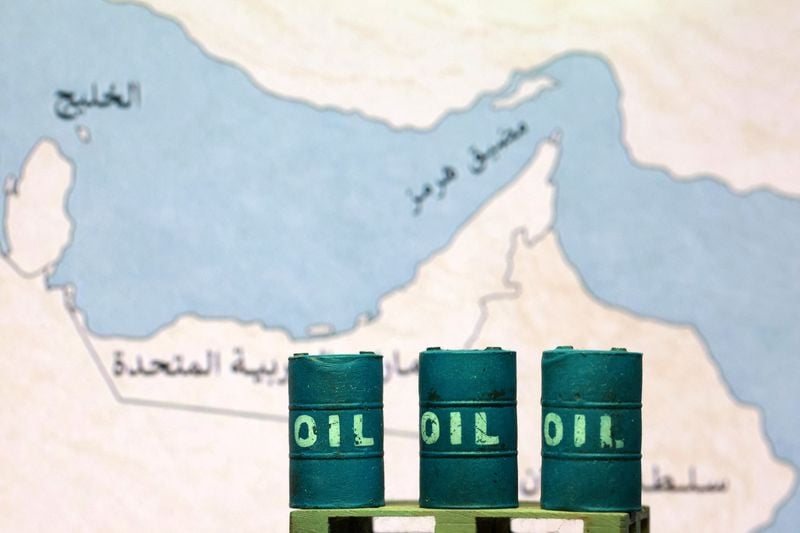
Oil prices fell by around 1% as traders concluded that the disruption to Middle East energy flows would be contained, easing the immediate risk premium that had built up around one of the world's most important supply routes. The decline reflects a market judgement that alternative routes, inventories and producer flexibility can absorb much of the shock, even after a critical pipeline was taken out of service.
Saudi Arabia's East-West pipeline was closed this week after serving as one of the largest buffers against this year's historic Strait of Hormuz energy shock. Together with the UAE's bypass pipeline, the two routes carried approximately 5 million additional barrels a day around the Strait in the second quarter, compared with their fourth quarter 2025 volumes. The temporary shutdown puts a fresh spotlight on the broader set of shock absorbers that have helped the global energy system adapt.
No single measure has absorbed a disruption that put roughly one-fifth of global oil supplies at risk. Instead, layers of resilience built over decades kicked in together. Alongside pipelines, governments and companies drew on inventories, while producers including the United States increased exports. Overall oil consumption did fall, but flexibility helped manage some of the economic impact. Refiners changed crude inputs and their production mix, industrial companies switched feedstocks, and consumers changed behaviour. More than one in five barrels of seaborne oil traded in the second quarter of 2026 moved differently than before the disruption.
Taken together, the experience brings several features of resilience into focus. It is layered, with different measures working alongside and compensating for one another. It is dynamic, because options available early in a disruption may become constrained or themselves disrupted, increasing the value of alternatives and the ability to adapt. And its economics evolve under stress, as spare capacity or alternative routes that appear underutilised in normal times can become vital when continuity is threatened.
For companies, these lessons matter well beyond Hormuz. Two-thirds of energy trade passes through maritime chokepoints, one-third occurs between partners who are not geopolitically aligned, and 95% of people live in regions importing at least one major fuel. The implications extend beyond the energy sector. Energy is embedded in production, feedstocks, transportation and supply chains, so a disruption can quickly become a business-continuity issue for manufacturers, retailers, technology companies and others. Few companies can insulate themselves completely.
Management teams are being urged to identify the dependencies that could interrupt the business. Companies should look beyond direct energy purchases to understand dependencies across fuels and feedstocks, suppliers, operations, infrastructure and trade routes, and identify where a disruption could materially impair operations. Dependencies can be particularly complex because firms operate across jurisdictions and sectors, and they can be counterintuitive: even a factory in a major energy exporter may rely on imports of a specific fuel or feedstock. The goal is to distinguish dependencies the business can tolerate from those that could become critical vulnerabilities.
The highest-priority vulnerabilities can then be stress-tested and responses formulated accordingly. Scenario planning, decision triggers and accountabilities can help companies act quickly when disruption comes. Building a portfolio of options, and the flexibility to use them, is seen as central. Depending on exposure, companies may need some combination of alternative fuels and feedstocks, diversified suppliers and routes, inventories, efficiency and electrification, or new and captive supply.
The recent disruption also shows why having options is not enough. As a disruption evolves, some may become constrained or unavailable. Flexibility, meaning the capacity to make changes easily and at manageable cost, can therefore enhance resilience. Input flexibility can allow equipment to switch fuels or feedstocks. Reliance, an Indian conglomerate, runs a refining complex that can process over 200 crude grades. Manufacturing flexibility can shift production between sites, while logistics flexibility can provide access to alternative ports, carriers, storage and suppliers. During Europe's 2022 gas shock, Yara, a chemicals company, reduced ammonia production in Europe while supplying fertiliser plants with ammonia produced elsewhere.
Commercial flexibility matters too. Physical alternatives are of little use if contracts prevent them from being exercised. Destination-free LNG contracts, for example, give buyers greater ability to redirect or resell cargoes during a shock. Resilience also needs to be valued explicitly in investment decisions. Capacity that looks redundant, or flexibility that carries a cost, can acquire substantial value when disruption threatens operations. Energy efficiency can reduce operating costs in normal times while lowering exposure to price spikes during disruptions, and every unit of energy a company does not use is one less that other security measures need to cover.
Resilience can also help companies perform through disruption. BASF, a chemicals producer, had been disrupted by the 2022 gas shock, yet it increased volumes by 7% year on year in the second quarter of 2026 amid Middle East supply disruptions, highlighting the value of adaptability when supply chains are under strain.