Economy 5 min read By Bethany Hadley
Putin Signals Russia's 2027 Budget Deficit to Hold Near 2% of GDP
Russia's President Vladimir Putin has indicated that the country's budget deficit in 2027 will be around 2% of GDP, signalling continued fiscal strain as the government balances military spending against economic stability.
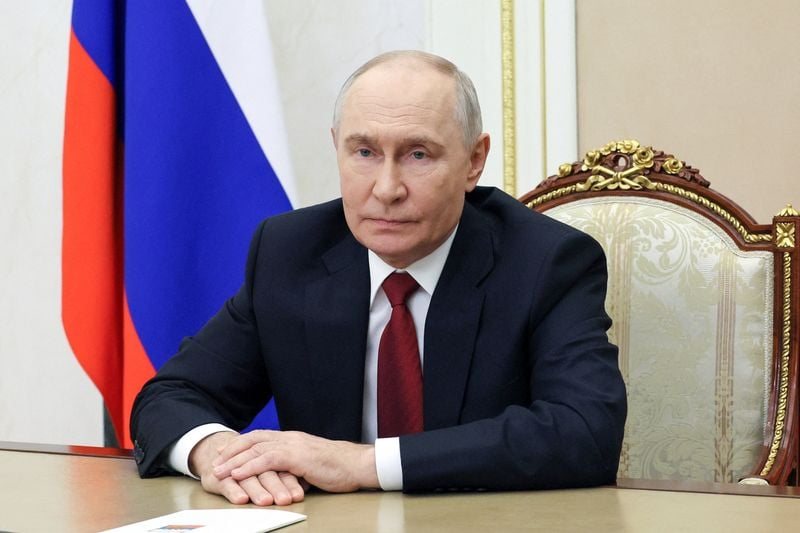
Russia's budget deficit is expected to remain around 2% of GDP in 2027, President Vladimir Putin has said, offering a rare forward-looking signal on the country's fiscal trajectory as it continues to manage the economic pressures of its war in Ukraine.
The projection points to a persistent shortfall in the government's finances, even as Moscow seeks to stabilise public spending and contain the wider economic fallout from sanctions and shifting global energy markets. A deficit of that scale would be modest by the standards of many large economies, but it comes as Russia faces elevated military expenditure and constrained access to Western capital.
Putin's remarks, reported on Wednesday, did not specify the exact rouble figure or the assumptions behind the forecast. The 2% figure is broadly in line with recent budget planning, which has seen the government run deficits in the range of 1% to 2% of GDP in recent years as it funnels resources toward defence and social commitments.
The Russian economy has proven more resilient than many Western analysts initially expected after the 2022 invasion of Ukraine and the subsequent wave of sanctions. Strong oil revenues, capital controls, and increased trade with China, India, and other non-Western partners have helped cushion the blow. But the fiscal picture remains delicate. Military spending now accounts for a historically high share of the federal budget, and pressure is mounting on other areas, including infrastructure, education, and healthcare.
A deficit of around 2% of GDP would require continued borrowing on domestic markets, where the government has relied heavily on banks and institutional investors. International borrowing remains largely closed off. The Finance Ministry has also tapped into the National Wealth Fund, a sovereign savings pot built up from earlier energy revenues, to cover shortfalls. That fund has shrunk in recent years, reducing the buffer available for future shocks.
Economists have warned that Russia's fiscal room for manoeuvre is narrowing. While the deficit itself is not alarming in isolation, the combination of high military outlays, a tight labour market, and persistent inflation has complicated the central bank's task. The Bank of Russia has kept interest rates elevated to bring price growth under control, a policy that raises the cost of government borrowing and weighs on private investment.
Putin's comments come amid broader debate within the government over the 2027 budget framework. Officials have signalled that defence and security spending will remain a priority, but there is also recognition that long-term growth requires investment in civilian sectors. The challenge is doing both without widening the deficit beyond manageable levels.
For British businesses and investors, the signal is one of continuity rather than dramatic change. Russia remains a restricted market for most Western firms, and the fiscal outlook does little to alter that reality. But the deficit figure offers a useful gauge of how long Moscow can sustain its current spending path without resorting to more aggressive measures, such as higher taxes or deeper cuts to non-military programmes.
The Kremlin has not yet published detailed 2027 budget plans. Putin's indication of a roughly 2% deficit will serve as a marker for analysts tracking Russia's fiscal health. It suggests the government is aiming for stability rather than stimulus, and that it expects to keep the deficit within a range that domestic markets can absorb.
Whether that target holds will depend on factors largely outside Moscow's control, including global energy prices, the effectiveness of sanctions enforcement, and the trajectory of the war. For now, the president's message is that Russia's finances remain under control, even as the costs of conflict continue to mount.