Economy 4 min read By Arthur Ellington
Mayors to Keep Share of Income Tax and Business Rates in Devolution Overhaul
Prime Minister Andy Burnham has announced that regional mayors, including London's Sadiq Khan, will retain a portion of income tax and business rates generated locally, as part of a major devolution drive aimed at shifting fiscal power away from Westminster.
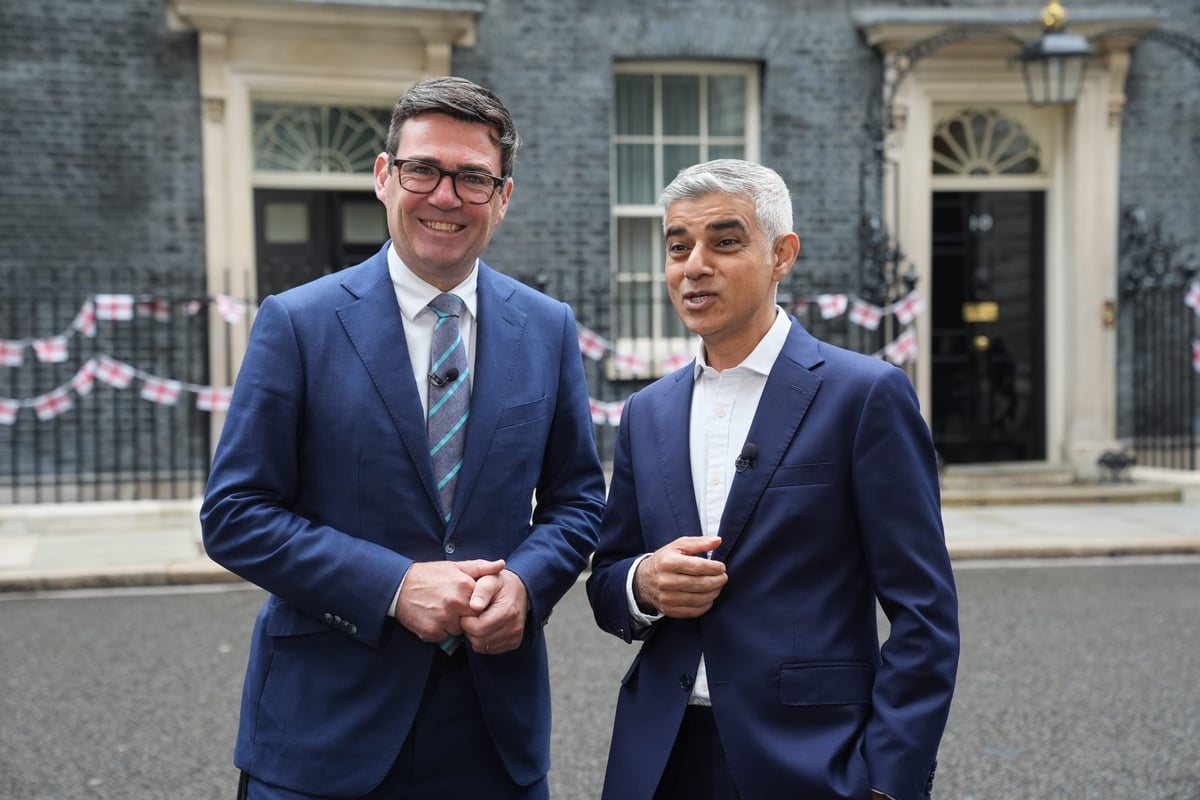
Prime Minister Andy Burnham has announced a major devolution drive that will allow regional mayors, including London's Sadiq Khan, to retain a portion of the income tax and business rates generated in their areas. The move represents the most significant shift of fiscal power away from Westminster in decades, giving local leaders greater control over spending decisions that affect their communities.
Under the plan, from 2028 mayors will keep a share of income tax collected locally, while from April 2027 they will retain business rates worth tens of millions of pounds. The Prime Minister said the reforms are part of a pledge to «take power out of Westminster» and ensure that decisions about local investment are made closer to the people who are affected by them.
The devolution shake-up also includes new borrowing powers, enabling mayors to fund large infrastructure projects without seeking central government approval for each initiative. The Guardian reported that local leaders described the plan as «transformational», allowing English regions to break out of what they called the «death grip of the Treasury» over regional funding.
Mayors across England, including those of Greater Manchester, the West Midlands, and other combined authorities, are expected to benefit from the changes. The additional fiscal autonomy will allow them to direct resources towards priorities such as housing, transport, skills training, and local economic development, rather than relying on Whitehall handouts for every project.
The exact percentage of income tax that mayors will retain has not yet been specified. The Manchester Evening News noted that the details remain unclear, although the principle of allowing local leaders to keep more of their revenue has been confirmed by Number 10. Further negotiations with individual mayors are expected in the coming months to finalise the allocations.
Sadiq Khan, the Mayor of London, welcomed the additional powers and cash, which are expected to boost the capital's capacity to address pressing challenges such as affordable housing, public transport upgrades, and climate resilience. The announcement builds on previous devolution agreements, including the 2016 London Finance Commission recommendations and subsequent deals with metro mayors.
The plan has been broadly welcomed by local government leaders and business groups, who argue that it will unlock investment and reduce inefficiencies caused by centralised decision-making. Critics, however, have questioned whether the new powers go far enough, pointing out that English regions still have far less fiscal autonomy than Scotland, Wales, or Northern Ireland.
The devolution drive is part of a broader agenda to rebalance the UK economy and address regional inequalities. By allowing mayors to retain a portion of the taxes generated in their areas, the government hopes to create stronger incentives for local economic growth and reduce the dependency on central government funding formulas that have long been criticised as outdated and opaque.