Economy 5 min read By Alice Ashford
German Tax Windfall Offers No Extra Fiscal Room, Minister Says
Germany expects €43.4 billion more in tax revenue between 2026 and 2030, but the finance minister says the revised forecasts do not create additional spending headroom.
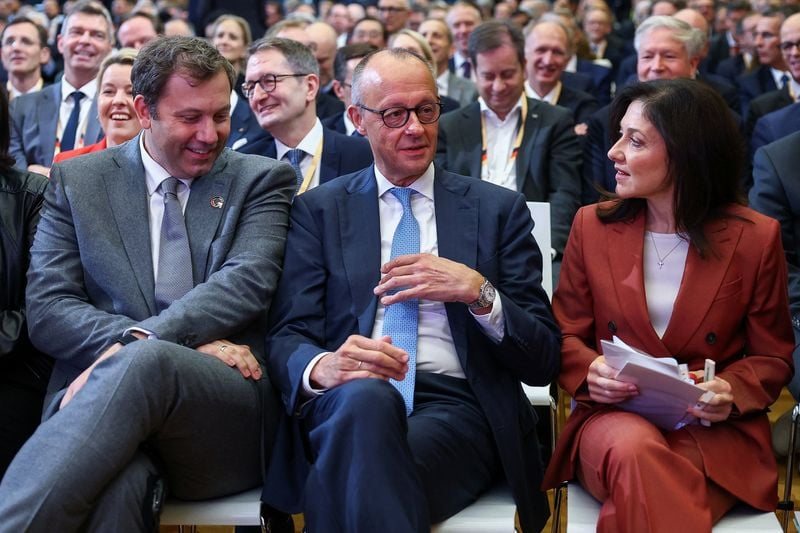
Germany's revised tax revenue forecasts will deliver billions of euros more to federal and state coffers over the coming years, but the country's finance minister has moved to dampen expectations that the improvement will translate into extra fiscal leeway.
The updated estimates point to around €43.4 billion in additional tax revenues between 2026 and 2030, according to the figures behind the revised projection. The minister's message was blunt: higher receipts do not automatically mean more room to spend or borrow.
The caution reflects the constrained position of Europe's largest economy, where weak growth, pressure on the industrial base and competing demands on the budget have narrowed the space for new commitments. Even as the revenue outlook improves on paper, the government is signalling that the extra money is already spoken for or needed to shore up the public finances.
Tax forecasts in Germany are compiled regularly and form a central input into budget planning at federal, state and municipal level. A revision of this size would normally be treated as a significant development in Berlin, giving coalition partners and regional governments a basis for arguing over how the proceeds should be divided.
The minister's intervention appears designed to head off exactly that debate. By stating that the higher estimates will not offer more fiscal leeway, the government is seeking to keep expectations in check and to avoid pre-committing funds that may be needed elsewhere.
The figures cover a five-year window beginning in 2026, meaning the effect will be spread across several budget cycles rather than delivered as a single windfall. That timing matters for a government managing annual spending plans and debt rules that limit how far it can stretch the public purse.
For businesses and households, the practical consequence is likely to be continuity rather than a wave of new relief or investment. Companies watching for signals on tax policy, infrastructure spending or subsidies will find little in the revised forecasts to suggest a loosening of the fiscal stance.
The revision also lands against a backdrop of sluggish momentum in the German economy, which has lagged many of its peers in recent years. Weak industrial output and soft demand have weighed on tax receipts in the past, making forecast upgrades sensitive to any change in the growth outlook.
Economists typically treat revenue revisions with caution, since they rest on assumptions about employment, wages, corporate profits and consumption that can shift quickly. A forecast improvement does not guarantee that the money will materialise in full, and the government's stance suggests it is treating the numbers as a buffer rather than a bonus.
For the finance ministry, the priority is credibility with the public and the markets. Promising new spending on the back of projections that may not hold would risk widening the deficit if growth disappoints, a scenario Berlin is keen to avoid.
The political dimension is equally delicate. Germany's coalition arrangements require compromise over the distribution of federal and regional revenues, and any suggestion of surplus funds tends to trigger demands from states and municipalities for a larger share.
By ruling out additional leeway early, the minister is attempting to set the terms of that negotiation before it begins. The message to regional leaders and coalition partners is that the improved outlook strengthens the existing framework rather than opening a new one.
Whether that position holds will depend on how the economy performs over the next two years. If growth picks up and receipts exceed even the revised estimates, pressure to loosen the purse strings will intensify. If the recovery stalls, the extra revenue may prove essential simply to keep existing plans on track.
For now, the government's line is that the tax windfall changes the arithmetic without changing the strategy. The extra billions will help steady the budget, but they will not be treated as a mandate for a more expansive fiscal policy.
2