
Culture 3 min read By Bethany Hadley
Oasis reunion film begins its global cinema run
‘Don’t Look Back in Anger’ takes the Gallagher brothers’ 2025 comeback from stadiums to cinemas, including their first joint interviews in more than two decades.
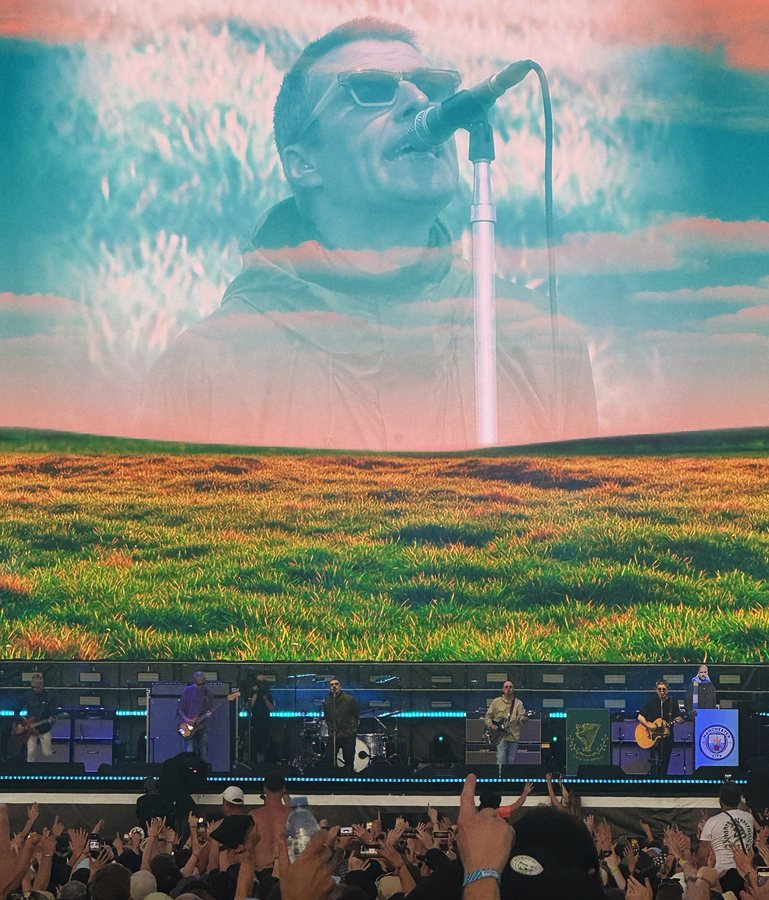
The Oasis reunion is moving from stadium memory to cinema screens. “Oasis: Don’t Look Back in Anger,” the documentary built around Liam and Noel Gallagher’s huge 2025 comeback tour, begins its limited theatrical rollout on 9 September, giving fans a new version of a reunion that already became one of the defining live-music stories of last year.
The film is not simply a concert recording. Directed by Dylan Southern and Will Lovelace and created with Steven Knight, it follows the return of Oasis through rehearsal rooms, backstage spaces and performances from the “Oasis Live ’25” tour. Its most obvious archival hook is also its most personal: the documentary includes the first joint interviews with Liam and Noel in more than 20 years.
That matters because Oasis history has always been inseparable from the Gallagher relationship. The band’s songs built a global audience, but the brothers’ arguments, split and long estrangement became part of the mythology. When they reconciled and returned to the stage after years apart, audiences were not only buying tickets for a catalogue. They were watching whether two people with one of rock’s most famous feuds could actually function together again.
The 2025 tour answered that question in the most public way possible: night after night, in front of enormous crowds. “Don’t Look Back in Anger” now has the opportunity to answer a different one — what did the reunion look like when the brothers were not standing under stadium lights?
Disney’s theatrical plan makes the documentary an event rather than a conventional wide release. The film begins in selected IMAX cinemas on 9 September, with further cinema screenings following from 11 September in several markets, before a later streaming release on Disney+. In Germany, for example, cinemas are advertising limited shows across the 9–13 September window.
The format suits a band whose comeback was defined by scale. Oasis songs such as “Wonderwall,” “Live Forever” and “Don’t Look Back in Anger” have spent decades moving between headphones, pubs, football terraces and festival fields. A cinema release places the reunion somewhere between collective concert memory and conventional music documentary.
There is also a generational story underneath the nostalgia. Many fans who experienced Oasis in the 1990s returned in 2025 with children or younger relatives who had never had the chance to see the original band. The tour therefore functioned both as a reunion for one audience and, strangely, as a debut for another.
The documentary arrives while that emotional momentum is still fresh. It does not need to prove that the reunion mattered commercially; the sold-out tour already did that. Its real test is whether it can show something the stadium spectacle could not — how Liam and Noel rebuilt enough trust to stand together again, and what their return meant once the noise of the crowd disappeared.
78