Culture 3 min read By Alice Ashford
Checkout Turns Mossad Satire Into a Geopolitical Rorschach Test
Jonathan Dekel's comedy about a Mossad spy desperate for recognition was made before the Israel-Hamas war but now reads as a shifting test of how audiences see Israeli security, satire and the conflict itself.
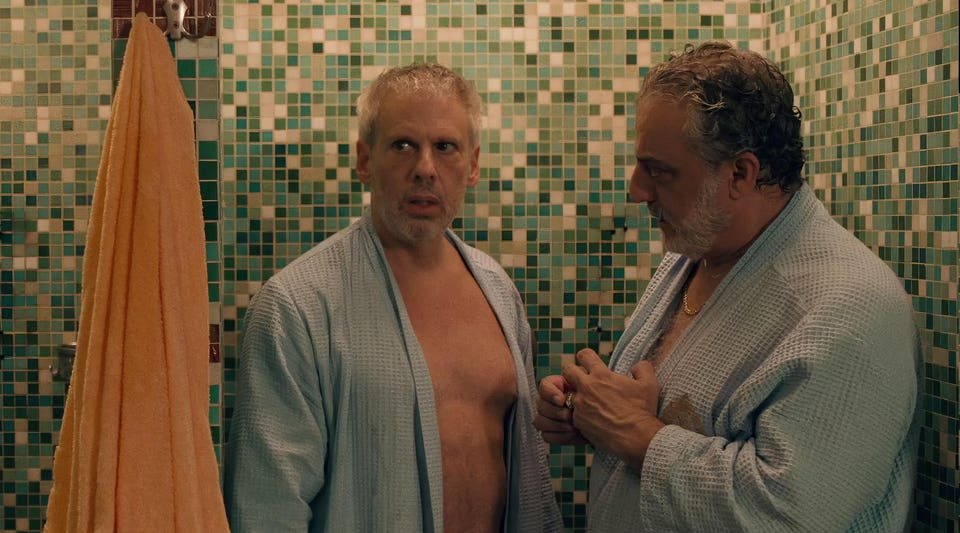
A comedy about a Mossad spy desperate for recognition has become an unexpected measure of how audiences read Israel, security and satire. Jonathan Dekel's film «Checkout» was made before the Israel-Hamas war, yet its story of an operative craving acknowledgment now lands differently, turning a quirky character study into what has been described as a geopolitical Rorschach test.
The film follows a spy whose hunger for recognition drives the comedy. That premise, rooted in the internal culture of Israel's security forces, was conceived as satire. But the war has changed the frame around it. What once played as an absurd portrait of bureaucratic ego can now be read through the lens of a conflict that has reshaped how Israeli institutions, and the people who serve them, are viewed abroad and at home.
That shift is central to why «Checkout» feels more timely than ever. A satire made in one political moment does not stay fixed when the context around it moves. Audiences bring new assumptions to the same scenes, and the film's portrait of a spy seeking validation can be interpreted as a comment on security culture, on individual ambition inside large institutions, or on the wider politics of the region. The work itself has not changed; the reading has.
The Rorschach comparison captures that instability. A Rorschach test is designed to reveal the observer as much as the subject, and «Checkout» now functions in a similar way. Viewers who see the security services through the prism of the war may find darker meaning in its jokes, while others may read it as a familiar story about vanity and recognition inside any powerful bureaucracy. The film's comedy depends on the gap between how the spy sees himself and how others see him, and that gap has widened in the public imagination.
For a British audience, the case also raises questions about how cultural work travels across political ruptures. A film completed before a war cannot anticipate how its subject will be received afterwards, yet it becomes part of the conversation about that war regardless. Satire is especially exposed to this, because its meaning relies on shared assumptions about what is being mocked. When those assumptions shift, the same joke can seem pointed, ambiguous or uncomfortable.
Dekel's film remains a comedy about one man's need for recognition, but its reception now carries a weight the original premise did not. The spy's desperation reads differently when the security apparatus he serves is being debated in public life. That is the nature of a Rorschach test: the image stays the same, while the interpretation keeps moving.
5