Culture 3 min read By Arthur Ellington
Museum releases 1938 aerial photos of Nikumaroro as Earhart search continues
A New Zealand museum has published a rare set of aerial survey photographs of Nikumaroro, the remote Pacific island where some researchers believe Amelia Earhart's aircraft came down, as renewed search efforts continue.
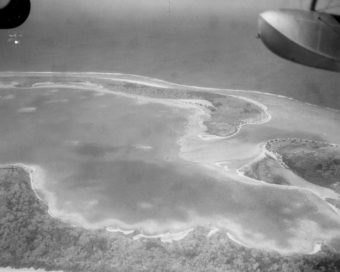
A New Zealand museum has released a set of historical aerial photographs of Nikumaroro, the remote Pacific atoll that has become central to one of aviation's most enduring mysteries: the disappearance of Amelia Earhart. The images, captured during a 1938 survey, offer a detailed view of the island's landscape at a time when it was still largely uninhabited and before later changes to its terrain.
The release comes as interest in the Earhart case intensifies, with search teams continuing to probe the waters around Nikumaroro for signs of the aircraft. The photographs are expected to help researchers compare the island's coastline, vegetation and reef structures as they were nearly nine decades ago with conditions today, a comparison that could sharpen the focus of underwater searches.
Earhart vanished in July 1937 while attempting to become the first woman to fly around the world. She and navigator Fred Noonan were flying a Lockheed Electra on the final leg of the journey, heading for Howland Island, when radio contact was lost. The US Navy mounted a massive search but found no trace of the aircraft or the crew.
One leading theory holds that Earhart and Noonan reached Nikumaroro, then known as Gardner Island, after failing to find Howland, and landed on its reef. Proponents of this view argue that the pair may have survived for a time on the island before perishing. The theory has been supported over the years by artefacts and features found on the atoll, though no definitive proof has emerged.
The newly released photographs add to a growing body of archival material that researchers are using to reconstruct the island's past. Aerial surveys from the colonial era are particularly valuable because they capture the island before the construction of airstrips and other infrastructure altered its shape. The museum's collection is now available to historians and search teams working on the case.
The search for Earhart's aircraft has been hampered by the vastness and remoteness of the Pacific, as well as by difficult weather conditions. Recent expeditions have used advanced sonar and underwater drones to scan the seabed around Nikumaroro, but no confirmed wreckage has been located.
The release of the photographs is unlikely to settle the debate on its own, but it gives investigators a clearer picture of the terrain Earhart would have encountered if she reached the island. For a mystery that has fascinated the public for nearly a century, each new piece of evidence keeps the search alive.
8