Business 4 min read By Bethany Hadley
China Opens Four New High-Speed Rail Lines as 180,000 km Network Plan Advances
Four new high-speed sections entered service at the end of September, extending links from the north and northwest to central and northeast China as Beijing pushes toward a 180,000 km rail network by 2030.
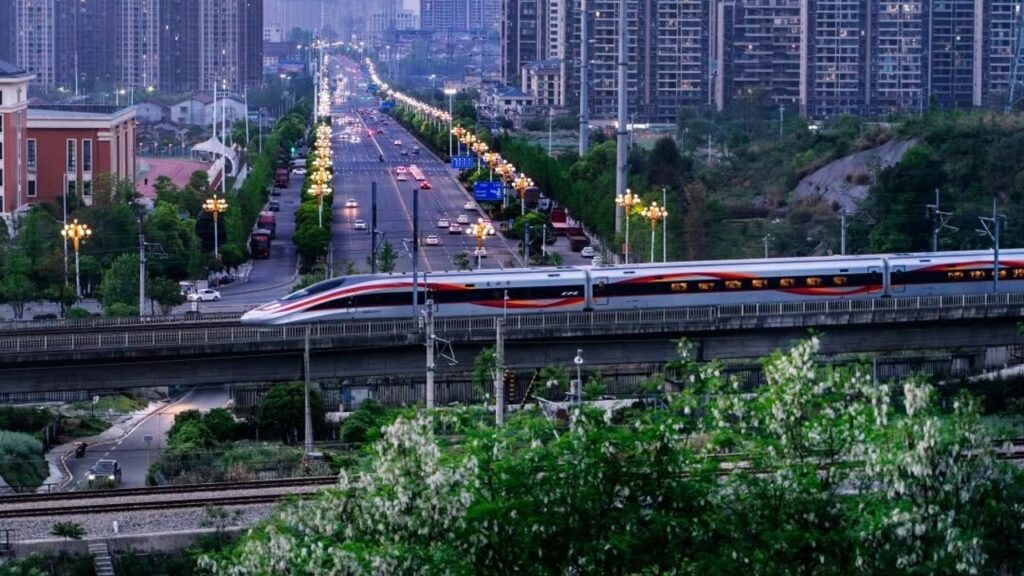
China has brought four new high-speed rail sections into operation at the end of September, extending its network from the north and northwest of the country into central and north-eastern regions. The new links add connections between cities, economic zones and large urban clusters, according to rail industry publication Club Feroviar.
The openings form part of a broader national effort to expand rail capacity, with the country working towards a network of 180,000 kilometres of track by 2030. High-speed lines are central to that target, which would reinforce China's position as the world's largest operator of high-speed rail by a wide margin.
The four sections span several regions rather than concentrating investment in a single corridor. By linking the north and northwest with the centre and northeast, the new routes are intended to improve connectivity between established industrial centres and fast-growing urban areas. That pattern has been a consistent feature of Chinese rail planning, where new lines are used to pull less-connected regions into national transport and economic networks.
China's high-speed programme has expanded rapidly over the past two decades, moving from a handful of initial routes to a web that now reaches most major cities. The scale of the build-out has made rail a key instrument of regional policy, allowing workers, goods and business travellers to move between provinces far more quickly than road or conventional rail allow.
The latest additions come as the government continues to prioritise infrastructure spending as a way of supporting growth and integrating inland provinces with the wealthier coastal economy. New stations and lines typically generate local construction activity and can shift patterns of commuting, tourism and property development in the areas they serve.
For businesses, the expansion of high-speed links reduces travel times between regional hubs and makes same-day trips between distant cities more practical. That matters for sectors such as manufacturing, logistics and professional services, where proximity to suppliers and clients affects investment decisions. The new sections are expected to feed traffic into the wider network rather than operate as isolated routes.
The 180,000 km target for 2030 covers the entire rail system, not only high-speed lines. It reflects a strategy that combines very fast passenger services on trunk routes with conventional and freight capacity on other corridors. Freight rail has become increasingly important as China seeks to move more goods by train and reduce reliance on road haulage.
Details of the individual sections, including their exact routes and journey times, have been published by rail industry sources. The four lines entered service at the end of September, adding to a network that already carries billions of passenger journeys each year.
The pace of construction has drawn attention from infrastructure firms and investors internationally, given the scale of contracts involved and the technical expertise required. Chinese rail builders have also exported their expertise, bidding for projects in Asia, Africa and Europe, though the domestic programme remains by far the largest part of their order books.
Whether the 2030 goal is met will depend on continued funding and on the approval of new projects in the coming years. For now, the opening of the four sections marks another step in a long-running effort to bind the country's regions together by rail.
6