Technology 4 min read By Bethany Hadley
Ukrainian-Estonian firm Haydamax plans bionic hand prosthesis costing up to 100 euros
Estonia-registered Haydamax OÜ has announced development of a bionic hand prosthesis with a target price of up to 100 euros, a project led by Oxogent Laboratory that relies on artificial muscle actuators rather than electric motors.
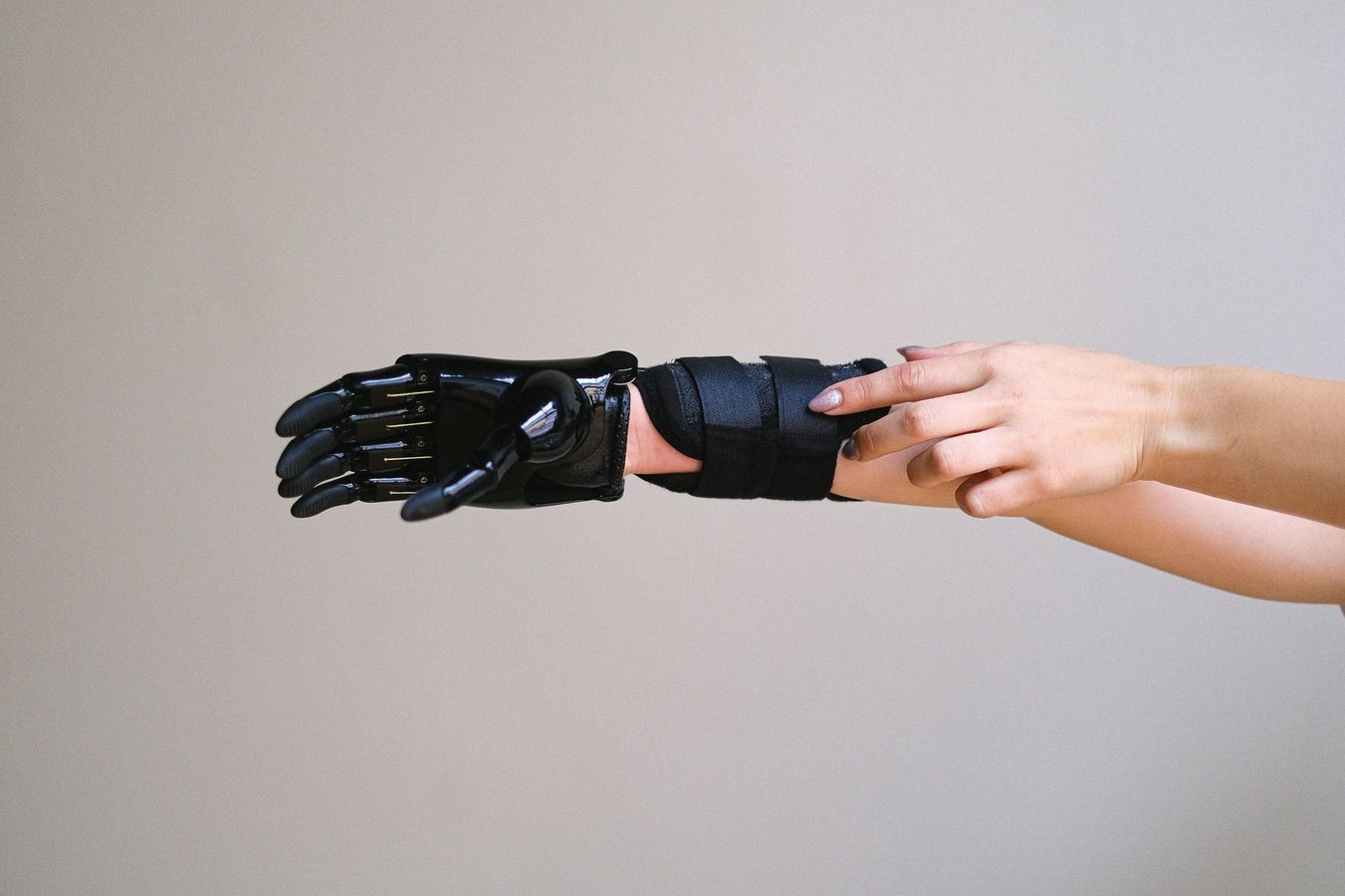
A Ukrainian-Estonian technology company, Haydamax OÜ, which is registered in Estonia, has announced that it is developing a bionic hand prosthesis with a target retail price of up to 100 euros. The announcement, made in November 2026, places the project at the centre of a broader effort to make advanced prosthetics affordable at a time when demand for them is rising sharply in Ukraine.
The work is being led by Oxogent Laboratory, and the working name for the hand is H-MUSCLE. Laboratory work is due to take place in Germany. The price figure should be read as an engineering and economic goal rather than a confirmed selling price. The final cost, the price of components and the expense of medical adaptation for individual patients have not yet been determined. For comparison, advanced bionic prostheses currently often cost tens of thousands of euros, which is why the proposed target has drawn attention.
The most unusual feature of the design is its actuation system. Rather than using electric motors, H-MUSCLE is built around McKibben-type artificial muscles, hydraulic devices that contract when pressurised. The concept dates back to the 1950s and is named after the physicist Joseph McKibben. The developers plan to use what they describe as "muscle nets", bundles of fibres that act on tendons and joints. Some of these fibres would be placed in the forearm to increase the available stroke length, allowing the hand to move through a fuller range.
The control approach is also designed to mirror biology. Instead of driving each actuator independently, the team plans to control grouped channels together, a method intended to imitate the coordination of the nervous system. The design envisages around 40 muscle channels, a number that roughly corresponds to the muscles and tendons of the human hand.
So far the project exists as a digital model, and no physical prototype has yet been built. To shape the design, the team has drawn on posture data from an open dataset covering 22 people carrying out 26 daily tasks. The engineers are concentrating on the thumb, palm mobility, grip precision and the handling of small objects, since these determine how useful a prosthesis is in everyday life.
The developers have identified several significant technical challenges. The most pressing is building a compact, low-cost fluid supply and pressure control system, which will be central to whether the device can be produced cheaply enough to meet its price target. Other work remains to be completed, including developing miniature muscles, integrating the components, solving power and control questions, and ensuring reliability, safety and manufacturability. No timelines for prototypes or mass production have been announced.
The project carries particular relevance for Ukraine, where the need for prostheses has grown since Russia launched its full-scale invasion. Access to prosthetic limbs in the country is framed not only as a medical matter but also as a social one, affecting the ability of people to return to work, study and daily life. A low-cost device, if it can be realised, would address that need directly, though the distance between a digital model and a widely available product remains considerable.
4