Technology 5 min read By Callum Montgomery
Ukraine's drone factories rewrite the rules of defence production
Ukraine's defence-tech ecosystem is producing drones at a scale and speed that Western manufacturers struggle to match, with one factory alone capable of making 100,000 units a month, according to an on-the-ground assessment of the country's combat innovation sector.
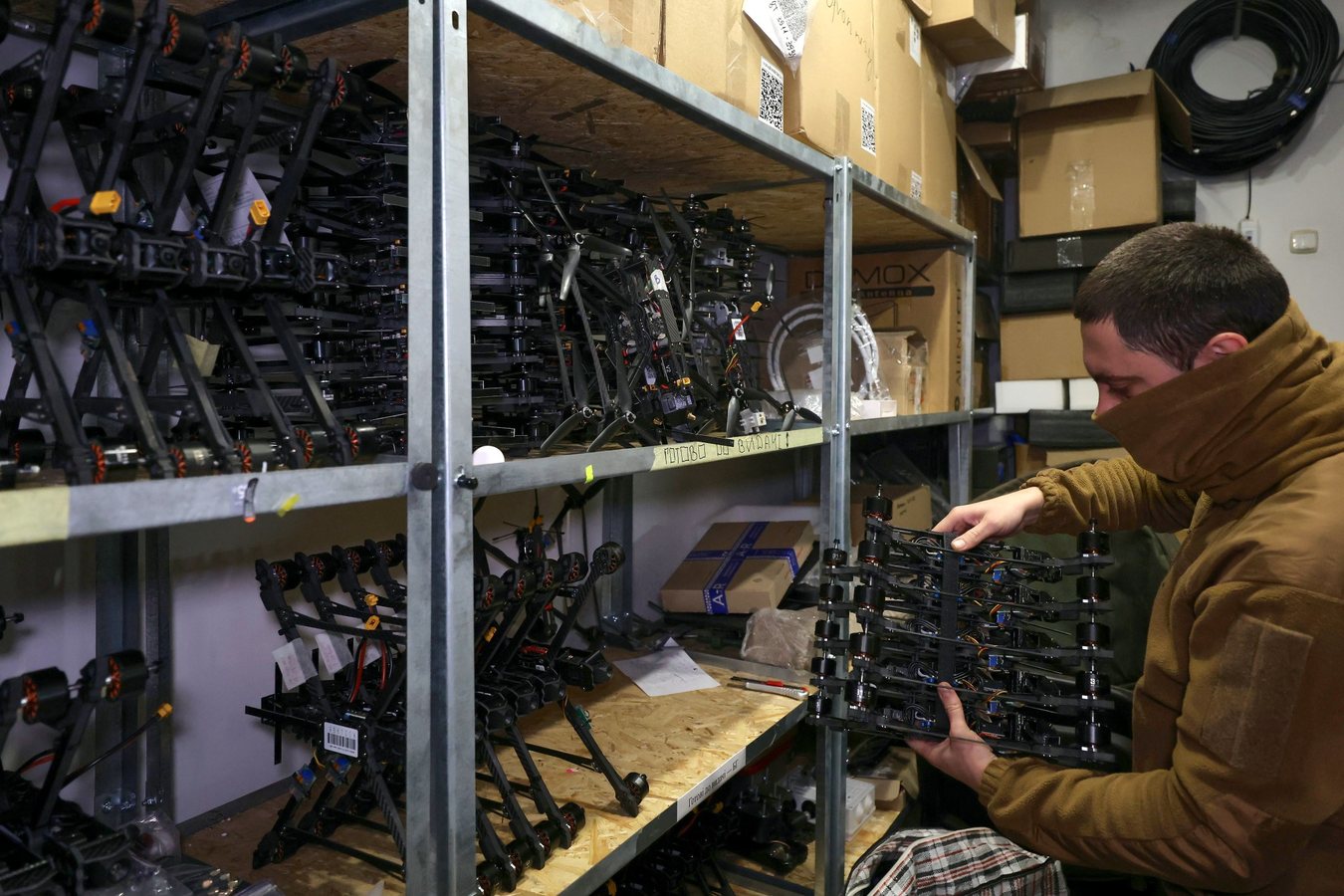
Ukraine's defence-technology sector has developed a production model that is outpacing Western defence procurement, with a single factory capable of manufacturing roughly 100,000 drones a month — a figure that dwarfs the entire annual output of the United States.
The finding comes from a first-hand assessment of Ukraine's combat innovation ecosystem, which has been shaped by more than four years of full-scale war and twelve years of conflict since Russia's initial invasion. The country's defence-tech companies are now serving over 200 Ukrainian military units with FPV strike drones and interceptor systems, operating under conditions that would halt conventional manufacturing.
General Cherry, one of the companies at the centre of this ecosystem, exemplifies the approach. Its executives continued working through a night of ballistic missile and drone strikes on Kyiv, arriving at the factory the following morning to maintain production schedules. The company's output capacity stands at approximately 100,000 drones per month, compared with roughly 300,000 drones produced across the entire United States in a year.
The structural advantage lies in decentralisation. Ukrainian manufacturers have spread production across distributed networks, making them far less vulnerable to disruption. If one node is taken offline, the broader network continues functioning without interruption. This approach stands in contrast to traditional defence manufacturing, where concentrated facilities represent single points of failure.
Speed is another defining characteristic. Ukrainian defence-tech companies operate on a three-month development cycle rather than the three-year timelines typical of Western procurement. This velocity allows them to respond to battlefield developments in real time, adapting systems as adversaries introduce new countermeasures.
The cat-and-mouse dynamic between Ukrainian engineers and Russian electronic warfare has driven rapid innovation. When Russia jammed drone operating frequencies, Ukrainian forces pivoted to fibre-optic FPVs, which unspool kilometres of cable to maintain a physical connection that electronic warfare cannot sever. Recent advances in thinner, lighter, bend-resistant fibre and precision-wound spools have extended the reach of these systems, with fibre links now approaching 50 kilometres — pushing unjammable drones deeper into contested territory.
Each new capability produces a countermeasure, which in turn produces a counter-countermeasure, all unfolding within weeks rather than years. This iterative cycle is fundamentally different from the procurement processes that govern defence acquisition in NATO countries.
The assessment also challenges persistent claims that Ukrainian defence products are merely hobby-grade or cheap because of lax safety standards or reliance on Chinese components. Such characterisations miss what appears to be the ecosystem's defining strength: an extraordinary ability to adapt, iterate and execute in real time. Innovation born from battlefield insight often produces unconventional solutions that would not emerge from peacetime development programmes.
Aggressive vertical integration is another feature of the sector. Defence-tech companies have moved to control more of their supply chains, reducing dependence on external suppliers and enabling faster design changes. This integration supports the rapid iteration cycle and helps maintain production even when logistics networks come under pressure.
The human dimension of this ecosystem is equally notable. Under martial law, wartime unity has not meant silence. Soldiers appear on recruitment billboards, with brigades competing for volunteers in a manner resembling brand competition. Protests that filled the streets in July over the dismissal of the defence minister were not disorder but an expression of democratic reflex, conducted mid-war. The country's defence industry operates with an expectation that solutions will be built in three months, and that velocity informs everything from engineering decisions to production planning.
For Western defence planners, the implications are significant. Ukraine's distributed manufacturing model, rapid iteration cycles and vertical integration offer a template for producing critical tactical systems at scale and speed. The country's defence-tech ecosystem has demonstrated that combat innovation can proceed at a pace that traditional procurement structures struggle to match, and that resilience can be built into production networks rather than added as an afterthought.